The Executive Summary of
The Architecture of Happiness
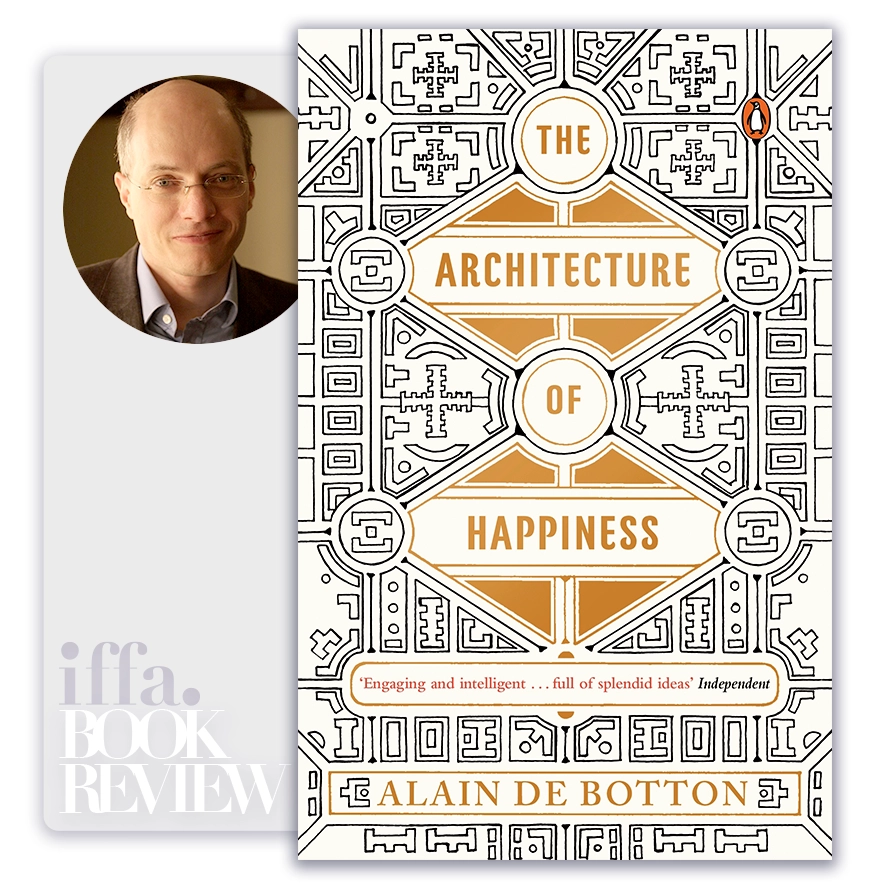
by Alain de Botton
Summary Overview:
The Architecture of Happiness invites a reconsideration of a quiet but powerful truth: the spaces we inhabit shape how we think, feel, and behave. Architecture is often treated as a technical or aesthetic concern, discussed in terms of style, cost, or efficiency. Alain de Botton reframes it as something far more intimate—an influence on mood, character, and aspiration that operates continuously, often without our awareness.
By linking buildings to psychology and philosophy, the book reveals how design choices communicate values about order, beauty, authority, calm, and belonging. For leaders, architects, developers, and decision-makers, this perspective is especially timely. As cities densify and work and life increasingly merge within designed environments, The Architecture of Happiness offers a thoughtful framework for understanding why certain spaces elevate human experience while others drain it. The book positions architecture not as a neutral backdrop, but as a moral and emotional force—one that can either support well-being and dignity or quietly undermine them over time.
About The Author
Alain de Botton is a philosopher and writer known for applying philosophical inquiry to everyday subjects such as work, love, travel, and art. His perspective is distinctive for making abstract ideas accessible and emotionally grounded, bridging intellectual reflection with lived experience.
Core Idea:
The core idea of The Architecture of Happiness is that architecture has the power to influence human happiness by expressing and reinforcing values. Buildings communicate ideals—order, freedom, authority, intimacy, calm—through form, proportion, material, and light. These messages shape our moods and aspirations, often without conscious awareness.
De Botton argues that people are drawn to architecture that reflects qualities they admire or seek within themselves. A building’s beauty is not arbitrary; it resonates because it embodies virtues—clarity, harmony, dignity, or gentleness—that we wish to cultivate. Architecture, therefore, becomes a form of silent moral education, reminding us of who we are or who we might become.
We are powerfully affected by places because they reflect back to us the values we admire.
Key Concepts:
- Architecture as Emotional Influence
De Botton shows that buildings influence emotions as directly as music or literature. Proportion, scale, and light can induce calm, awe, melancholy, or anxiety, shaping daily experience without explicit instruction. - Beauty as Moral Communication
Beauty is framed not as decoration, but as communication. Beautiful buildings express ideals—order, balance, restraint—that resonate with human aspirations. Ugliness, by contrast, often reflects neglect or indifference. - The Psychology of Proportion and Scale
Human comfort is deeply affected by scale. Overly monumental buildings can intimidate, while overly small or chaotic ones can unsettle. Architecture mediates between human vulnerability and ambition. - Homes as Reflections of Identity
The book explores domestic architecture as an extension of personality. Homes express values—privacy, openness, simplicity—and influence how inhabitants think, rest, and relate to others. - Public Buildings and Civic Values
Civic architecture communicates societal priorities. Courthouses, schools, and museums embody authority, fairness, or openness depending on their design. Architecture thus shapes public trust and belonging. - Order, Complexity, and Calm
De Botton argues that environments with legible order reduce mental fatigue. Excessive visual complexity creates stress, while thoughtful variation within order sustains interest and comfort. - The Role of Nature in Architecture
Buildings that integrate views, light, and natural materials tend to support emotional well-being. Nature reminds inhabitants of continuity and humility, counterbalancing artificial intensity. - Memory, Place, and Attachment
Architecture anchors memory. Places become meaningful through repetition and association, contributing to emotional stability and identity over time. - Modernity and Alienation
The book critiques aspects of modern architecture that prioritize efficiency or novelty at the expense of human experience. When buildings neglect emotional needs, they contribute to alienation rather than progress. - Architecture as Ethical Practice
Ultimately, de Botton frames architecture as an ethical discipline. Designers and commissioners hold responsibility for shaping environments that influence behavior, dignity, and happiness.
Architecture teaches us how to feel by showing us how to live.
Executive Insights:
The Architecture of Happiness reframes architecture as a long-term psychological and cultural investment, not merely a functional or economic one. Its insights suggest that poorly considered environments impose hidden costs—stress, disengagement, and erosion of well-being—while thoughtful design generates durable, non-financial value.
For leaders and institutions, the book highlights that environments shape organizational culture. Offices, campuses, and public spaces influence how people collaborate, focus, and identify with shared purpose. Architecture, therefore, becomes a silent but powerful leadership tool.
The book also implies that ignoring emotional impact does not make architecture neutral—it merely allows unintended values to dominate.
Key strategic implications include:
- Built environments influence behavior and well-being
- Beauty communicates values and priorities
- Human-scale design supports dignity and calm
- Architecture shapes institutional identity
- Emotional quality is a form of long-term value
Actionable Takeaways:
The book offers reflective principles for those shaping or inhabiting spaces.
- Consider emotional impact as a design criterion
- Align architectural choices with desired values
- Favor clarity, proportion, and calm over spectacle
- Integrate light and nature to support well-being
- Design spaces that respect human scale
- Treat buildings as long-term cultural statements
- Recognize architecture as an ethical responsibility
Final Thoughts:
The Architecture of Happiness is ultimately a meditation on how surroundings shape the inner life. Alain de Botton invites readers to notice what is usually overlooked: the quiet influence of walls, windows, streets, and rooms on our sense of meaning and contentment.
The enduring insight of the book is both simple and demanding: we deserve environments that help us become better versions of ourselves. Architecture that acknowledges this responsibility moves beyond utility and style, contributing instead to a deeper, more humane understanding of progress.
The ideas in this book go beyond theory, offering practical insights that shape real careers, leadership paths, and professional decisions. At IFFA, these principles are translated into executive courses, professional certifications, and curated learning events aligned with today’s industries and tomorrow’s demands. Discover more in our Courses.
Applied Programs

- Course Code : SBM-409
- Delivery : In-class / Virtual / Workshop
- Duration : 2-4 Days
- Venue: DUBAI HUB

- Course Code : PMA-613
- Delivery : In-class / Virtual / Workshop
- Duration : 3-5 Days
- Venue: DUBAI HUB
- Course Code : CIF-505
- Delivery : In-class / Virtual / Workshop
- Duration : 3-5 Days
- Venue: DUBAI HUB

- Course Code : CIF-512
- Delivery : In-class / Virtual / Workshop
- Duration : 2-4 Days
- Venue: DUBAI HUB
Related Books