The Executive Summary of
Don’t Worry
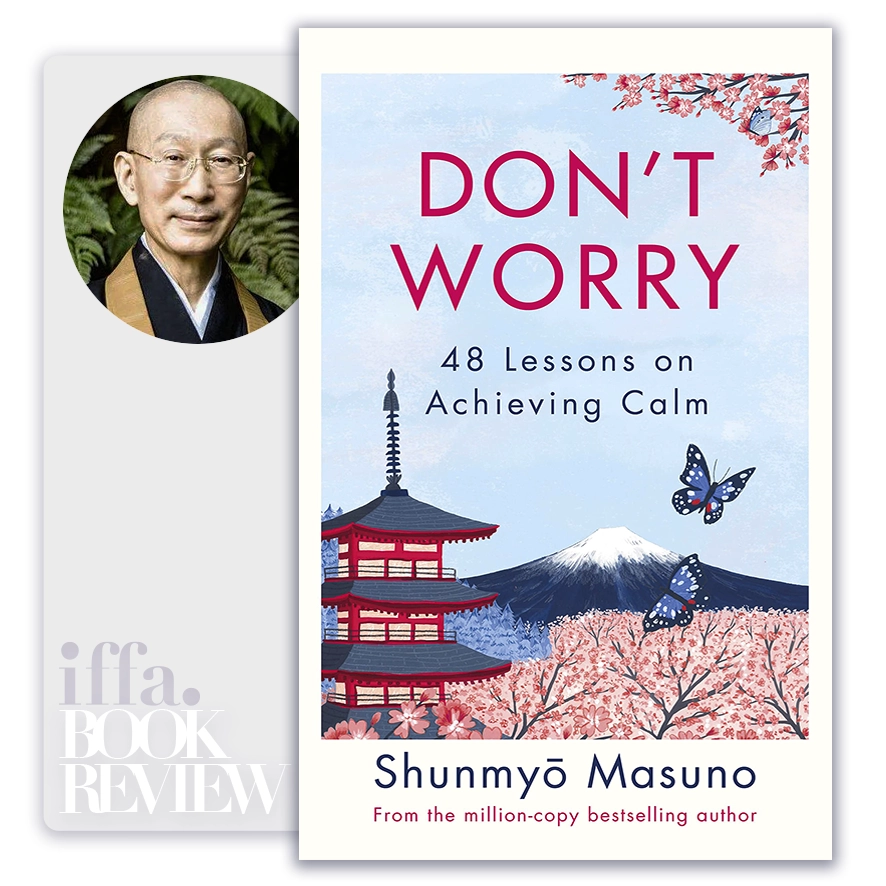
by Shunmyo Masuno
Summary Overview:
Don’t Worry addresses a condition that silently degrades leadership quality: persistent low-level anxiety normalized as responsibility. In senior roles, worry is often mistaken for diligence, foresight, or care. Shunmyo Masuno challenges this assumption by showing how chronic worry clouds perception, narrows options, and pushes leaders toward reactive decisions. The book remains relevant because uncertainty has become structural, not episodic—and leaders who internalize uncertainty as anxiety pay for it in judgment quality.
For CEOs, board members, and long-term stewards of institutions, the book matters because calm is a prerequisite for clear thinking. Worry consumes attention without improving outcomes; it rehearses problems without resolving them. Masuno reframes worry as a habit of mind that can be observed, interrupted, and released. His message is not about optimism or denial, but about maintaining inner stability so decisions are proportionate, timely, and humane—even under pressure.
About The Author
Shunmyo Masuno is a Zen Buddhist monk and architect who integrates centuries-old Zen practice with modern professional life. As head priest of a historic Zen temple and a practicing designer, he brings philosophical rigor together with practical structure.
Masuno’s perspective is distinctive because it treats mental discipline as a daily governance practice, not a spiritual abstraction. He translates Zen principles into simple behavioral guidance applicable to work, leadership, and decision-making without requiring belief, ideology, or withdrawal from responsibility.
Core Idea:
The central thesis of Don’t Worry is that worry is not a useful form of thinking; it is a misdirected use of attention. Masuno argues that worry does not prevent problems or improve preparedness. Instead, it traps the mind in imagined futures, draining energy needed for effective action in the present.
At a deeper level, the book presents a worldview in which calm is an active state, cultivated through awareness and restraint. Letting go of worry does not mean ignoring reality; it means responding to reality without unnecessary emotional amplification. Leaders who master this discipline preserve clarity, resilience, and ethical balance under uncertainty.
Worry feels productive, but it rarely improves outcomes.
Key Concepts:
- Worry Is Mental Overreach
Masuno explains that worry arises from trying to control what is not controllable.
- Control beyond reach creates tension.
- Acceptance restores proportionality.
- The Future Is Not Improved by Anxiety
Imagining worst-case scenarios rarely produces readiness.
- Anxiety exhausts attention.
- Preparation requires clarity, not fear.
- Attention Belongs in the Present
Effective action happens only in the current moment.
- Present focus enables response.
- Future fixation disables action.
- Emotional Amplification Distorts Judgment
Worry enlarges perceived risk beyond reality.
- Amplification narrows options.
- Calm restores perspective.
- Repetition Strengthens Mental Habits
Worry persists because it is rehearsed.
- Awareness interrupts cycles.
- Non-engagement weakens habit.
- Simplicity Reduces Cognitive Load
Reducing unnecessary choices lowers anxiety.
- Complexity fuels worry.
- Simplicity preserves focus.
- Rituals Stabilize the Mind
Simple daily practices anchor attention.
- Routine replaces rumination.
- Structure supports steadiness.
- Comparison Generates Anxiety
Measuring oneself against others invites worry.
- Comparison shifts attention outward.
- Self-reference restores balance.
- Calm Is Not Indifference
Masuno distinguishes calm from passivity.
- Calm enables decisive action.
- Anxiety delays resolution.
- Inner State Shapes Outer Impact
Leadership presence influences organizational tone.
- Anxiety transmits downward.
- Calm stabilizes systems.
Calm attention creates better decisions than anxious vigilance.
Executive Insights:
Don’t Worry reframes emotional regulation as a core leadership competence. Leaders who carry constant worry often believe they are being responsible, yet they unintentionally introduce volatility into decisions, conversations, and culture. Masuno’s work suggests that the ability to remain calm under uncertainty is a strategic differentiator, not a personal luxury.
At governance level, the book implies that decision quality improves when emotional noise is reduced. Boards and executive teams benefit when leaders separate signal from anxiety, respond proportionately to risk, and model steadiness during ambiguity.
- Judgment improves when worry is contained.
- Decision speed increases with emotional clarity.
- Organizational stability reflects leadership temperament.
- Risk is managed better without emotional inflation.
- Long-term thinking requires calm attention.
Actionable Takeaways:
Effective leadership steadiness begins with attention discipline.
- Notice worry without engaging it.
- Redirect attention to what can be acted on now.
- Reduce unnecessary complexity in decisions.
- Establish routines that stabilize mental focus.
- Model calm as a leadership standard.
Final Thoughts:
Don’t Worry offers a restrained, practical philosophy for navigating uncertainty without being consumed by it. Masuno’s insight is not that problems disappear when we stop worrying, but that solutions appear more clearly when anxiety recedes. Worry promises control, yet delivers distraction.
For leaders responsible for people, capital, and long-term direction, the book offers a timeless reminder: clarity comes from presence, not preoccupation. Calm does not weaken leadership—it refines it.
In the long run, the leaders who worry least often see most clearly.
The ideas in this book go beyond theory, offering practical insights that shape real careers, leadership paths, and professional decisions. At IFFA, these principles are translated into executive courses, professional certifications, and curated learning events aligned with today’s industries and tomorrow’s demands. Discover more in our Courses.
Applied Programs

- Course Code : SBM-409
- Delivery : In-class / Virtual / Workshop
- Duration : 2-4 Days
- Venue: DUBAI HUB

- Course Code : PMA-613
- Delivery : In-class / Virtual / Workshop
- Duration : 3-5 Days
- Venue: DUBAI HUB
- Course Code : CIF-505
- Delivery : In-class / Virtual / Workshop
- Duration : 3-5 Days
- Venue: DUBAI HUB

- Course Code : CIF-512
- Delivery : In-class / Virtual / Workshop
- Duration : 2-4 Days
- Venue: DUBAI HUB
Related Books