The Executive Summary of
Triumph of the City
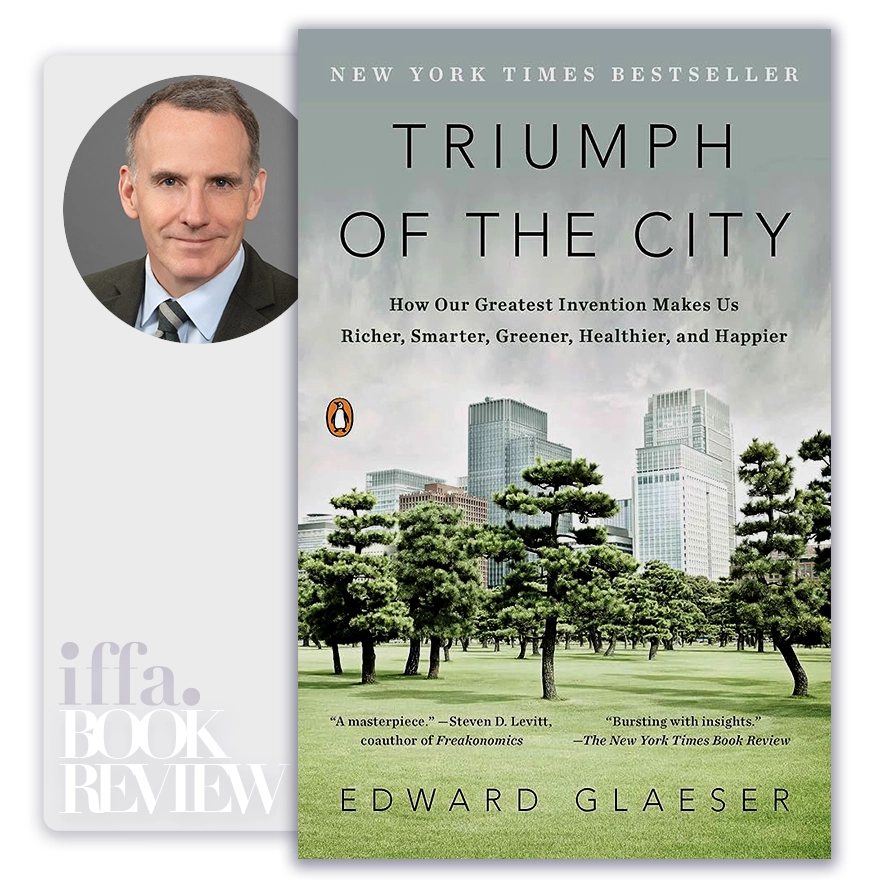
by Edward Glaeser
Summary Overview:
Triumph of the City presents a compelling case for cities as humanity’s greatest engines of innovation, prosperity, and social progress. At a time when urban density is often blamed for inequality, congestion, and environmental strain, Edward Glaeser challenges the narrative by showing how cities—when governed well—enable learning, creativity, and economic growth in ways no other human settlement can.
By grounding his argument in economics, history, and real-world examples, Glaeser reframes cities not as collections of buildings, but as networks of people whose proximity accelerates idea exchange and productivity. For policymakers, investors, planners, and business leaders, this perspective is essential. The book clarifies why density matters, how infrastructure and education amplify urban success, and why abandoning cities in favor of sprawl undermines both prosperity and sustainability. The Triumph of the City ultimately positions urban life not as a problem to escape, but as a strategic asset to cultivate thoughtfully for long-term economic and social resilience.
About The Author
Edward Glaeser is a leading urban economist and professor at Harvard University, known for empirical research on cities, growth, and public policy. His perspective is distinctive for combining economic rigor with historical insight, using data to explain why cities thrive—and why they sometimes falter.
Core Idea:
The core idea of Triumph of the City is that human progress is fundamentally urban. Cities thrive because they bring people close together, enabling the rapid exchange of ideas, skills, and opportunities. This density fuels innovation, productivity, and cultural vitality—making cities central to economic and social advancement.
Glaeser argues that physical proximity remains essential even in a digital age. Face-to-face interaction fosters trust, learning, and creativity in ways that virtual connections cannot fully replace. While cities generate problems—high costs, congestion, inequality—the book contends that these are byproducts of success, not reasons for retreat. The real task is to govern cities effectively, not abandon them.
Cities succeed because they connect people, and people are the ultimate source of innovation.
Key Concepts:
- Density as an Economic Multiplier
Cities increase productivity by reducing distance between people and ideas. Dense environments accelerate learning, collaboration, and innovation, creating economic value that outweighs the costs of congestion. - Human Capital Over Physical Capital
Glaeser emphasizes that cities thrive not because of buildings or infrastructure alone, but because of educated, skilled people. Investment in human capital is the strongest predictor of urban success. - Cities as Engines of Innovation
Historically, cities have been the birthplace of new ideas, industries, and cultural movements. Proximity enables informal knowledge transfer that formal systems struggle to replicate. - Poverty and Opportunity Coexist
Cities attract the poor not because they create poverty, but because they offer opportunity. Urban poverty reflects migration toward opportunity, underscoring the importance of inclusive policy rather than urban retreat. - Housing Affordability as a Policy Failure
High housing costs are not inevitable. Glaeser argues that restrictive zoning and land-use regulation limit supply, driving prices up. Affordability is governed, not predetermined. - Transportation and Mobility Matter
Efficient transportation expands opportunity by connecting people to jobs and education. Poor transit traps inequality spatially, while smart mobility policy amplifies urban advantage. - Environmental Benefits of Density
Contrary to common belief, dense cities are often greener. Urban residents consume less energy per capita and emit fewer greenhouse gases than suburban counterparts due to shared infrastructure and shorter commutes. - The Myth of Place-Based Decline
Cities decline when governance fails, not because urbanization is obsolete. Examples from history show that crime, disease, and decay are reversible with effective policy. - Education as Urban Infrastructure
Schools and universities are central to city success. Education drives both economic mobility and innovation, reinforcing cities’ long-term resilience. - Leadership and Governance Shape Outcomes
Urban success depends on leadership that enables growth, inclusion, and adaptability. Cities are dynamic systems requiring continuous policy adjustment, not static planning.
Urban problems reflect policy choices, not the failure of urban life itself.
Executive Insights:
Triumph of the City reframes cities as strategic assets rather than liabilities. Its central implication is that retreating from cities—through sprawl, disinvestment, or anti-density policy—undermines long-term prosperity, sustainability, and innovation.
For leaders and investors, the book highlights that urban performance hinges on policy choices: land use, education, transportation, and governance quality. Cities that embrace density, talent, and openness attract opportunity; those that resist change stagnate.
The book also carries a climate and sustainability message: dense urban living is one of the most effective tools for reducing per-capita environmental impact while sustaining economic growth.
Key strategic implications include:
- Density fuels innovation and productivity
- Human capital investment outperforms physical expansion
- Housing affordability is a governance issue
- Cities are environmentally efficient when well-designed
- Urban decline reflects policy failure, not inevitability
Actionable Takeaways:
The book offers broad principles for urban leadership, investment, and policy.
- Support density through inclusive and flexible land-use policy
- Invest in education as core urban infrastructure
- Expand transportation access to unlock opportunity
- Address housing supply constraints proactively
- Treat cities as climate solutions, not climate problems
- Focus on people and ideas rather than buildings alone
- Strengthen governance to manage growth rather than resist it
Final Thoughts:
Triumph of the City is a confident and data-driven defense of urban life. Edward Glaeser shows that cities endure because they amplify what humans do best: learn from one another, innovate, and adapt. While urban challenges are real, they are solvable—and far outweighed by the benefits of proximity and scale.
The enduring insight of the book is clear: the future belongs to cities that welcome people, ideas, and density rather than fearing them. Leaders who understand this will focus less on escaping urban problems and more on governing cities wisely—ensuring that their triumph is shared, sustainable, and long-lasting.
The ideas in this book go beyond theory, offering practical insights that shape real careers, leadership paths, and professional decisions. At IFFA, these principles are translated into executive courses, professional certifications, and curated learning events aligned with today’s industries and tomorrow’s demands. Discover more in our Courses.
Applied Programs

- Course Code : SBM-409
- Delivery : In-class / Virtual / Workshop
- Duration : 2-4 Days
- Venue: DUBAI HUB

- Course Code : PMA-613
- Delivery : In-class / Virtual / Workshop
- Duration : 3-5 Days
- Venue: DUBAI HUB
- Course Code : CIF-505
- Delivery : In-class / Virtual / Workshop
- Duration : 3-5 Days
- Venue: DUBAI HUB

- Course Code : CIF-512
- Delivery : In-class / Virtual / Workshop
- Duration : 2-4 Days
- Venue: DUBAI HUB
Related Books