
The Executive Summary of
Architecture From Prehistory to Climate Emergency
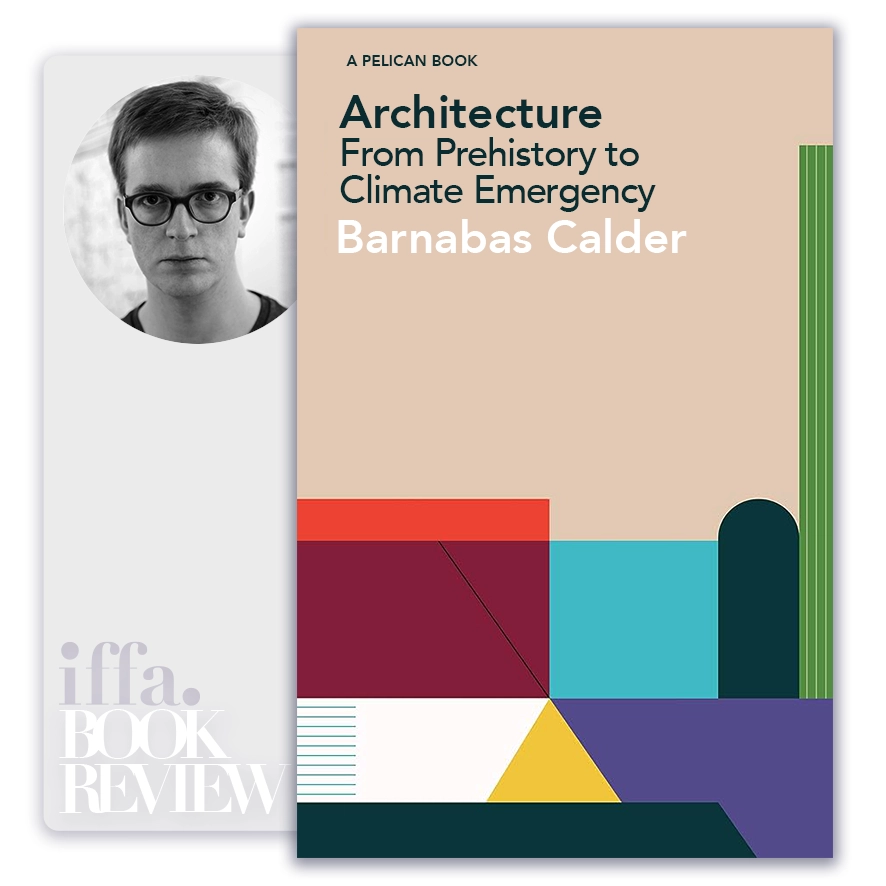
by Barnabas Calder
Summary Overview:
Architecture: From Prehistory to Climate Emergency reframes architectural history not as a stylistic timeline, but as a record of how human societies have used buildings to organize power, resources, comfort, and environmental impact. Barnabas Calder argues that architecture has always been inseparable from energy, materials, and climate—yet only recently have leaders been forced to confront the full consequences of that relationship. The book remains urgent because the built environment now accounts for a significant share of global emissions, resource extraction, and ecological stress.
For senior executives, policymakers, developers, and long-term investors, the book matters because architecture is no longer a neutral backdrop to economic activity. It is a primary driver of climate outcomes and a major lever for mitigation and adaptation. Calder exposes a deeper governance failure: decisions about buildings are still made using outdated assumptions about energy abundance, permanence, and growth. In an era of climate constraint, leaders must understand architecture not just as design, but as infrastructure with long-term environmental consequences.
About The Author
Barnabas Calder is an architectural historian specializing in the relationship between buildings, energy systems, and environmental change. His work combines historical scholarship with contemporary climate analysis.
Calder’s perspective is distinctive because he connects architectural form directly to energy regimes and material systems. Rather than treating climate change as an external challenge to architecture, he demonstrates that architecture has always been a climate actor—shaped by, and shaping, how societies use energy.
Core Idea:
The central thesis of Architecture: From Prehistory to Climate Emergency is that architecture has always been an energy system, whether through fire, biomass, fossil fuels, or electricity. Buildings encode assumptions about climate stability, resource availability, and social organization. As those assumptions break down, so too must architectural norms.
At a deeper level, the book presents a worldview in which the climate emergency is not an interruption of architectural history, but its logical consequence. Modern architecture—particularly since the industrial era—has relied on cheap energy to overcome climate, geography, and material limits. Calder argues that the future of architecture depends on relearning restraint, adaptation, and environmental intelligence rather than doubling down on energy-intensive solutions.
Architecture has always shaped climate outcomes; it can no longer pretend otherwise.
Key Concepts:
- Architecture Begins With Energy
From early shelters to monumental structures, buildings reflect available energy sources.
- Fire enabled enclosure.
- Fossil fuels enabled scale and uniform comfort.
- Climate Shaped Early Architecture
Pre-industrial architecture adapted to local climates.
- Form followed environment.
- Passive strategies dominated.
- Industrialization Severed Climate Sensitivity
Modern systems replaced adaptation with control.
- Heating and cooling masked climate realities.
- Energy use substituted for design intelligence.
- Materials Carry Embedded Energy
Concrete, steel, and glass embody large carbon costs.
- Material choice is a climate decision.
- Durability does not equal sustainability.
- Modern Comfort Is Energy-Intensive
Uniform indoor climates demand constant energy input.
- Comfort expectations drive emissions.
- Cultural norms shape demand.
- Architecture Locked in Carbon Trajectories
Buildings commit societies to decades of energy use.
- Design decisions have long tails.
- Retrofitting is harder than restraint.
- Efficiency Alone Is Insufficient
Incremental gains do not offset scale.
- Growth cancels efficiency.
- Absolute reduction matters.
- Vernacular Knowledge Holds Lessons
Historic building practices offer climate-responsive insight.
- Local intelligence reduces energy demand.
- Context matters more than style.
- Architects Are System Designers
Buildings influence behavior, energy use, and policy.
- Design shapes demand.
- Responsibility extends beyond aesthetics.
- The Climate Emergency Demands Architectural Rethinking
Calder argues for a shift from spectacle to sufficiency.
- Fewer resources, better use.
- Longevity over novelty.
The buildings of the future must be governed by limits, not abundance.
Executive Insights:
Architecture: From Prehistory to Climate Emergency positions the built environment as one of the most consequential arenas of climate governance. Calder shows that many climate strategies fail because they treat buildings as technical problems rather than long-term socio-energy commitments. Leaders who continue to commission, finance, or regulate architecture using 20th-century assumptions risk locking in emissions for generations.
At board, policy, and investment levels, the implication is clear: architectural decisions are climate decisions. Value creation, resilience, and regulatory alignment increasingly depend on reducing embodied carbon, lowering operational demand, and designing for adaptive use.
- Climate risk is embedded in buildings.
- Long-term value depends on low-energy design.
- Material choices determine carbon exposure.
- Restraint outperforms spectacle under constraint.
- Governance must integrate architecture and climate strategy.
Actionable Takeaways:
Climate-responsible leadership begins with architectural realism.
- Treat buildings as long-term energy commitments.
- Prioritize passive design over mechanical compensation.
- Reduce embodied carbon through material discipline.
- Design for adaptability and long life.
- Align architectural ambition with planetary limits.
Final Thoughts:
Architecture: From Prehistory to Climate Emergency is a sober reminder that the climate crisis is built into our walls, roofs, and systems. Calder’s work strips away the illusion that sustainability can be achieved through surface-level innovation alone. What is required instead is a fundamental shift in how leaders understand progress, comfort, and success in the built environment.
For those shaping cities, institutions, and capital flows, the book offers a lasting insight: architecture is destiny at planetary scale. The choices made today will define environmental outcomes for decades. Wisdom now lies not in building more, faster, or bigger—but in building less, better, and with humility.
In the age of climate emergency, architecture must move from symbol of power to instrument of responsibility.
The ideas in this book go beyond theory, offering practical insights that shape real careers, leadership paths, and professional decisions. At IFFA, these principles are translated into executive courses, professional certifications, and curated learning events aligned with today’s industries and tomorrow’s demands. Discover more in our Courses.
Applied Programs

- Course Code : SBM-409
- Delivery : In-class / Virtual / Workshop
- Duration : 2-4 Days
- Venue: DUBAI HUB

- Course Code : PMA-613
- Delivery : In-class / Virtual / Workshop
- Duration : 3-5 Days
- Venue: DUBAI HUB
- Course Code : CIF-505
- Delivery : In-class / Virtual / Workshop
- Duration : 3-5 Days
- Venue: DUBAI HUB

- Course Code : CIF-512
- Delivery : In-class / Virtual / Workshop
- Duration : 2-4 Days
- Venue: DUBAI HUB
Related Books