The Executive Summary of
Cities for People
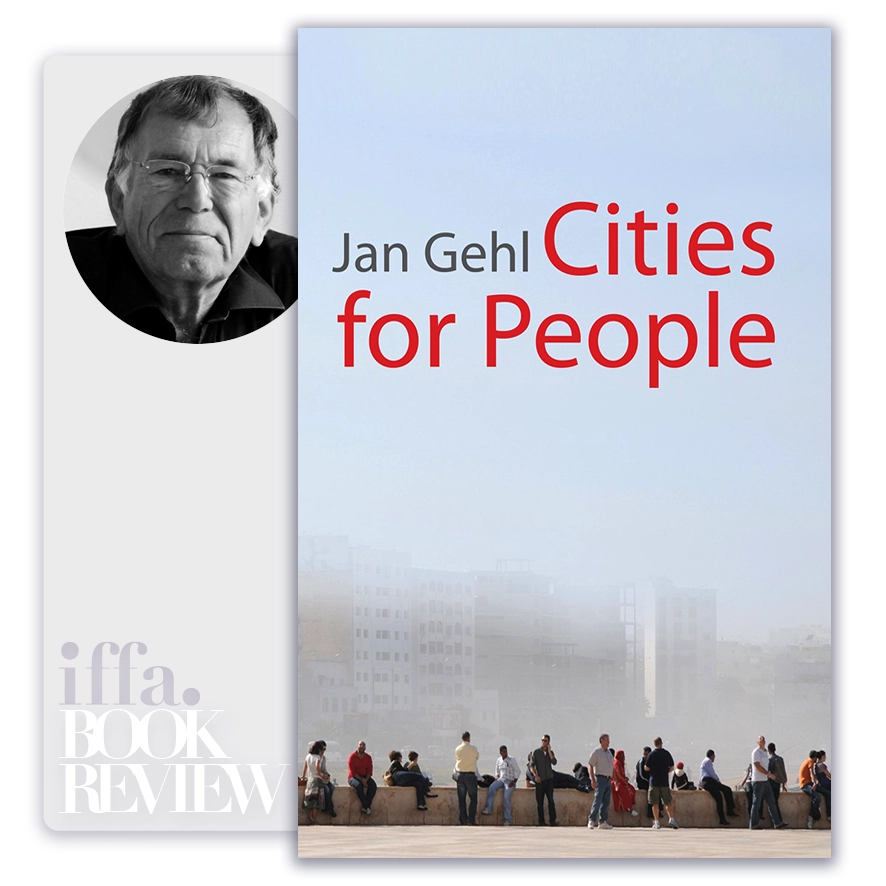
by Jan Gehl
Summary Overview:
Cities for People reframes how cities should be understood, evaluated, and ultimately led. Rather than viewing urban success through skylines, traffic flow, or iconic projects, Jan Gehl redirects attention to what people actually experience at street level—how they walk, pause, meet, and inhabit public space. This human-centered lens exposes a central flaw in much modern urban development: cities have been optimized for movement, efficiency, and scale, often at the expense of daily life, health, and social connection.
The book brings renewed urgency to this perspective as cities confront climate stress, public health challenges, social fragmentation, and declining livability. For mayors, planners, developers, and policy leaders, Cities for People offers more than design guidance—it provides a strategic framework for understanding how urban form shapes behavior, trust, and long-term resilience. By focusing on human scale, walkability, and the quality of life between buildings, the book demonstrates that livability is not a soft ideal, but a measurable driver of safety, economic vitality, and civic well-being.
About The Author
Jan Gehl is a globally influential architect and urban design consultant whose work has reshaped cities such as Copenhagen, Melbourne, and New York. His authority comes from combining decades of empirical observation of public life with practical urban interventions, grounding theory in real-world outcomes.
Core Idea:
The core idea of Cities for People is that cities function best when they are designed at human scale, prioritizing walking, social interaction, and sensory experience over speed, distance, and abstract geometry. Gehl argues that modern planning has often ignored basic human needs—visibility, comfort, safety, and opportunity for interaction—resulting in spaces that people pass through rather than inhabit.
Rather than seeing public life as an accidental byproduct of urban form, Gehl positions it as a deliberate design outcome. When streets, squares, and buildings invite people to linger, interact, and move at human pace, cities become healthier, safer, and more resilient. Urban quality, in this view, is measured not by how efficiently traffic moves, but by how richly life unfolds between buildings.
A city’s quality is defined by what happens at eye level, not by what appears on the skyline.
Key Concepts:
- Human Scale as the Foundation of Urban Quality
Gehl emphasizes that humans experience cities at walking speed and eye level. Large blocks, wide roads, and oversized buildings discourage engagement and reduce sensory richness. At a strategic level, designing for human scale improves safety, comfort, and emotional connection to place. - Public Life Is Not Automatic
Social interaction does not occur simply because space exists. It depends on conditions—protection from traffic, weather, and noise; places to sit; visual interest; and proximity. Leaders who invest intentionally in these conditions see measurable gains in urban vitality. - The Priority of Pedestrians and Cyclists
Cities that prioritize cars reduce opportunities for human interaction. By reallocating space to walking and cycling, cities slow movement, increase visibility, and improve public health. Strategically, this shift supports sustainability, safety, and long-term economic vitality. - Life Between Buildings Matters Most
Gehl’s famous phrase captures a central insight: the most important urban activity happens not inside buildings, but in the spaces between them. Streets and squares are social infrastructure, shaping how communities form and interact. - Invitation Creates Use
People respond to subtle invitations—benches, edges, cafés, small plazas. When cities provide reasons to stop rather than rush through, public spaces become active and self-reinforcing. This insight matters for leaders seeking to revive underused districts without massive redevelopment. - Safety Emerges From Presence
Gehl shows that active public life increases perceived and actual safety. “Eyes on the street” emerge naturally when spaces are inviting. This reframes safety from a policing issue to a design and livability outcome. - Soft Edges Encourage Interaction
Buildings with transparent façades, frequent entrances, and varied ground-floor uses support engagement. Blank walls and inactive edges repel life. For developers and planners, this has direct implications for zoning, frontage design, and mixed-use policy. - Incremental Change Beats Grand Plans
Gehl advocates for testing, observation, and gradual improvement rather than rigid master plans. Small, reversible interventions allow cities to learn from real behavior. Strategically, this reduces risk and builds public support. - Measuring What Matters
Instead of traffic counts alone, Gehl promotes measuring pedestrian movement, time spent in public space, and social interaction. These metrics align planning decisions with lived experience rather than abstract efficiency. - Livability Is a Competitive Advantage
Cities that prioritize people attract talent, tourism, and investment. Livability is not a luxury—it is a strategic asset that supports economic resilience, social cohesion, and long-term sustainability.
When cities invite people to walk, sit, and meet, public life flourishes naturally.
Executive Insights:
Cities for People reframes urban leadership as a human-centered governance challenge. The book demonstrates that many urban problems—congestion, isolation, insecurity, and declining health—are not inevitable consequences of growth, but results of design choices that ignore human behavior.
For decision-makers, the key implication is that investing in public life yields compounding returns. Walkable streets, active public spaces, and human-scale design reduce healthcare costs, improve safety, strengthen community, and enhance economic performance. Importantly, these benefits often arise from reallocating existing space, not from expensive new infrastructure.
The book also challenges prestige-driven development. Iconic buildings and megaprojects mean little if everyday urban life deteriorates. Long-term urban success depends on how cities feel to ordinary people, every day.
Actionable Takeaways:
The book offers practical, principle-driven guidance for urban leaders and planners.
- Design cities at human scale and walking speed
- Prioritize pedestrians and cyclists over cars
- Invest in public spaces that invite lingering
- Activate ground floors and soft edges
- Use observation and pilot projects before scaling
- Measure livability, not just traffic flow
- Treat public life as critical urban infrastructure
Final Thoughts:
Cities for People is ultimately a book about restoring dignity, health, and connection to urban life. Jan Gehl reminds us that cities are not machines for movement or monuments to ambition—they are habitats for human beings.
The enduring insight of the book is clear and quietly radical: when cities are designed for people, everything else—economic vitality, safety, sustainability, and social cohesion—follows. Leaders who internalize this shift move beyond building cities that look impressive to building cities that truly work.
The ideas in this book go beyond theory, offering practical insights that shape real careers, leadership paths, and professional decisions. At IFFA, these principles are translated into executive courses, professional certifications, and curated learning events aligned with today’s industries and tomorrow’s demands. Discover more in our Courses.
Applied Programs

- Course Code : SBM-409
- Delivery : In-class / Virtual / Workshop
- Duration : 2-4 Days
- Venue: DUBAI HUB

- Course Code : PMA-613
- Delivery : In-class / Virtual / Workshop
- Duration : 3-5 Days
- Venue: DUBAI HUB
- Course Code : CIF-505
- Delivery : In-class / Virtual / Workshop
- Duration : 3-5 Days
- Venue: DUBAI HUB

- Course Code : CIF-512
- Delivery : In-class / Virtual / Workshop
- Duration : 2-4 Days
- Venue: DUBAI HUB
Related Books