The Executive Summary of
The Compound Effect
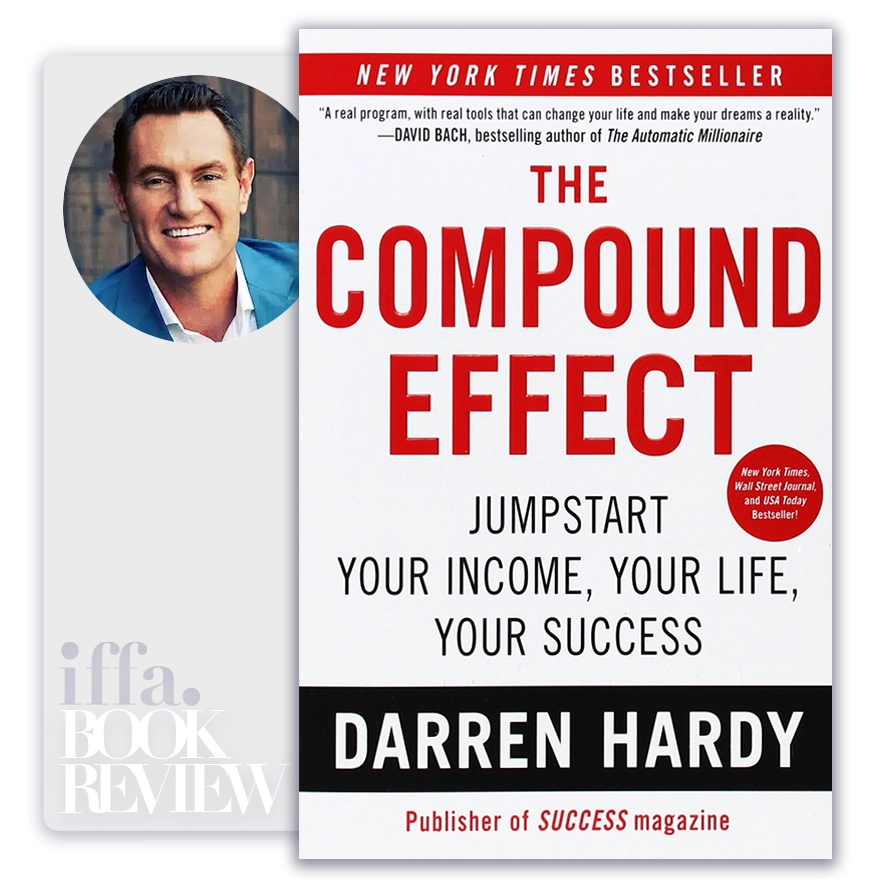
by Darren Hardy
Summary Overview:
The Compound Effect centers on a principle that quietly governs success, failure, growth, and decline: small decisions, repeated consistently, shape outcomes far more than dramatic actions. In leadership, business, and personal development, attention is often drawn to breakthroughs, turning points, and bold moves—while the everyday behaviors that actually determine long-term results remain underestimated.
The book reframes progress as a function of consistency, discipline, and time, rather than intensity or motivation. For executives, entrepreneurs, and long-term thinkers, this perspective is especially relevant in environments driven by quarterly pressure and short-term performance signals. By revealing how minor habits, choices, and standards compound—positively or negatively—over time, The Compound Effect provides a clear lens for understanding how sustained advantage is built quietly, predictably, and with far less drama than most expect.
About The Author
Darren Hardy is an entrepreneur, former publisher of SUCCESS magazine, and long-time student of high performance. His perspective is grounded in observational patterns from business, leadership, and personal development, translated into practical, repeatable principles.
Core Idea:
The core idea of The Compound Effect is that small, smart choices—when repeated consistently—create exponential results over time, while small negative choices compound just as powerfully in the opposite direction. The challenge is that compounding is invisible in the early stages, which leads many people to abandon good habits before results appear.
Hardy emphasizes that outcomes are rarely accidental. They are the delayed result of daily behaviors, environments, and standards people tolerate. By taking control of inputs—habits, routines, and influences—individuals and organizations can shape outputs predictably, even if progress feels slow at first.
Success is built daily through small choices that seem insignificant in the moment.
Key Concepts:
- Compounding Works in Both Directions
The same force that builds success also magnifies neglect and poor habits. Progress and decline follow the same rule—only the direction changes.
- Positive habits compound quietly
- Negative habits compound invisibly
- Neutral choices do not exist
Example:
Skipping a daily learning habit feels harmless, but over years it creates a widening knowledge gap.
- Responsibility Precedes Results
Hardy argues that progress begins with ownership. Externalizing blame interrupts compounding; taking responsibility restores control.
- 100% ownership enables change
- Excuses stall momentum
- Awareness creates leverage
Example:
Leaders who take responsibility for culture can change it; those who blame “people” cannot.
- Small Wins Build Momentum
Breakthroughs often follow long periods of unremarkable effort. Momentum builds when small wins reinforce belief.
- Small progress sustains motivation
- Consistency beats intensity
- Momentum compounds confidence
Example:
Improving a process by 1% weekly creates substantial gains over a year.
- Habits Are the Vehicle of Compounding
Daily routines automate behavior, turning discipline into default action. Habits remove reliance on motivation.
- Systems outperform willpower
- Environment shapes behavior
- Habits define identity
Example:
Professionals who schedule thinking time consistently outperform those who rely on “finding time.”
- Tracking Sharpens Awareness
Measurement brings reality into focus. What is tracked improves because attention follows measurement.
- Visibility drives correction
- Awareness precedes improvement
- Data reduces self-deception
Example:
Tracking time usage often reveals hidden inefficiencies that intuition misses.
- Environment Is a Silent Multiplier
People underestimate how surroundings influence behavior. Environment either supports or sabotages compounding.
- Proximity shapes choice
- Friction changes behavior
- Defaults determine outcomes
Example:
Organizations that design default behaviors outperform those that rely on policy reminders.
- Standards Set the Trajectory
Results reflect the standards people accept, not their stated goals. Raising standards subtly shifts long-term outcomes.
- Goals inspire, standards sustain
- Tolerance defines culture
- Drift begins with lowered standards
Example:
Teams that tolerate “good enough” rarely achieve excellence, regardless of ambition.
- Time Is the Ultimate Amplifier
Compounding requires patience. Early stages show little progress, which tempts abandonment.
- Delayed gratification is strategic
- Time rewards consistency
- Impatience kills compounding
Example:
Long-term investors benefit not from timing markets, but from time in the market.
- Influences Shape Identity
Inputs—people, information, and media—compound into mindset and behavior over time.
- Influence accumulates silently
- Associations affect standards
- Inputs determine thinking quality
Example:
Leaders who curate information sources make calmer, more deliberate decisions.
- Success Is Predictable, Not Lucky
Hardy reframes success as the predictable outcome of aligned habits, standards, and time.
- Luck follows preparation
- Systems create repeatability
- Discipline replaces randomness
Example:
Organizations with consistent execution outperform those reliant on heroic effort.
What you do consistently matters far more than what you do occasionally.
Executive Insights:
The Compound Effect reframes performance as a long-term system design problem, not a motivation challenge. Its core implication is that leaders often overinvest in strategy and underinvest in daily execution standards that actually produce results.
For executives and organizations, the book highlights that culture compounds the same way individuals do. Small behaviors—how meetings start, how feedback is given, how decisions are followed up—accumulate into performance advantage or decline.
Key strategic implications include:
- Small behaviors scale into culture
- Consistency outperforms intensity
- Standards determine trajectory
- Environment shapes execution
- Patience is a competitive advantage
Actionable Takeaways:
The book offers enduring principles applicable across roles and industries.
- Focus on small, repeatable actions
- Build systems that support consistency
- Measure what matters to expose reality
- Design environments that reduce friction
- Raise standards incrementally but firmly
- Protect long-term habits from short-term noise
- Trust compounding even when progress feels slow
Final Thoughts:
The Compound Effect is ultimately a book about quiet discipline in a noisy world. Darren Hardy reminds readers that extraordinary outcomes rarely come from extraordinary moments—they come from ordinary actions executed relentlessly.
The enduring insight is simple and demanding: the decisions that matter most are often the ones that feel too small to matter today. Leaders and individuals who understand this stop chasing breakthroughs and start building systems—allowing time and consistency to do the heavy lifting that shortcuts never can.
The ideas in this book go beyond theory, offering practical insights that shape real careers, leadership paths, and professional decisions. At IFFA, these principles are translated into executive courses, professional certifications, and curated learning events aligned with today’s industries and tomorrow’s demands. Discover more in our Courses.
Applied Programs

- Course Code : SBM-409
- Delivery : In-class / Virtual / Workshop
- Duration : 2-4 Days
- Venue: DUBAI HUB

- Course Code : PMA-613
- Delivery : In-class / Virtual / Workshop
- Duration : 3-5 Days
- Venue: DUBAI HUB
- Course Code : CIF-505
- Delivery : In-class / Virtual / Workshop
- Duration : 3-5 Days
- Venue: DUBAI HUB

- Course Code : CIF-512
- Delivery : In-class / Virtual / Workshop
- Duration : 2-4 Days
- Venue: DUBAI HUB
Related Books