The Executive Summary of
Blue Machine
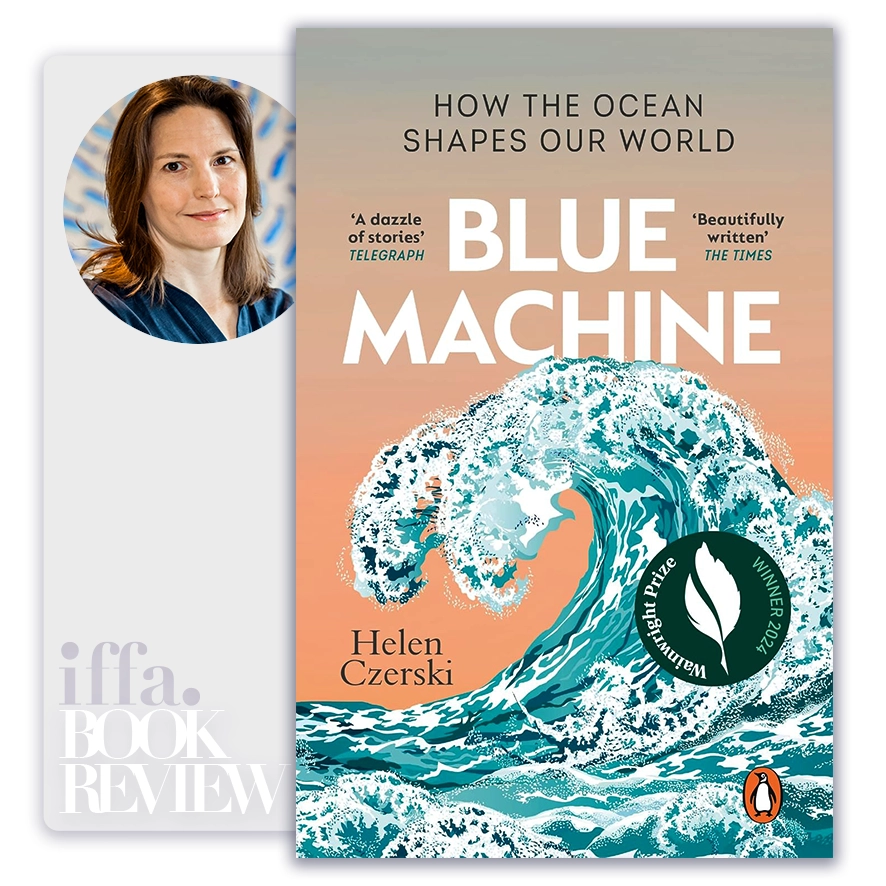
by Helen Czerski
Summary Overview:
Blue Machine reframes the ocean not as scenery or resource, but as the primary operating system of the planet. Helen Czerski reveals how the seas regulate climate, move energy, and connect living systems across vast distances and timescales. The book remains essential because many strategic decisions—about climate risk, energy transition, food security, and coastal development—are made with an incomplete understanding of how deeply ocean processes govern outcomes.
For CEOs, policymakers, investors, and institutional leaders, the book matters because the ocean is a systems problem hiding in plain sight. It absorbs heat, stores carbon, drives weather, and underwrites global trade—yet it is often excluded from strategic thinking until crisis strikes. Blue Machine shows that leadership blind spots around the ocean translate directly into misjudged risk, poor resilience planning, and short-term decisions that collide with long-term planetary constraints.
About The Author
Helen Czerski is a physicist and ocean scientist whose work focuses on air–sea interactions and the physical processes that govern the oceans. She combines academic research with public communication.
Her perspective is distinctive for its clarity: she explains complex planetary systems without abstraction, grounding science in observable mechanisms that directly shape human life and decision-making.
Core Idea:
The central thesis of Blue Machine is that the ocean is the planet’s main engine for moving energy, heat, and matter, making life on Earth possible in its current form. Czerski argues that climate, weather, ecosystems, and even human civilization depend on slow, powerful processes operating largely out of sight.
At a deeper level, the book presents a worldview in which human systems are nested inside ocean systems, not separate from them. Leaders who ignore this hierarchy misunderstand risk. The ocean is not a backdrop to climate change; it is the medium through which climate change unfolds.
The ocean is not part of the climate system; it is the system that makes climate stable at all.
Key Concepts:
- The Ocean as a Planetary Heat Engine
Czerski explains how the ocean absorbs, stores, and redistributes heat across the globe, stabilizing temperatures over centuries.
- Heat storage buffers climate volatility, delaying visible impacts.
- Delay is not protection; stored energy eventually reshapes systems.
- Circulation Creates Global Interdependence
Ocean currents connect distant regions into a single system.
- Local actions have remote consequences.
- No coastline operates in isolation.
- The Ocean Sets the Pace of Climate Change
Atmospheric change is fast; oceanic change is slow but decisive.
- Short-term calm can mask long-term shift.
- Strategy must match oceanic timescales.
- Life Depends on Physical Processes
Biology follows physics, not the other way around.
- Ecosystems rise and fall with circulation and chemistry.
- Disrupt physics, and biology follows.
- Carbon Is Managed by the Sea
The ocean absorbs vast amounts of carbon dioxide.
- Absorption alters chemistry, not just temperature.
- Ocean health is climate governance.
- Human Activity Alters Feedback Loops
Small interventions can destabilize large systems.
- Feedback loops amplify change.
- Linear thinking underestimates impact.
- Scale Mismatch Distorts Policy
Political and financial cycles are short; ocean processes are long.
- Short horizons create structural blindness.
- Governance must stretch beyond election cycles.
- The Ocean Is Not Resilient by Default
Czerski challenges the myth of infinite resilience.
- Recovery has limits and thresholds.
- Some changes are effectively irreversible.
- Measurement Shapes Understanding
What is not measured is not managed.
- Invisible systems invite neglect.
- Data gaps become strategic risks.
- The Ocean Demands Systems Thinking
Reductionism fails at planetary scale.
- Interconnected problems require integrated decisions.
- Fragmented responsibility weakens outcomes.
Long-term planetary outcomes are governed by processes that operate far beyond human timescales.
Executive Insights:
Blue Machine positions the ocean as critical infrastructure for civilization, not an environmental side issue. Leaders who fail to integrate ocean science into strategy misunderstand climate risk, supply-chain exposure, coastal assets, and food systems. The book makes clear that planetary stability depends on processes no single institution controls—but all depend upon.
At board and policy level, the implication is unavoidable: long-term value creation now requires ocean literacy. Climate adaptation, insurance, trade resilience, and sustainability strategy are incomplete without understanding how the ocean actually works.
- Climate risk is ocean-mediated risk.
- Delay does not reduce impact; it concentrates it.
- Long-term stability requires long-term governance.
- Environmental neglect becomes financial exposure.
- Systems thinking is no longer optional.
Actionable Takeaways:
Strategic leadership must account for planetary systems.
- Integrate ocean science into climate and risk strategy.
- Extend planning horizons beyond short-term cycles.
- Treat environmental data as strategic intelligence.
- Avoid decisions that assume infinite resilience.
- Align governance with long-timescale realities.
Final Thoughts:
Blue Machine is a corrective to human-centered overconfidence. Helen Czerski shows that the forces shaping our future are already in motion, operating patiently beneath the surface. The ocean does not negotiate, accelerate, or reverse on demand—it responds to physics, energy, and accumulated change.
For leaders entrusted with long-term stewardship, the book offers a sober insight: the most important systems shaping human outcomes are those we rarely see and seldom respect. Wisdom now lies in aligning ambition with planetary reality.
In the long run, leadership that ignores the ocean does not lead the future—it collides with it.
The ideas in this book go beyond theory, offering practical insights that shape real careers, leadership paths, and professional decisions. At IFFA, these principles are translated into executive courses, professional certifications, and curated learning events aligned with today’s industries and tomorrow’s demands. Discover more in our Courses.
Applied Programs

- Course Code : SBM-409
- Delivery : In-class / Virtual / Workshop
- Duration : 2-4 Days
- Venue: DUBAI HUB
- Course Code : PMA-613
- Delivery : In-class / Virtual / Workshop
- Duration : 3-5 Days
- Venue: DUBAI HUB
- Course Code : CIF-505
- Delivery : In-class / Virtual / Workshop
- Duration : 3-5 Days
- Venue: DUBAI HUB

- Course Code : CIF-512
- Delivery : In-class / Virtual / Workshop
- Duration : 2-4 Days
- Venue: DUBAI HUB
Related Books