The Executive Summary of
Think Again
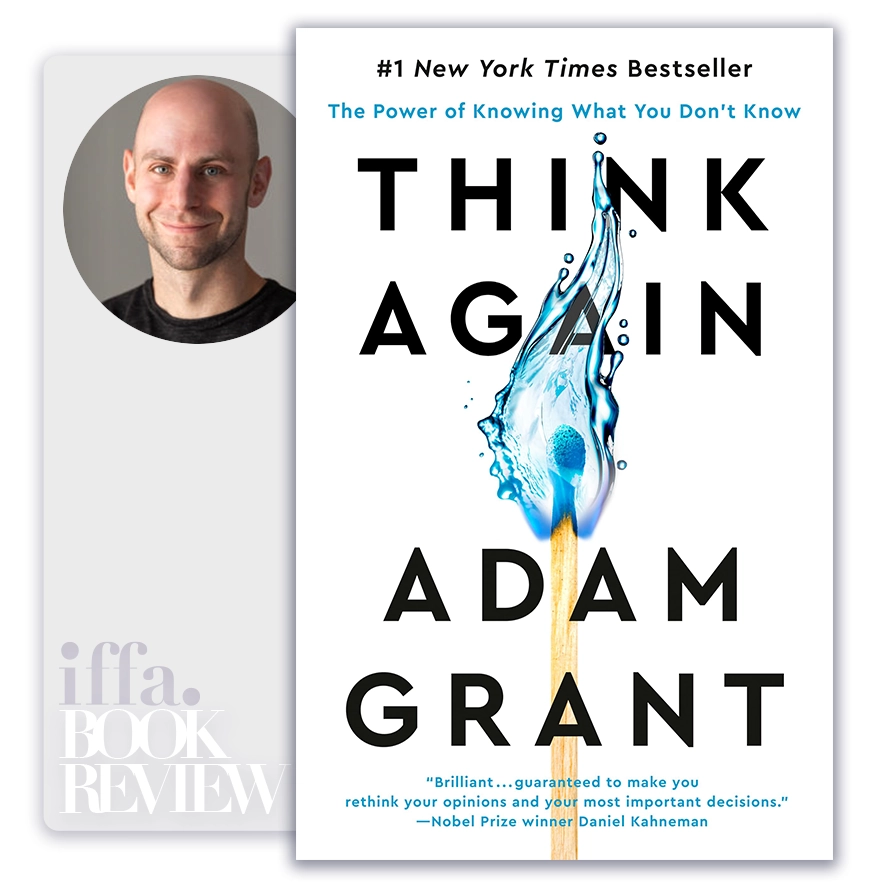
by Adam Grant
Summary Overview:
Think Again matters because modern success increasingly depends not on what we know, but on how quickly and thoughtfully we can revise what we think we know. In business, policy, and everyday life, people are rewarded for confidence, decisiveness, and consistency—yet these same traits often harden beliefs, suppress learning, and amplify error. Adam Grant argues that the greatest risk today is not ignorance, but the inability to unlearn.
As industries face disruption, societies polarize, and expertise is questioned, the skill of rethinking has become a strategic advantage. Leaders make decisions with incomplete information, professionals operate in shifting knowledge domains, and organizations must adapt faster than established playbooks allow. Think Again reframes intelligence as mental flexibility, showing that progress comes not from defending ideas, but from improving them.
For executives, educators, and institutions, the book offers a disciplined alternative to dogmatism. It explains why strong convictions can become liabilities, how humility improves judgment, and why cultures that reward curiosity outperform those that prize certainty.
About The Author
Adam Grant is a leading organizational psychologist and professor at the Wharton School, known for research on motivation, leadership, and learning. His work stands out for translating behavioral science into practical insight, grounded in evidence and real-world examples.
Core Idea:
The core idea of Think Again is that rethinking is a skill that can be learned, practiced, and institutionalized. Intelligence is not just the ability to reason, but the willingness to question assumptions, update beliefs, and change course when evidence demands it.
Grant distinguishes between three common mindsets that block learning—the preacher, the prosecutor, and the politician—and advocates for a scientist mindset, where ideas are treated as hypotheses to be tested rather than truths to be defended. In this mindset, confidence comes from curiosity, and strength comes from adaptability.
Intelligence is not defined by how much you know, but by how well you can revise what you think.
Key Concepts:
- The Cost of Overconfidence
People often confuse confidence with competence. Grant shows that overconfidence reduces learning by discouraging doubt and inquiry.
- Certainty closes the mind
- Confidence can outpace accuracy
- Doubt invites discovery
Example: Experts who acknowledge uncertainty often outperform those who project absolute certainty when conditions change.
- The Preacher, Prosecutor, and Politician Mindsets
These mindsets focus on persuading, winning, or pleasing rather than learning. They prioritize ego and identity over truth.
- Preachers defend beliefs
- Prosecutors attack opposing views
- Politicians seek approval
Example: Leaders who argue to win debates often miss signals that their strategy is failing.
- Thinking Like a Scientist
Grant advocates adopting a scientist mindset—forming hypotheses, testing assumptions, and revising conclusions based on evidence.
- Ideas are experiments
- Errors are data
- Updating beliefs is strength
Example: Teams that treat strategy as a series of experiments adapt faster than those committed to fixed plans.
- The Joy of Being Wrong
Being wrong is uncomfortable because it threatens identity. Grant reframes error as an opportunity to learn faster than others.
- Mistakes accelerate learning
- Psychological safety matters
- Growth requires vulnerability
Example: Organizations that normalize admitting mistakes identify problems earlier and recover faster.
- Confidence With Humility
The most effective thinkers balance confidence with openness. Grant calls this confident humility—strong opinions, loosely held.
- Conviction without rigidity
- Openness without indecision
- Balance improves judgment
Example: Leaders who invite challenge strengthen trust and decision quality.
- Why Debate Often Fails
Arguing facts rarely changes minds. People double down when their identity feels threatened.
- Facts don’t defeat beliefs
- Identity drives resistance
- Empathy opens dialogue
Example: Asking how someone formed a belief is more effective than telling them why it’s wrong.
- Creating Psychological Safety
Rethinking flourishes where people feel safe to question authority and challenge norms without punishment.
- Safety enables dissent
- Fear enforces conformity
- Openness improves outcomes
Example: Teams that reward questioning outperform those that reward agreement.
- The Problem With “Best Practices”
Best practices often freeze learning. What worked yesterday may fail tomorrow.
- Context changes outcomes
- Imitation limits innovation
- Adaptation beats replication
Example: Companies that copy competitors’ success without understanding context often replicate failure.
- Teaching People How to Think, Not What to Think
Grant emphasizes education that builds reasoning skills rather than memorization.
- Critical thinking outlasts facts
- Curiosity sustains learning
- Flexibility beats expertise
Example: Students trained to evaluate evidence adapt better to new information than those trained to recall answers.
- Institutionalizing Rethinking
Organizations can design systems that encourage updating beliefs through metrics, incentives, and norms.
- Reward learning, not stubbornness
- Track assumptions, not just outcomes
- Make revision visible
Example: Companies that review assumptions after decisions learn faster than those that review results alone.
The hallmark of good thinking is not conviction, but the courage to change your mind.
Executive Insights:
Think Again reframes leadership as belief management under uncertainty. The most dangerous leaders are not those who lack intelligence, but those who mistake consistency for wisdom. In fast-changing environments, the inability to rethink becomes a strategic liability.
For executives and boards, the book highlights that adaptability depends on culture. Incentives that reward being right discourage learning, while systems that reward updating beliefs improve resilience and innovation.
Key strategic implications include:
- Mental flexibility is a core leadership skill
- Confidence without humility increases risk
- Cultures that reward learning outperform those that reward certainty
- Psychological safety accelerates adaptation
- Rethinking is a competitive advantage
Actionable Takeaways:
The book offers general principles for individuals and organizations.
- Treat beliefs as hypotheses, not identities
- Encourage questioning and dissent
- Reward learning and revision, not stubborn consistency
- Ask better questions instead of winning arguments
- Build psychological safety into teams
- Track assumptions alongside decisions
- Practice confident humility daily
Final Thoughts:
Think Again is a timely reminder that progress depends on the courage to revise our thinking. Adam Grant shows that the smartest people and organizations are not those who avoid mistakes, but those who learn fastest from them.
The enduring insight of the book is clear: in a world that changes faster than our beliefs, the ability to rethink is not weakness—it is wisdom. Leaders who embrace this mindset move beyond defending yesterday’s answers and begin building tomorrow’s understanding.
The ideas in this book go beyond theory, offering practical insights that shape real careers, leadership paths, and professional decisions. At IFFA, these principles are translated into executive courses, professional certifications, and curated learning events aligned with today’s industries and tomorrow’s demands. Discover more in our Courses.
Applied Programs

- Course Code : SBM-409
- Delivery : In-class / Virtual / Workshop
- Duration : 2-4 Days
- Venue: DUBAI HUB

- Course Code : PMA-613
- Delivery : In-class / Virtual / Workshop
- Duration : 3-5 Days
- Venue: DUBAI HUB
- Course Code : CIF-505
- Delivery : In-class / Virtual / Workshop
- Duration : 3-5 Days
- Venue: DUBAI HUB

- Course Code : CIF-512
- Delivery : In-class / Virtual / Workshop
- Duration : 2-4 Days
- Venue: DUBAI HUB
Related Books