The Executive Summary of
The Upside of Irrationality
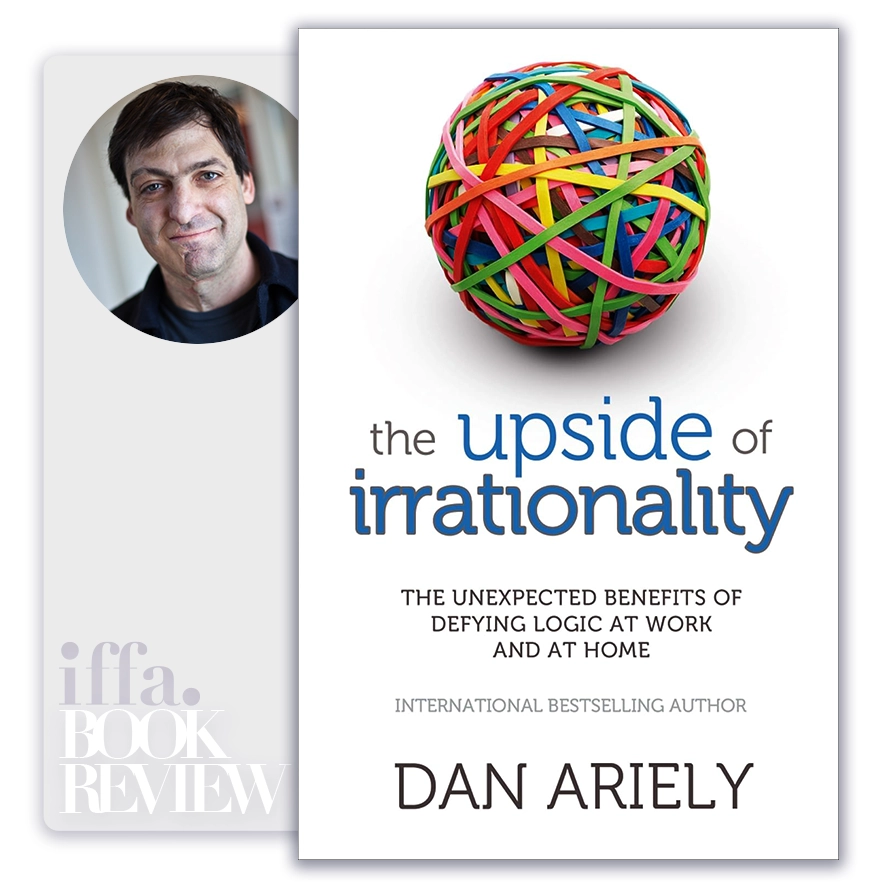
by Dan Ariely
Summary Overview:
Modern organizations are built on a powerful assumption: people behave rationally when incentives, metrics, and information are aligned. Yet leaders repeatedly encounter disengagement, burnout, poor motivation, ethical lapses, and puzzling decision failures—even in highly optimized systems. The Upside of Irrationality explains why. Dan Ariely demonstrates that human behavior systematically deviates from rational models, and that these deviations are not merely flaws—they can be sources of energy, creativity, persistence, and meaning.
This book matters because many management practices unintentionally crowd out motivation, undermine performance, and erode trust by ignoring how people actually think and feel. Ariely shows that when leaders understand irrationality, they can design work, incentives, and cultures that harness human nature instead of fighting it. For executives, HR leaders, founders, policymakers, and boards, The Upside of Irrationality offers a behavioral blueprint for building more motivated, ethical, and resilient organizations.
About The Author
Dan Ariely is a leading behavioral economist whose research bridges psychology and economics to explain real-world decision-making. Known for his experimental rigor and practical insights, Ariely has reshaped how leaders understand motivation, incentives, ethics, and performance.
His authority comes from uncovering predictable patterns of irrationality—patterns that recur across cultures, industries, and contexts. In this book, Ariely moves beyond identifying biases to show how irrational forces can be leveraged for better outcomes.
Core Idea:
At the heart of The Upside of Irrationality lies a counterintuitive but powerful thesis:
Irrational behavior is not always a liability—when understood and designed for, it can become a strategic advantage.
Ariely argues that people are motivated not only by money and logic, but by:
- Meaning
- Purpose
- Progress
- Fairness
- Effort justification
- Emotional engagement
People work harder, care more, and behave better when their irrational motivations are respected, not dismissed.
Key Concepts:
- Meaning Is a Stronger Motivator Than Money
One of the book’s most impactful insights is that meaning dramatically influences effort and persistence.
Ariely’s experiments show that:
- People work harder when their work is acknowledged
- Effort collapses when work feels pointless
- Small signals of meaning can outperform financial incentives
When work feels meaningless, even high pay cannot sustain motivation. Leaders who focus solely on compensation miss a powerful motivational lever.
- Progress Fuels Engagement
People are deeply motivated by a sense of forward movement.
Even small signs of progress:
- Increase persistence
- Reduce burnout
- Improve satisfaction
Momentum matters more than milestones. Effective leaders design work to make progress visible and frequent.
- Incentives Can Undermine Performance
Ariely demonstrates that misaligned incentives often backfire.
Examples include:
- Excessive bonuses narrowing focus
- Performance targets encouraging gaming
- Monetary rewards crowding out intrinsic motivation
Incentives don’t just motivate behavior—they redefine what people care about. This has profound implications for sales compensation, KPIs, and performance management.
- Effort Creates Value (IKEA Effect)
People value outcomes more when they invest effort in creating them.
Ariely shows that:
- Self-created products are valued more
- Participation increases ownership
- Effort strengthens attachment
Involvement builds commitment. This explains why co-creation, employee participation, and customer engagement drive loyalty.
- Emotional Investment Beats Rational Optimization
People are not optimization machines.
Ariely finds that:
- Emotional connection increases endurance
- Pride enhances quality
- Personal investment boosts resilience
People protect what they feel connected to—not what they are paid to maintain. Leadership that ignores emotion weakens performance.
- Burnout Is Often a Design Problem
Burnout is not just workload—it is meaninglessness plus lack of progress.
People can tolerate hard work—but not futile work. Organizations must design roles that connect effort to purpose.
- Fairness Is a Performance Variable
People react strongly to perceived unfairness.
Unfair systems:
- Trigger disengagement
- Encourage rule-breaking
- Destroy trust
Perceived fairness matters as much as absolute rewards. Leaders must manage how decisions feel, not just how they compute.
- People Are More Honest Than Expected—Until Systems Push Them
Ariely’s research shows that most people want to see themselves as honest.
However:
- Small justifications enable dishonesty
- Ambiguous rules invite rationalization
- Pressure erodes ethics
Ethical behavior depends on context more than character. Designing ethical systems is more effective than enforcing moral lectures.
- Creativity Thrives Under the Right Constraints
Total freedom does not maximize creativity.
Ariely shows that:
- Moderate constraints focus effort
- Clear goals with flexibility spark innovation
Constraints guide creativity; chaos stifles it. This informs innovation management and organizational design.
- Rational Models Miss Human Energy
Traditional management optimizes efficiency but ignores human energy.
Motivation is not a formula—it is an experience. Organizations that design for engagement outperform those that design for compliance.
Momentum matters more than milestones.
Executive Insights:
The Upside of Irrationality reframes leadership as behavioral architecture.
Strategic Implications for Executives and Boards:
- Meaning outperforms money over time
- Progress drives persistence
- Incentives must be psychologically sound
- Fairness affects productivity
- Ethics are system-dependent
- Motivation is emotional before it is rational
Organizations that rely only on rational models optimize efficiency while draining engagement.
Actionable Takeaways:
For Executives
- Design work with visible meaning
- Make progress measurable and frequent
- Audit incentives for unintended consequences
- Involve people in creation and decision-making
- Signal appreciation consistently
For HR & People Leaders
- Shift from motivation programs to system design
- Embed fairness and transparency
- Redesign performance metrics
- Address burnout through purpose, not perks
Final Thoughts:
The Upside of Irrationality delivers a liberating message for modern leaders: humans are not broken machines—they are meaning-seeking, emotionally driven contributors. Dan Ariely shows that when organizations stop fighting irrationality and start designing for it, they unlock energy, creativity, loyalty, and ethical behavior that no spreadsheet can predict.
For executives, the lesson is clear:
Stop trying to make people more rational.
Start building systems that make their humanity work for you.
In doing so, leaders don’t just improve performance—they build organizations where people care, contribute, and endure.
The ideas in this book go beyond theory, offering practical insights that shape real careers, leadership paths, and professional decisions. At IFFA, these principles are translated into executive courses, professional certifications, and curated learning events aligned with today’s industries and tomorrow’s demands. Discover more in our Courses.
Applied Programs

- Course Code : SBM-409
- Delivery : In-class / Virtual / Workshop
- Duration : 2-4 Days
- Venue: DUBAI HUB

- Course Code : PMA-613
- Delivery : In-class / Virtual / Workshop
- Duration : 3-5 Days
- Venue: DUBAI HUB
- Course Code : CIF-505
- Delivery : In-class / Virtual / Workshop
- Duration : 3-5 Days
- Venue: DUBAI HUB

- Course Code : CIF-512
- Delivery : In-class / Virtual / Workshop
- Duration : 2-4 Days
- Venue: DUBAI HUB
Related Books