The Executive Summary of
Dollars and Sense
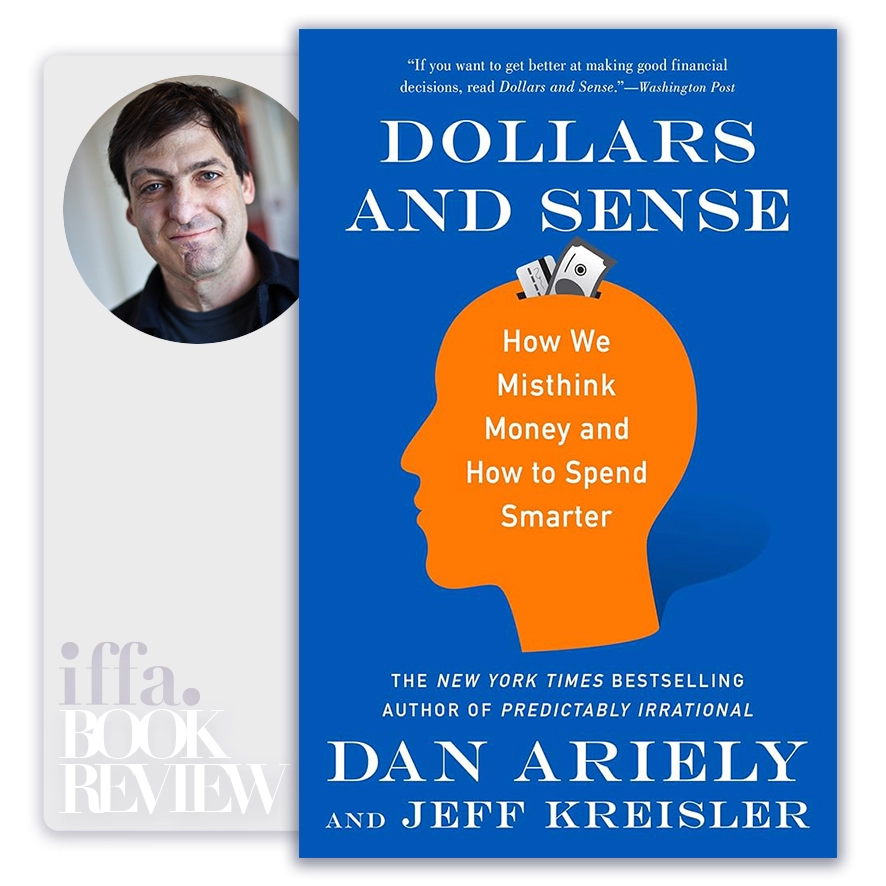
by Dan Ariely & Jeff Kreisler
Summary Overview:
Organizations lose enormous value not because leaders lack financial intelligence, but because they misunderstand how humans actually think about money. Dollars and Sense exposes a fundamental truth that traditional economics ignores: financial decisions are rarely rational, even among highly educated professionals. Instead, they are shaped by emotion, context, comparison, habit, and deeply ingrained psychological biases.
This book matters because executives, boards, policymakers, and investors make high-stakes financial decisions every day—pricing, compensation, incentives, investments, budgeting, acquisitions—while assuming people behave logically. Ariely and Kreisler show that this assumption is systematically wrong. For leaders, Dollars and Sense provides a behavioral lens for understanding financial behavior, helping organizations design better pricing models, incentive systems, customer experiences, and internal financial governance.
At an executive level, the book answers a critical question:
Why do smart people make consistently poor decisions about money—and how can leaders design systems that correct for this?
About The Authors
Dan Ariely is one of the world’s most influential behavioral economists, known for pioneering research on irrational decision-making. His work bridges economics, psychology, and real-world business behavior.
Jeff Kreisler is a behavioral science expert and communicator who specializes in translating complex research into practical insights for organizations and policymakers.
Together, they combine rigorous behavioral research with real-world financial application, making Dollars and Sense especially relevant for executive decision-making.
Core Idea:
At the heart of Dollars and Sense lies a clear and unsettling insight:
People don’t think in terms of absolute value when it comes to money—they think in terms of comparison, emotion, and context.
As a result:
- Prices feel “cheap” or “expensive” relative to reference points
- Spending feels different depending on how money is framed
- Financial pain and pleasure are psychologically inconsistent
- People behave differently with cash, credit, bonuses, or “found money”
Money is not just a number, it is a psychological experience.
Key Concepts:
- Relative Thinking Dominates Financial Decisions
Humans evaluate money relatively, not absolutely.
Examples include:
- Paying more for convenience after spending a lot
- Feeling a $100 loss differently depending on context
- Overreacting to small differences when comparisons are clear
People don’t ask “What is this worth?”—they ask “Is this better or worse than the alternative?” For leaders, this means pricing, compensation, and budgeting must consider reference points, not just value.
- Pain of Paying Is Inconsistent
Ariely explains that spending money creates psychological pain—but this pain varies.
Payment feels less painful when:
- It is delayed (credit cards, subscriptions)
- It is bundled
- It is framed as “free” or discounted
The easier it is to spend, the easier it is to overspend. This insight has implications for consumer finance, corporate expense policies, and subscription-based models.
- Mental Accounting Shapes Behavior
People separate money into mental categories:
- Salary vs. bonus
- Savings vs. windfalls
- Budgeted vs. “extra” money
Money is fungible in theory—but not in the human mind. Organizations can leverage this understanding in:
- Incentive design
- Expense control
- Consumer pricing and promotions
- “Free” Is a Financial Distortion
The concept of “free” triggers irrational behavior.
Ariely shows that:
- Free offers overwhelm rational evaluation
- Consumers overconsume when marginal cost feels zero
- “Free” creates emotional attachment
Zero is not a price—it is an emotional trigger. This explains freemium models, trial strategies, and promotional distortions.
- Cash Feels Different from Digital Money
People spend more when money is:
- Abstract
- Digital
- Invisible
The less tangible money feels, the less control people exercise. This has implications for:
- Corporate spending discipline
- Consumer debt
- Digital payment systems
- Price Anchors Distort Perceived Value
Initial prices shape future judgments—even when arbitrary.
The first number people see becomes the benchmark for everything that follows. Anchoring affects:
- Salary negotiations
- M&A valuations
- Retail pricing
- Contract renewals
- Incentives Often Backfire
Ariely warns that poorly designed incentives:
- Encourage gaming behavior
- Reduce intrinsic motivation
- Narrow thinking
Incentives don’t just motivate behavior—they redefine it. Leaders must design incentives with psychological realism, not economic theory alone.
- The Illusion of “Good Deals”
Discounts and promotions can create false savings.
Saving money feels good—even when spending more overall. This explains over-purchasing and consumer regret.
- Fairness Matters as Much as Price
People react strongly to perceived unfairness.
Unfair pricing:
- Triggers outrage
- Destroys trust
- Provokes retaliation
Customers and employees would rather pay more than feel cheated. Fairness is a financial variable, not a moral add-on.
- Financial Education Alone Is Not Enough
Knowledge does not eliminate bias.
Knowing about biases does not prevent them—designing around them does. Systems must be built to protect people from predictable mistakes.
The easier it is to spend, the easier it is to overspend.
Executive Insights:
Dollars and Sense reframes financial leadership as behavioral system design.
Strategic Implications for Executives and Boards:
- Financial decisions are emotional, not purely analytical
- Pricing is psychological, not just mathematical
- Incentives must account for human behavior
- Fairness affects profitability
- Design beats discipline
- Behavioral blind spots create systemic financial leakage
Organizations that assume rational behavior optimize spreadsheets and lose real-world outcomes.
Actionable Takeaways:
For Executives
- Design pricing with reference points in mind
- Audit incentive systems for unintended consequences
- Make spending visible and tangible
- Use framing deliberately and ethically
- Test financial decisions behaviorally, not just analytically
For Finance & Strategy Teams
- Incorporate behavioral economics into planning
- Challenge assumptions of rational choice
- Re-evaluate discounts and promotions
- Consider fairness as a strategic variable
Final Thoughts:
Dollars and Sense delivers a crucial reminder for modern leaders: money is never just money. It is wrapped in emotion, perception, habit, and social context. Dan Ariely and Jeff Kreisler show that financial failure is often not a matter of intelligence—but of ignoring human psychology.
For executives, the lesson is clear:
Stop assuming people think rationally about money.
Start designing systems that work with human behavior—not against it.
Those who understand the psychology of money don’t just avoid mistakes.
They build smarter organizations, fairer markets, and more sustainable financial outcomes.
The ideas in this book go beyond theory, offering practical insights that shape real careers, leadership paths, and professional decisions. At IFFA, these principles are translated into executive courses, professional certifications, and curated learning events aligned with today’s industries and tomorrow’s demands. Discover more in our Courses.
Applied Programs

- Course Code : SBM-409
- Delivery : In-class / Virtual / Workshop
- Duration : 2-4 Days
- Venue: DUBAI HUB

- Course Code : PMA-613
- Delivery : In-class / Virtual / Workshop
- Duration : 3-5 Days
- Venue: DUBAI HUB
- Course Code : CIF-505
- Delivery : In-class / Virtual / Workshop
- Duration : 3-5 Days
- Venue: DUBAI HUB

- Course Code : CIF-512
- Delivery : In-class / Virtual / Workshop
- Duration : 2-4 Days
- Venue: DUBAI HUB
Related Books