The Executive Summary of
Financial Freedom
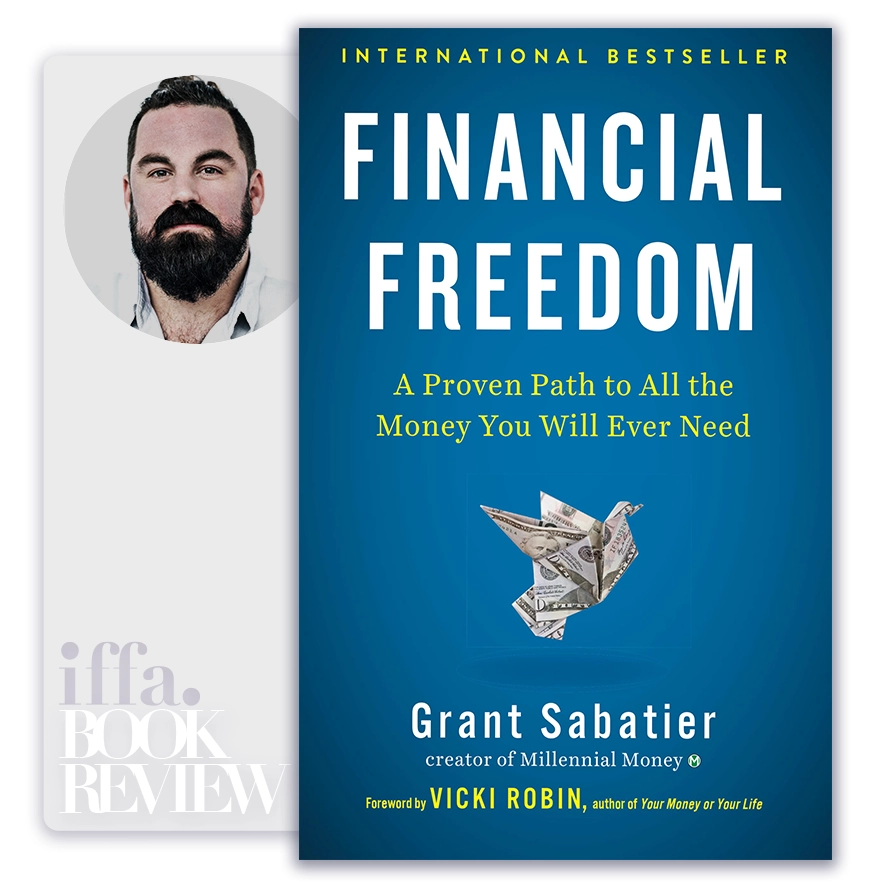
by Grant Sabatier
Summary Overview:
Financial Freedom matters because it reframes money not as an end in itself, but as a tool for autonomy and optionality. In an economy shaped by volatility, career fragility, and rising living costs, traditional assumptions—work longer, earn more, retire later—offer diminishing security. Sabatier’s work addresses a deeper question relevant to professionals at every level: how quickly and deliberately can individuals design lives resilient to uncertainty?
The book’s relevance extends beyond household budgeting. It speaks to the strategic tension between income dependence and time sovereignty—a tension increasingly visible across organizations and careers. As technology accelerates change and erodes predictability, the capacity to decouple lifestyle choices from a single paycheck becomes a form of risk management. Sabatier’s argument is that financial independence is not an extreme lifestyle choice; it is a defensive and strategic posture.
What distinguishes this book is its emphasis on agency and systems thinking. Rather than focusing solely on frugality or investment returns, it integrates income diversification, intentional spending, and mindset. For readers interested in long-term judgment and resilience, Financial Freedom functions as a blueprint for building leverage over time rather than relying on linear effort.
About The Author
Grant Sabatier is an entrepreneur who achieved financial independence at a young age through income diversification, investing, and intentional spending. His perspective is distinctive because it blends practical experimentation with strategic framing, translating personal experience into broadly applicable principles.
Core Idea:
The core idea of Financial Freedom is that financial independence is primarily about increasing options, not accumulating wealth. Money’s highest value lies in the freedom it provides to choose how time is spent, which risks are taken, and which paths are declined. Sabatier argues that independence is achievable not by extreme sacrifice, but by aligning income, spending, and investment decisions with a clear purpose.
The book presents financial freedom as a dynamic process, not a finish line. It emphasizes building systems—multiple income streams, flexible skills, and automated investing—that compound over time. By focusing on controllable inputs rather than market timing or prediction, Sabatier reframes wealth-building as a matter of structure and behavior.
Financial freedom is not about retiring early, it is about owning your time and decisions.
Key Concepts:
- Time as the Ultimate Asset
Sabatier places time at the center of financial decision-making. Money is valuable only insofar as it buys time, flexibility, and reduced stress. This reframing encourages decisions that protect future autonomy rather than maximize short-term income. - Income Growth Over Expense Minimization
While cost control matters, the book prioritizes scaling income as the fastest path to independence. Developing high-leverage skills, negotiating compensation, and creating side income often deliver greater returns than incremental frugality alone. - Multiple Income Streams Reduce Risk
Relying on a single paycheck concentrates risk. Sabatier advocates diversifying income—through freelancing, entrepreneurship, or investments—to smooth volatility and expand choice. This diversification mirrors portfolio thinking applied to careers. - Intentional Spending
The book distinguishes between mindless spending and values-based spending. Cutting costs indiscriminately can reduce quality of life; focusing spending on what truly matters increases satisfaction while freeing capital for investment. - Automation and Systems
Progress accelerates when decisions are automated. By setting up automatic saving and investing, individuals remove emotion and inconsistency from the process. Systems outperform willpower over long horizons. - Investing as a Long-Term Engine
Sabatier emphasizes simple, diversified investing strategies designed for consistency rather than outperformance. The focus is on time in the market, compounding, and discipline—not prediction or complexity. - Redefining Risk
Traditional definitions equate risk with market volatility. The book reframes risk as loss of flexibility and forced dependence. From this perspective, excessive lifestyle inflation and debt increase risk even in stable markets. - Career Optionality and Skill Portability
Financial freedom is strengthened by skills that transfer across industries and geographies. Sabatier highlights learning, adaptability, and personal branding as forms of capital that compound alongside financial assets. - Lifestyle Design Before Retirement
Rather than postponing life satisfaction, the book encourages incremental freedom—using financial progress to renegotiate work terms, reduce hours, or pursue meaningful projects well before “retirement.” - Psychological Shifts Around Money
Underlying all tactics is a mindset shift: moving from scarcity to intentional control. Money decisions improve when guided by clarity about goals, trade-offs, and acceptable risk.
Optionality compounds faster than income when aligned with intentional systems.
Executive Insights:
Financial Freedom presents independence as a strategic advantage, not a withdrawal from ambition. Individuals with financial optionality negotiate better, take smarter risks, and make values-aligned choices. In organizational contexts, this suggests a broader implication: people perform best when they are less economically trapped and more intrinsically motivated.
The book also highlights how personal balance sheets mirror organizational ones. Diversification, liquidity, and resilience matter as much at the individual level as they do for institutions. Leaders who understand these dynamics are better positioned to design careers—and teams—that endure disruption.
Key strategic implications include:
- Optionality is a form of risk management
- Income diversification improves resilience
- Systems outperform motivation over time
- Investing discipline matters more than optimization
- Autonomy enhances judgment and performance
Actionable Takeaways:
The book translates into clear, general principles applicable to a wide audience.
- Treat time and flexibility as primary decision criteria
- Focus on expanding income potential alongside controlling costs
- Build multiple income sources to reduce dependence
- Automate saving and investing to ensure consistency
- Invest simply and for the long term
- Align spending with values rather than habits
- Develop transferable skills to increase career resilience
- Use financial progress to create incremental freedom now
Final Thoughts:
Financial Freedom is ultimately about designing a life resilient to uncertainty. Its contribution lies not in promising easy wealth, but in offering a structured way to reclaim control over time, risk, and choice.
The enduring insight of the book is straightforward yet powerful: money is most valuable when it expands options rather than obligations. Readers who adopt this perspective shift from chasing income to building systems—and in doing so, gain a form of freedom that compounds long before any finish line is reached.
The ideas in this book go beyond theory, offering practical insights that shape real careers, leadership paths, and professional decisions. At IFFA, these principles are translated into executive courses, professional certifications, and curated learning events aligned with today’s industries and tomorrow’s demands. Discover more in our Courses.
Applied Programs

- Course Code : SBM-409
- Delivery : In-class / Virtual / Workshop
- Duration : 2-4 Days
- Venue: DUBAI HUB

- Course Code : PMA-613
- Delivery : In-class / Virtual / Workshop
- Duration : 3-5 Days
- Venue: DUBAI HUB
- Course Code : CIF-505
- Delivery : In-class / Virtual / Workshop
- Duration : 3-5 Days
- Venue: DUBAI HUB

- Course Code : CIF-512
- Delivery : In-class / Virtual / Workshop
- Duration : 2-4 Days
- Venue: DUBAI HUB
Related Books