
The Executive Summary of
When the Rivers Run Dry
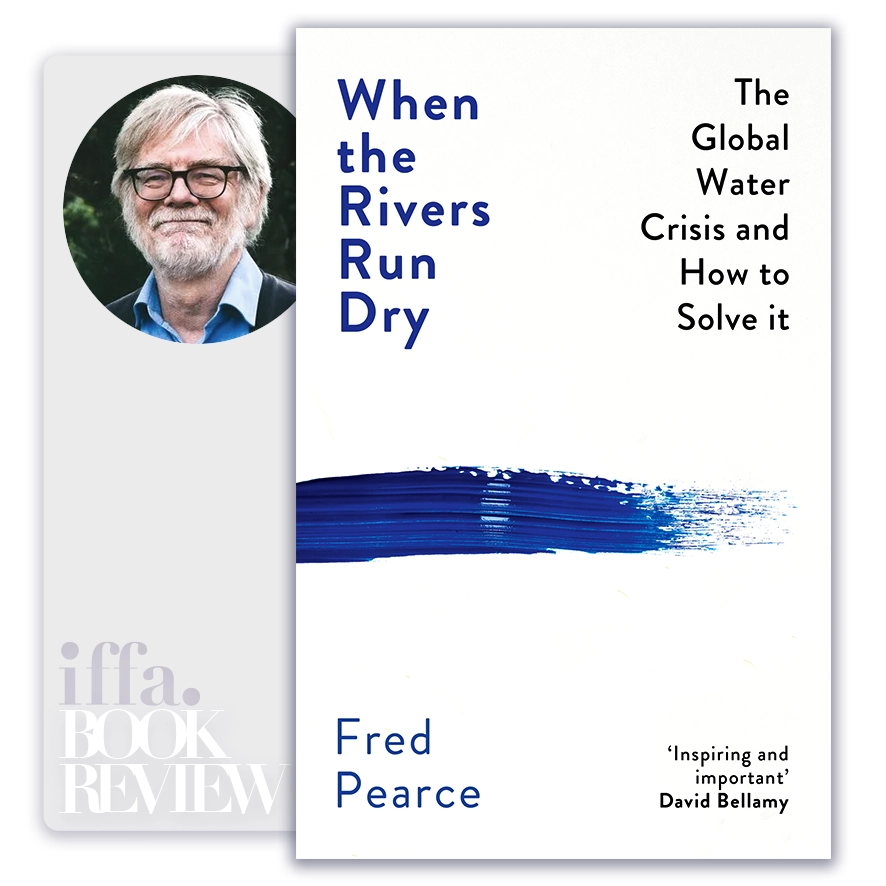
by Fred Pearce
Summary Overview:
When the Rivers Run Dry matters because it dismantles a dangerous misconception: that water scarcity is a future problem or an unavoidable natural condition. Fred Pearce shows, with unsettling clarity, that many of the world’s great rivers are already failing—not primarily because of climate change, but because of how societies extract, allocate, and govern water.
The book is deeply relevant in a world where economic growth, urban expansion, and agricultural demand continue to outpace the limits of freshwater systems. Rivers that once defined civilizations—the Colorado, the Yellow River, the Indus, the Murray-Darling—are now routinely depleted before reaching the sea. Pearce argues that this is not an accident of geography, but the predictable outcome of short-term planning, political pressure, and fragmented responsibility.
For leaders, planners, and institutions, the book reframes water scarcity as a systemic governance failure rather than a technical shortage. It shows that many water crises are self-inflicted and therefore preventable. Understanding this distinction is critical: problems created by policy and incentives can be corrected by policy and incentives—if leaders are willing to confront uncomfortable truths about growth, entitlement, and limits.
About The Author
Fred Pearce is an award-winning environmental journalist with decades of experience reporting on global resource and sustainability issues. His authority comes from combining on-the-ground investigation, scientific insight, and policy analysis, allowing him to translate complex water challenges into clear systemic narratives.
Core Idea:
The core idea of When the Rivers Run Dry is that water scarcity is largely a crisis of over-allocation and mismanagement, not absolute lack. Rivers run dry because societies promise more water than nature can provide, distribute it inefficiently, and fail to protect the ecological systems that sustain supply.
Pearce presents rivers as living systems with limits, not pipelines to be emptied. When those limits are ignored, ecosystems collapse, groundwater is mined to compensate, and communities become locked into unsustainable dependencies. The book argues that sustainable water futures require accepting physical limits, restoring ecological balance, and reforming governance structures that reward overuse.
Most rivers do not run dry because of drought, but because we have allocated every drop before it arrives.
Key Concepts:
- Over-Allocation as the Root Cause
Pearce shows that many rivers fail because governments allocate water rights far beyond sustainable yields. Once promises are made—to farmers, cities, or industries—they become politically difficult to reverse, even when rivers collapse. - Agriculture as the Dominant Driver
Irrigated agriculture consumes the vast majority of freshwater withdrawals. The book highlights how subsidies, crop choices, and inefficient irrigation systems drive river depletion more than domestic or industrial use. - Groundwater as a Hidden Crisis
When rivers fail, societies turn to groundwater. Pearce exposes how aquifers are being depleted worldwide as a silent substitute for surface water, creating delayed but severe consequences when reserves are exhausted. - Rivers Need Water to Survive
Environmental flows are often treated as optional. The book makes clear that rivers require water to maintain ecosystems, fisheries, water quality, and flood regulation. Ignoring this undermines long-term supply. - Dams and the Myth of Control
Large dams are presented as double-edged solutions. While they provide storage and stability, they also encourage over-allocation by creating the illusion of abundance and disrupting natural flow patterns. - Climate Change as a Stress Multiplier
Pearce does not dismiss climate change, but places it in context. Climate variability worsens water stress where systems are already overextended. Robust governance reduces vulnerability; weak governance magnifies risk. - Virtual Water and Global Trade
The book explores how water-scarce regions export water through crops and goods. This “virtual water” trade often deepens local scarcity while masking true water costs from consumers. - Urban Growth and Political Priorities
Cities often secure water at the expense of rural areas or ecosystems. Pearce highlights how political power shapes allocation decisions more than sustainability considerations. - Failure of Fragmented Governance
Water is typically managed by multiple agencies with conflicting mandates. This fragmentation prevents holistic solutions and allows overuse to persist unchecked. - Pathways to Recovery Exist
Despite its stark warnings, the book shows that rivers can recover when allocations are reduced, efficiencies improved, and ecosystems restored. The barrier is political will, not technical feasibility.
Water crises persist not because solutions are unknown, but because difficult choices are postponed.
Executive Insights:
When the Rivers Run Dry reframes water scarcity as a predictable outcome of governance choices. Its implications extend far beyond environmental policy into food security, energy systems, urban planning, and geopolitical stability.
For leaders, the book underscores that water risk accumulates quietly and then manifests suddenly. Over-allocation creates systemic fragility, where small shocks trigger cascading failures. Institutions that address water limits early gain resilience, while those that delay face rising costs and social conflict.
Key strategic implications include:
- Water scarcity is driven more by allocation than availability
- Agriculture reform is central to river recovery
- Groundwater depletion signals system failure, not resilience
- Environmental protection safeguards long-term supply
- Political courage determines water outcomes
Actionable Takeaways:
The book offers clear, general principles for water-related leadership and planning.
- Align water allocations with physical and ecological limits
- Treat groundwater depletion as a warning sign, not a solution
- Reform agricultural water use, pricing, and incentives
- Protect environmental flows as non-negotiable system needs
- Reduce dependence on large-scale control infrastructure alone
- Integrate water governance across sectors and agencies
- Address water scarcity proactively rather than reactively
Final Thoughts:
When the Rivers Run Dry is both a warning and a call to responsibility. Its power lies in showing that water crises are not mysterious or inevitable—they are the cumulative result of choices made over decades.
The enduring insight of the book is stark but empowering: rivers fail when societies refuse to live within limits. Leaders who acknowledge those limits, reform incentives, and restore balance can still reverse decline and secure water for future generations. Those who do not will discover that scarcity, once entrenched, is far harder to escape than to prevent.
The ideas in this book go beyond theory, offering practical insights that shape real careers, leadership paths, and professional decisions. At IFFA, these principles are translated into executive courses, professional certifications, and curated learning events aligned with today’s industries and tomorrow’s demands. Discover more in our Courses.
Applied Programs

- Course Code : SBM-409
- Delivery : In-class / Virtual / Workshop
- Duration : 2-4 Days
- Venue: DUBAI HUB

- Course Code : PMA-613
- Delivery : In-class / Virtual / Workshop
- Duration : 3-5 Days
- Venue: DUBAI HUB
- Course Code : CIF-505
- Delivery : In-class / Virtual / Workshop
- Duration : 3-5 Days
- Venue: DUBAI HUB

- Course Code : CIF-512
- Delivery : In-class / Virtual / Workshop
- Duration : 2-4 Days
- Venue: DUBAI HUB
Related Books