
The Executive Summary of
Blue Covenant
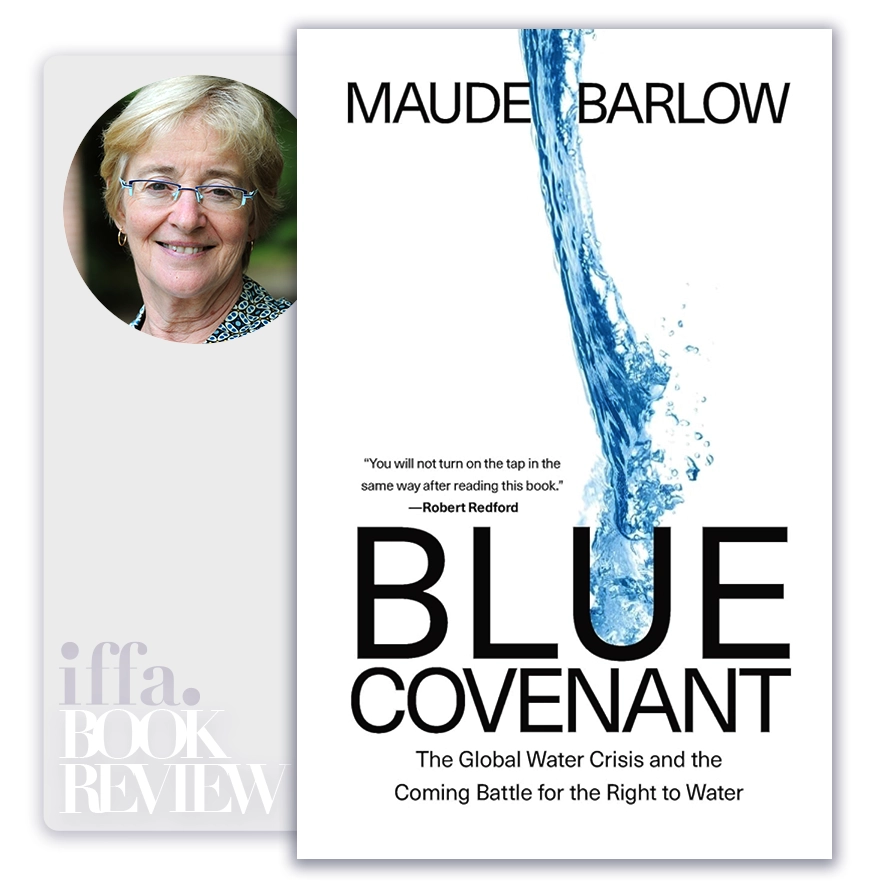
by Maude Barlow
Summary Overview:
Blue Covenant matters because it confronts one of the most fundamental and unresolved questions of our time: who controls water, and on what terms. As freshwater systems come under increasing stress from overuse, pollution, privatization, and climate change, decisions about water are no longer technical or local—they are ethical, political, and civilizational.
The book is especially relevant as water scarcity intersects with inequality, public health, food systems, and geopolitical tension. Around the world, rivers are depleted, aquifers exhausted, and communities displaced—not only by natural forces, but by governance choices that treat water as an economic commodity rather than a shared necessity. Barlow challenges this trajectory directly, arguing that the way societies define water determines whether it becomes a source of cooperation or conflict.
For leaders, policymakers, and institutions, Blue Covenant functions as a moral and strategic intervention. It asks readers to step back from efficiency debates and infrastructure plans and instead examine the underlying assumptions shaping water policy. The book insists that sustainable water futures depend not only on management systems, but on values, rights, and collective responsibility.
About The Author
Maude Barlow is an internationally recognized advocate for water justice and human rights, with decades of experience influencing global water policy. Her perspective is distinctive for combining activism, policy engagement, and ethical clarity, making water governance a question of public trust rather than technical ownership.
Core Idea:
The core idea of Blue Covenant is that water must be protected as a commons and a fundamental human right, not treated primarily as a commodity subject to market forces. Barlow argues that privatization, bulk exports, and corporate control of water systems undermine equity, ecological health, and democratic accountability.
The book frames water as a sacred trust between people, ecosystems, and future generations. When water is governed for profit or short-term gain, natural systems degrade and vulnerable communities bear the cost. Conversely, when water is recognized as a shared responsibility, societies are more likely to protect sources, ensure access, and manage scarcity with fairness and restraint.
The way societies value water determines whether it sustains life or fuels inequality and conflict.
Key Concepts:
- Water as a Human Right
Barlow strongly asserts that access to clean, safe water is a basic human right. When water is treated as a market good, access becomes contingent on ability to pay, undermining public health and social stability. Rights-based frameworks, she argues, provide a stronger foundation for equitable governance. - The Dangers of Water Privatization
The book critiques privatization models that transfer control of water services to private entities. While often justified by efficiency claims, such models can reduce transparency, increase costs, and weaken accountability. Water systems, Barlow contends, function best under public stewardship. - Water as a Commons, Not a Commodity
Barlow draws on the concept of the commons to argue that water belongs to everyone and no one. Commodification encourages extraction and overuse, while commons-based governance emphasizes protection, limits, and shared responsibility. - Ecological Integrity of Water Systems
Healthy rivers, lakes, and aquifers are essential to water security. The book stresses that diverting or polluting water beyond ecological thresholds destroys the systems that sustain supply. Environmental protection is therefore not optional, but foundational. - Climate Change and Water Injustice
Climate change exacerbates existing inequalities in water access. Floods and droughts disproportionately affect marginalized communities. Barlow highlights how climate adaptation strategies must prioritize justice, not just resilience for the powerful. - Corporate Influence and Trade Agreements
The book warns that international trade agreements and corporate lobbying increasingly shape water policy. These forces often prioritize commercial interests over public good, locking governments into long-term commitments that limit democratic control. - Community-Based Water Governance
Barlow emphasizes the role of local communities in protecting water sources. Grassroots stewardship, indigenous knowledge, and local accountability often outperform centralized, profit-driven models in preserving long-term water health. - Bottled Water and the Illusion of Choice
The rise of bottled water is presented as a symptom of declining trust in public systems. Rather than solving water problems, it diverts attention and resources away from maintaining shared infrastructure and protecting sources. - Global Water Conflicts and Cooperation
As water stress grows, competition over transboundary rivers and aquifers increases. Barlow argues that cooperation, shared governance, and legal frameworks are essential to prevent conflict and ensure collective security. - A Call for a Global Water Covenant
At the heart of the book is a call for a global covenant—an agreement that recognizes water as a shared heritage of humanity and commits nations to protect it for present and future generations.
Protecting water as a commons is a prerequisite for justice, resilience, and long-term security.
Executive Insights:
Blue Covenant reframes water governance as a question of legitimacy and trust, not just efficiency. Its arguments suggest that systems prioritizing profit over access and ecological limits may deliver short-term gains but create long-term instability and public resistance.
For institutions and leaders, the book highlights that water mismanagement erodes social cohesion and undermines confidence in governance. Conversely, transparent, rights-based water systems strengthen resilience, public health, and long-term economic stability.
Key strategic implications include:
- Water governance reflects societal values and power structures
- Privatization can weaken accountability and equity
- Ecological protection underpins long-term water security
- Water justice is central to social and political stability
- Democratic oversight strengthens resilience and trust
Actionable Takeaways:
The book offers clear principles that can guide water-related decision-making.
- Recognize access to clean water as a non-negotiable public right
- Protect water sources as shared ecological systems
- Prioritize public and community stewardship over privatization
- Align water policies with long-term environmental limits
- Ensure transparency and accountability in water governance
- Resist policies that commodify water at the expense of equity
- Treat water security as a foundation of social stability
Final Thoughts:
Blue Covenant is a forceful reminder that water decisions are ultimately choices about values, power, and responsibility. Its strength lies in articulating a clear ethical stance at a time when water is increasingly framed as an economic asset rather than a shared necessity.
The enduring message of the book is uncompromising yet pragmatic: societies that fail to protect water as a commons place both people and ecosystems at risk. Leaders who embrace stewardship over exploitation—and rights over profit—are more likely to secure water’s role as a source of life, dignity, and cooperation for generations to come.
The ideas in this book go beyond theory, offering practical insights that shape real careers, leadership paths, and professional decisions. At IFFA, these principles are translated into executive courses, professional certifications, and curated learning events aligned with today’s industries and tomorrow’s demands. Discover more in our Courses.
Applied Programs

- Course Code : SBM-409
- Delivery : In-class / Virtual / Workshop
- Duration : 2-4 Days
- Venue: DUBAI HUB

- Course Code : PMA-613
- Delivery : In-class / Virtual / Workshop
- Duration : 3-5 Days
- Venue: DUBAI HUB
- Course Code : CIF-505
- Delivery : In-class / Virtual / Workshop
- Duration : 3-5 Days
- Venue: DUBAI HUB

- Course Code : CIF-512
- Delivery : In-class / Virtual / Workshop
- Duration : 2-4 Days
- Venue: DUBAI HUB
Related Books