
The Executive Summary of
Let There Be Water
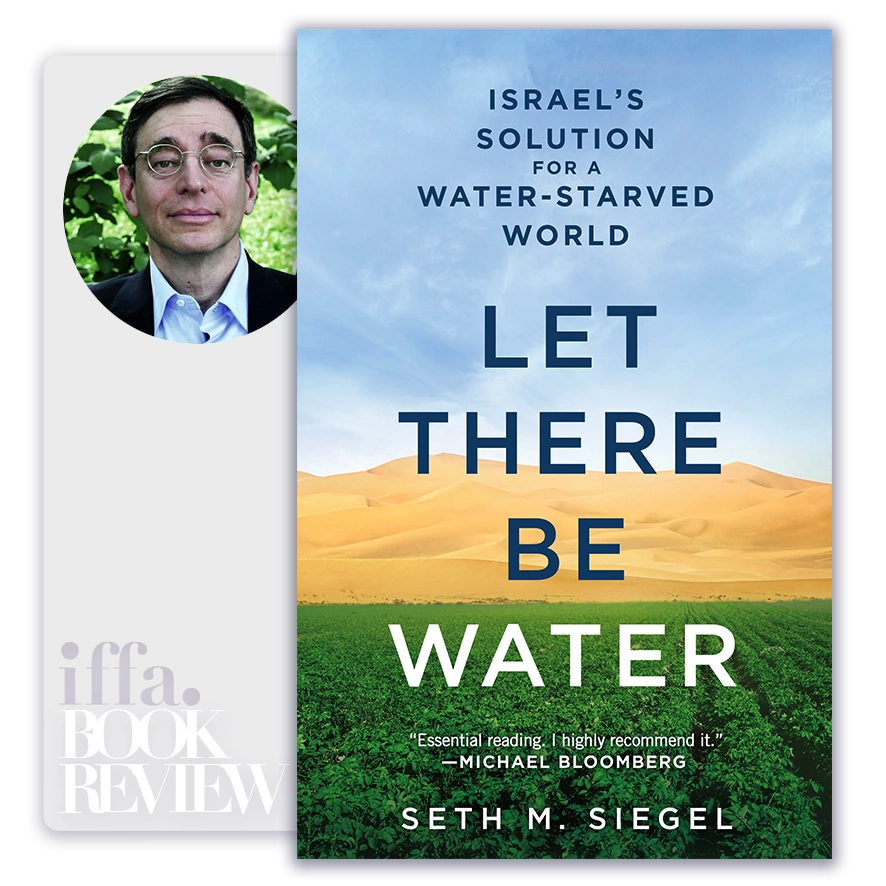
by Seth M. Siegel
Summary Overview:
Let There Be Water matters because water scarcity is no longer a distant environmental concern—it is a strategic constraint shaping economic growth, national security, food systems, and social stability. As populations rise, climates shift, and infrastructure ages, water stress increasingly defines which regions can sustain development and which face chronic crisis. Yet most countries continue to treat water as a political liability rather than a managed asset.
Seth M. Siegel’s book offers a rare and practical counterexample. By examining how Israel transformed itself from a water-poor nation into a global leader in water security, the book reframes scarcity as a governance and management challenge, not a fatal condition. For policymakers, executives, investors, and infrastructure leaders, Let There Be Water demonstrates that disciplined policy, technology deployment, and cultural alignment can overcome even severe natural constraints—if institutions choose to act decisively.
About The Author
Seth M. Siegel is a senior fellow at the Center for Advanced Energy Studies and a leading voice on global water policy. His perspective is distinctive for connecting water technology, public policy, and economic governance, translating technical success into lessons relevant for national and corporate leadership.
Core Idea:
The core idea of Let There Be Water is that water scarcity is solvable when nations treat water as strategic infrastructure governed by pricing, technology, accountability, and long-term planning. Israel’s success did not come from abundance or luck, but from a deliberate shift in mindset: water was recognized as too important to be left to short-term politics or unmanaged consumption.
Siegel argues that water crises persist not because solutions are unknown, but because political will, institutional discipline, and public alignment are missing. By integrating desalination, wastewater reuse, agricultural efficiency, and transparent pricing into a coherent national strategy, Israel built resilience into its water system. The lesson is not that every country should copy Israel’s methods exactly, but that systemic coordination beats fragmented intervention.
Water scarcity is not a natural disaster; it is a management failure.
Key Concepts:
- Water as National Security Infrastructure
Israel treats water as critical infrastructure on par with energy and defense. This framing elevates water policy above partisan debate and ensures long-term investment continuity. - Pricing Water to Reflect Value
Water is priced transparently to encourage conservation and fund infrastructure. Subsidies are targeted, not universal, preventing waste while protecting vulnerable users. - Desalination at Scale
Israel invested early in large-scale desalination, turning seawater into a reliable supply source. The book emphasizes that scale, regulation, and long-term contracts—not technology alone—made desalination economically viable. - Wastewater Reuse as a Resource
A majority of Israel’s wastewater is treated and reused, primarily for agriculture. This reframes wastewater from liability to asset, dramatically expanding usable supply. - Agricultural Efficiency Over Expansion
Rather than increasing water allocation, Israel focused on doing more with less through drip irrigation, crop selection, and data-driven farming—maintaining productivity while reducing consumption. - Centralized Governance With Clear Accountability
Water management is coordinated through national institutions with clear authority. Fragmentation is minimized, reducing conflict between regions, sectors, and agencies. - Technology as Enabler, Not Savior
Siegel stresses that technology works only when embedded in sound policy and economics. Innovation without governance produces pilots, not systems. - Public Education and Cultural Alignment
Citizens understand water scarcity and their role in conservation. Behavioral alignment reinforces policy, making compliance normal rather than coerced. - Resilience Through Redundancy
Israel designs water systems with redundancy—multiple sources, storage, and contingency planning—reducing vulnerability to drought or system failure. - Exporting Water Knowledge as Strategy
Water expertise has become a diplomatic and economic asset. Israel exports technology and know-how, turning domestic necessity into global influence.
When water is governed as infrastructure, scarcity becomes a strategic problem with solutions.
Executive Insights:
Let There Be Water reframes water from an environmental issue into a governance and investment discipline. Its central insight is that scarcity becomes catastrophic only when institutions fail to plan, price, and coordinate. Where governance is strong, even arid nations can sustain growth.
For leaders and investors, the book highlights that water risk increasingly affects supply chains, real estate, energy systems, food security, and geopolitical stability. Ignoring water economics exposes organizations and nations to systemic shocks. Conversely, proactive water management creates resilience, cost stability, and long-term competitiveness.
The book also carries a warning: delaying action increases cost exponentially. Infrastructure, pricing reform, and public trust take time to build, but collapse happens quickly when systems are overstressed.
Key strategic implications include:
- Water security underpins economic and social stability
- Governance matters more than hydrology
- Pricing enables conservation and investment
- Integrated systems outperform isolated projects
- Resilience requires redundancy and foresight
Actionable Takeaways:
Let There Be Water is ultimately a book about choice under constraint. Seth M. Siegel shows that water scarcity does not doom societies to decline—it tests whether leaders can govern rationally, invest patiently, and align public behavior with long-term necessity.
The enduring insight of the book is clear and transferable: nations and organizations that manage water intelligently secure not only their supply, but their future. Those that delay, deny, or politicize water management will discover that scarcity punishes indecision far more harshly than nature ever could.
Final Thoughts:
The Diary of a CEO is not a blueprint for success—it is a reality check for those pursuing it. Steven Bartlett delivers a message many leaders need but rarely hear: achievement does not heal insecurity, money does not buy peace, and power does not remove fear.
What sustains leaders over time is not growth alone, but self-awareness, discipline, truth, and emotional responsibility.
In a world obsessed with becoming more, this book reminds us that who you are while becoming matters more than what you achieve.
The ideas in this book go beyond theory, offering practical insights that shape real careers, leadership paths, and professional decisions. At IFFA, these principles are translated into executive courses, professional certifications, and curated learning events aligned with today’s industries and tomorrow’s demands. Discover more in our Courses.
Applied Programs

- Course Code : SBM-409
- Delivery : In-class / Virtual / Workshop
- Duration : 2-4 Days
- Venue: DUBAI HUB

- Course Code : PMA-613
- Delivery : In-class / Virtual / Workshop
- Duration : 3-5 Days
- Venue: DUBAI HUB
- Course Code : CIF-505
- Delivery : In-class / Virtual / Workshop
- Duration : 3-5 Days
- Venue: DUBAI HUB

- Course Code : CIF-512
- Delivery : In-class / Virtual / Workshop
- Duration : 2-4 Days
- Venue: DUBAI HUB
Related Books