
The Executive Summary of
The Hard Thing About Hard Things
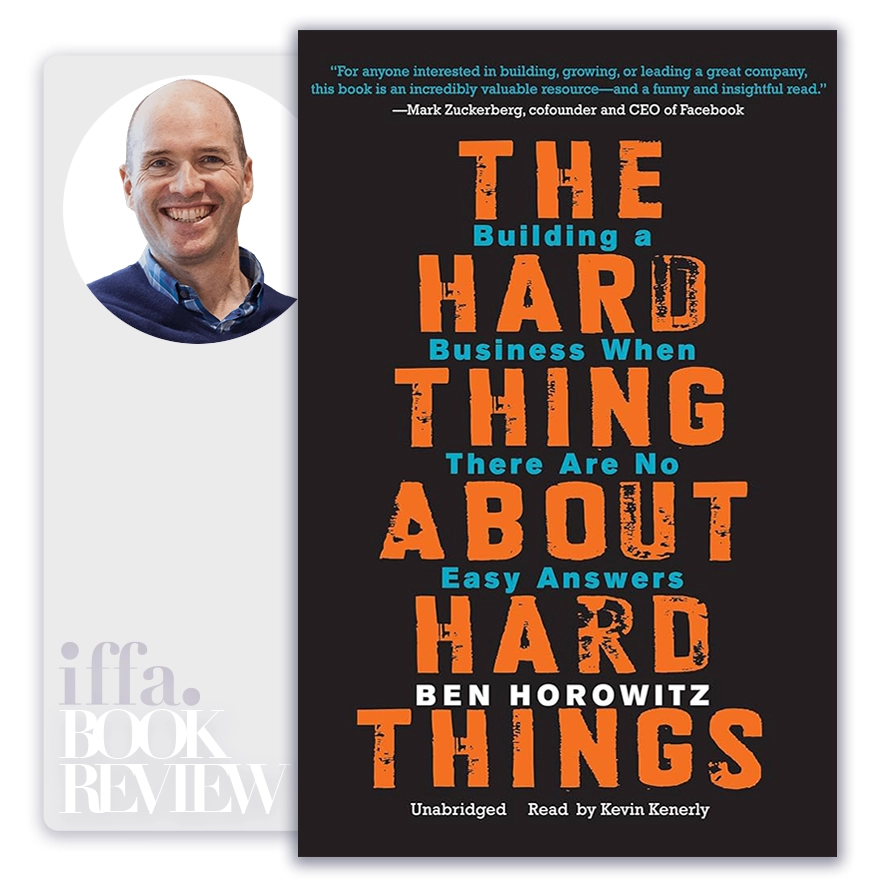
by Ben Horowitz
Summary Overview:
In leadership narratives filled with success stories, growth curves, and best practices, The Hard Thing About Hard Things addresses what most books avoid: the painful, lonely, and ambiguous moments when there are no good options—only hard ones. Ben Horowitz strips away theory and delivers a brutally honest account of what it actually feels like to run a company when things go wrong. For founders, CEOs, and senior executives, this book is a survival manual for leadership under extreme pressure.
This book matters because most real leadership challenges cannot be solved with frameworks or inspirational slogans. Layoffs, cash crises, culture breakdowns, executive firings, and existential threats require judgment, emotional resilience, and decisive action—not checklists. Horowitz provides practical wisdom forged in crisis, making this book essential for anyone responsible for keeping an organization alive when certainty disappears.
About The Author
Ben Horowitz is a co-founder of Andreessen Horowitz, one of Silicon Valley’s most influential venture capital firms, and a former CEO who led companies through near-collapse, hostile markets, and turnaround scenarios.
Horowitz’s credibility comes from lived experience at the edge of failure, not hindsight theory. His perspective is uniquely valuable because it reflects decisions made in real time, under pressure, with imperfect information.
Core Idea:
The central thesis of The Hard Thing About Hard Things is stark and realistic:
There are no formulas for the hardest leadership decisions—only responsibility, judgment, and resolve.
Horowitz argues that leadership is defined not during periods of growth and optimism, but during moments of fear, doubt, and existential threat. The “hard thing” is not knowing what to do—it is doing it anyway, while carrying the emotional weight alone.
The book reframes leadership as a psychological and moral challenge, not just a strategic one.
The hard thing isn’t setting a big goal, it’s surviving when everything goes wrong.
Key Concepts:
- There Are No Easy Answers
In crisis, leaders face choices where:
- All options are bad
- Data is incomplete
- Time is limited
- Consequences are severe
Horowitz emphasizes that seeking certainty or consensus in these moments is often impossible. Leadership means deciding anyway.
- CEO Psychology Matters More Than Strategy
A recurring theme is that the CEO’s mental state becomes the company’s emotional operating system. The CEO is always on stage—even when no one is watching.
When leaders panic:
- Teams lose confidence
- Execution deteriorates
- Culture fractures
When leaders endure:
- Stability returns
- Trust holds
- Recovery becomes possible
- Making Decisions in Wartime vs. Peacetime
Horowitz distinguishes between two leadership modes:
Peacetime CEO
- Focuses on growth, culture, and innovation
- Encourages experimentation
- Optimizes for long-term upside
Wartime CEO
- Prioritizes survival
- Makes unpopular decisions
- Demands clarity, speed, and discipline
Great leaders must switch modes when reality demands it, even if it feels uncomfortable.
- Hiring, Firing, and Building Executives
One of the hardest responsibilities of leadership is people decisions at the top.
Horowitz offers unfiltered guidance on:
- Hiring executives without perfect data
- Knowing when loyalty becomes liability
- Firing senior leaders decisively and humanely
Delaying tough personnel decisions often multiplies damage over time.
- Layoffs: The Hardest Leadership Moment
Horowitz treats layoffs with rare honesty. He rejects euphemisms and emphasizes clarity, dignity, and responsibility.
Key principles include:
- Be direct and truthful
- Take personal accountability
- Avoid false optimism
- Preserve trust with those who remain
The hard thing about layoffs is that there is no way to make them feel good—only ways to make them worse.
- Culture Is Tested in Crisis, Not Growth
Culture is not values written on walls—it is behavior under pressure.
Crisis reveals:
- What leaders truly believe
- Whether values are conditional
- Who can be trusted
Strong cultures survive because leaders model behavior consistently, even when it hurts.
- No One Prepares You for the Loneliness
Horowitz repeatedly emphasizes the isolation of leadership. Founders and CEOs cannot fully share fear or doubt without destabilizing the organization.
The burden of leadership includes:
- Carrying uncertainty alone
- Making irreversible decisions
- Living with consequences publicly
This emotional reality is rarely discussed—but unavoidable.
The CEO is always on stage, even when no one is watching.
Executive Insights:
The Hard Thing About Hard Things reframes leadership away from aspiration and toward endurance, clarity, and moral courage. It teaches leaders to respect reality, not fight it.
Strategic Implications for Leaders:
- Leadership is tested in crisis, not comfort
- Psychological resilience is a strategic asset
- Delaying hard decisions compounds damage
- Culture reveals itself under pressure
- Experience in failure matters more than theory
Actionable Takeaways:
Horowitz’s insights apply directly to founders, CEOs, boards, and senior executives navigating high-stakes environments.
Practical Actions for Leaders:
- Accept that some decisions have no good outcomes
- Act decisively with incomplete information
- Separate empathy from avoidance
- Communicate clearly during crisis
- Switch leadership style based on context
- Build emotional resilience as seriously as strategy
- Prepare for loneliness—it comes with responsibility
Final Thoughts:
The Hard Thing About Hard Things is not a guide to success—it is a guide to survival when success feels impossible. Its power lies in honesty: leadership is hard because reality is unforgiving.
When there are no easy answers, the leader’s job is not to feel confident—but to act with courage anyway.
The ideas in this book go beyond theory, offering practical insights that shape real careers, leadership paths, and professional decisions. At IFFA, these principles are translated into executive courses, professional certifications, and curated learning events aligned with today’s industries and tomorrow’s demands. Discover more in our Courses.
Applied Programs

- Course Code : SBM-409
- Delivery : In-class / Virtual / Workshop
- Duration : 2-4 Days
- Venue: DUBAI HUB

- Course Code : PMA-613
- Delivery : In-class / Virtual / Workshop
- Duration : 3-5 Days
- Venue: DUBAI HUB
- Course Code : CIF-505
- Delivery : In-class / Virtual / Workshop
- Duration : 3-5 Days
- Venue: DUBAI HUB

- Course Code : CIF-512
- Delivery : In-class / Virtual / Workshop
- Duration : 2-4 Days
- Venue: DUBAI HUB
Related Books