The Executive Summary of
Zero to One
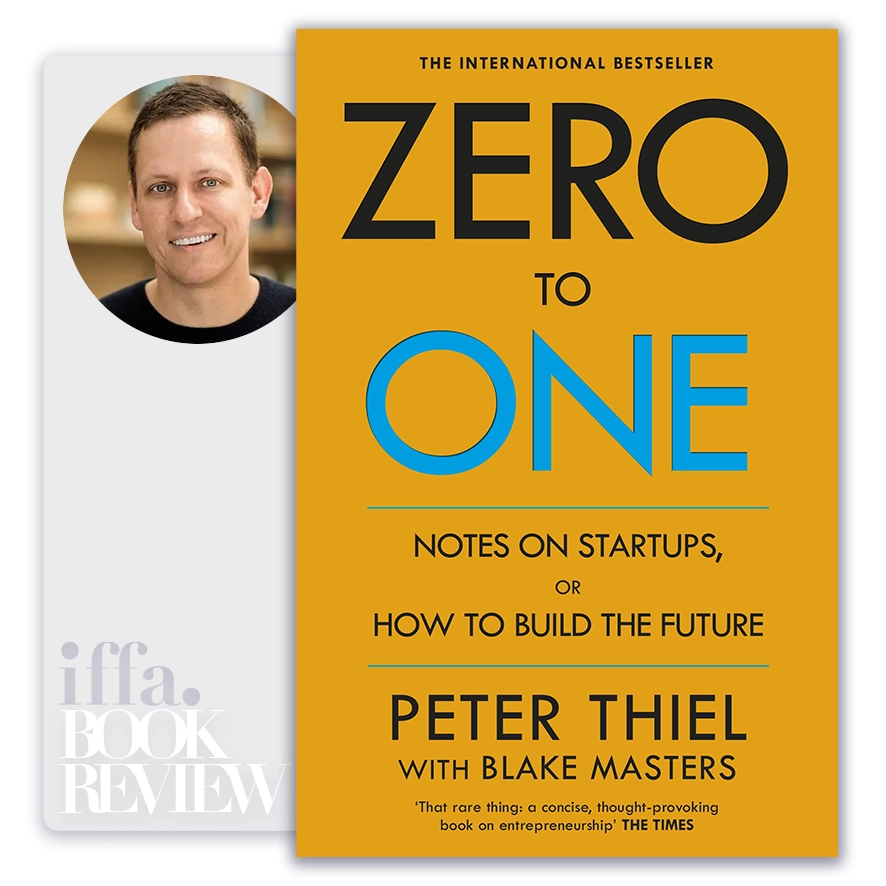
by Peter Thiel
Summary Overview:
In an era dominated by incremental improvement, rapid imitation, and crowded competition, Zero to One makes a contrarian yet clarifying claim: real progress comes from creating something fundamentally new—not from copying what already works. Peter Thiel argues that enduring value is built when companies move from zero to one—from nonexistence to originality—rather than from one to many through replication. For founders, executives, and investors, this book reframes innovation as unique value creation, not optimization.
Zero to One matters because many organizations confuse growth with innovation. They scale products, markets, and processes without building defensible differentiation. Thiel challenges leaders to ask harder questions about monopoly, technology, and long-term thinking—offering a strategic lens for building companies that last in a world of accelerating competition.
About The Author
Peter Thiel is a technology entrepreneur, venture capitalist, and co-founder of PayPal, with early investments in companies such as Facebook. His credibility stems from first-hand experience building and backing category-defining businesses.
Thiel’s perspective is distinctive because it blends philosophy, economics, and startup practice, challenging conventional Silicon Valley wisdom about competition, disruption, and success.
Core Idea:
The central thesis of Zero to One is bold and precise:
Progress happens when someone creates something new and unique—moving from zero to one—not by copying existing ideas.
Thiel distinguishes between:
- Horizontal progress (1 → n): globalization, scaling, copying what works
- Vertical progress (0 → 1): technology, invention, doing what has never been done
While both create growth, only vertical progress produces true innovation and durable advantage. The book reframes entrepreneurship as a search for secrets—important truths about the world that few others recognize.
The goal of a successful company is not to compete, but to escape competition.
Key Concepts:
- Competition Is for Losers
Contrary to mainstream thinking, Thiel argues that competition destroys profits and limits creativity. Firms in perfect competition are forced to differentiate marginally and operate on thin margins.
Monopolies, by contrast:
- Create unique value
- Earn superior profits
- Have resources to invest long term
- Monopoly as Value Creation
Thiel redefines monopoly not as exploitation, but as earning the right to be different. A monopoly exists when a company:
- Is the only one solving a specific problem
- Offers a product that is 10x better, not 10% better
- Builds defensible advantages
Healthy monopolies drive innovation by focusing on the future rather than fighting rivals.
- The Power of Secrets
Every great business is built around a secret—a truth that others overlook or reject.
Thiel challenges entrepreneurs to ask:
- What important truth do very few people agree with you on?
Finding secrets requires independent thinking, not consensus.
- Foundations Matter More Than Iteration
While many startups emphasize rapid iteration, Thiel stresses the importance of getting the foundation right from the start:
- Choosing the right market
- Building the right team
- Designing durable technology
Small early decisions compound massively over time.
- Technology vs. Globalization
Thiel warns that relying solely on globalization—spreading existing ideas to new markets—leads to stagnation. Technology creates new possibilities, while globalization merely extends the present.
Future progress depends on technological breakthroughs, not just broader adoption.
- The Importance of Long-Term Thinking
Great companies plan for decades, not quarters. Thiel criticizes short-termism driven by financial markets and trend chasing.
Long-term thinking enables:
- Deep technology development
- Strong culture and mission
- Durable competitive advantage
- Founders, Teams, and Culture
Thiel emphasizes that startups succeed because of exceptional teams with shared belief systems, not just ideas.
Key attributes include:
- Strong founder vision
- Mission-driven culture
- Alignment over incentives
Culture is strategy made human.
Brilliant thinking is rare, but courage is even rarer.
Executive Insights:
Zero to One reframes leadership away from best practices and toward original thinking and courageous choice. It challenges executives to pursue uniqueness, defensibility, and long-term value rather than incremental gains.
Strategic Implications for Leaders:
- Differentiation must be fundamental, not cosmetic
- Monopoly profits fund future innovation
- Independent thinking outperforms consensus
- Long-term vision beats short-term optimization
- Foundations determine scalability
Actionable Takeaways:
The principles of Zero to One apply across entrepreneurship, corporate innovation, strategy, and investment.
Practical Actions for Executives and Founders:
- Identify secrets others overlook
- Aim for 10x improvement, not incremental gains
- Choose markets where you can dominate
- Build defensible advantages early
- Design organizations for long-term thinking
- Avoid competition when you can create new value
Final Thoughts:
Zero to One is a provocative manifesto for original progress. Its core message is demanding yet empowering: the future belongs to those who create it, not those who copy it.
In a world moving from one to many, the greatest opportunities lie in going from zero to one.
The ideas in this book go beyond theory, offering practical insights that shape real careers, leadership paths, and professional decisions. At IFFA, these principles are translated into executive courses, professional certifications, and curated learning events aligned with today’s industries and tomorrow’s demands. Discover more in our Courses.
Applied Programs

- Course Code : SBM-409
- Delivery : In-class / Virtual / Workshop
- Duration : 2-4 Days
- Venue: DUBAI HUB

- Course Code : PMA-613
- Delivery : In-class / Virtual / Workshop
- Duration : 3-5 Days
- Venue: DUBAI HUB
- Course Code : CIF-505
- Delivery : In-class / Virtual / Workshop
- Duration : 3-5 Days
- Venue: DUBAI HUB

- Course Code : CIF-512
- Delivery : In-class / Virtual / Workshop
- Duration : 2-4 Days
- Venue: DUBAI HUB
Related Books