The Executive Summary of
Clear Thinking
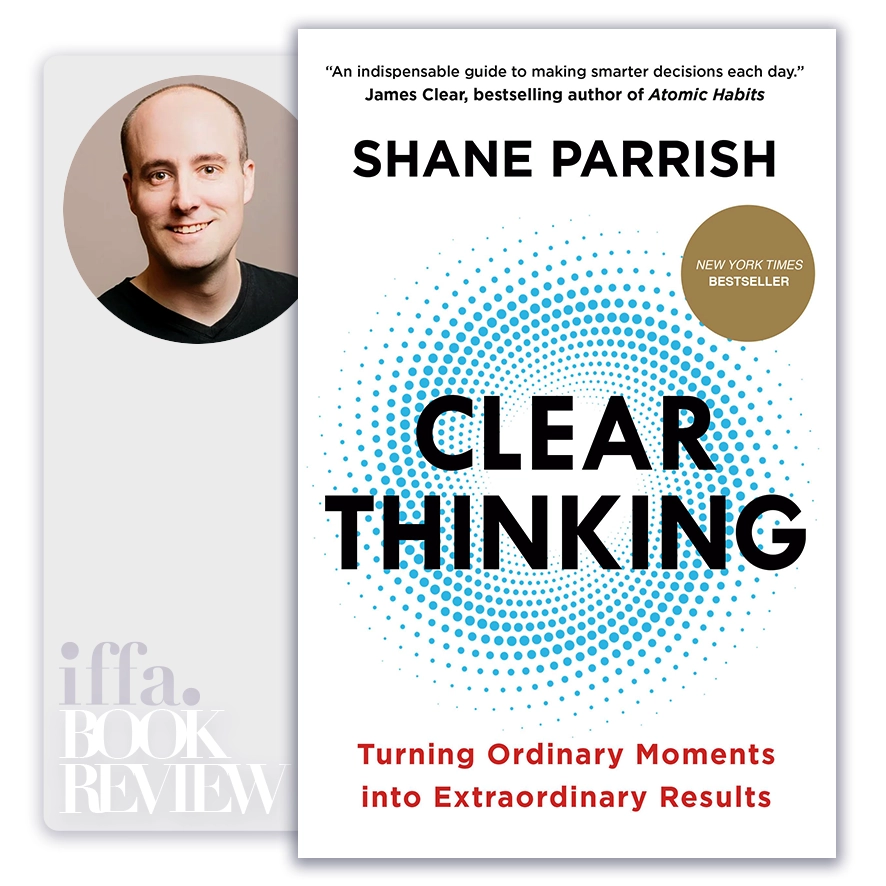
by Shane Parrish
Summary Overview:
In modern leadership, failure rarely comes from lack of intelligence, information, or ambition. It comes from poor judgment under pressure. Executives routinely make decisions while distracted, emotionally charged, rushed, politically constrained, or biased by incentives they barely notice. Clear Thinking addresses the core vulnerability behind these failures: our inability to think clearly when it matters most.
This book matters because today’s leaders operate in environments of constant noise, speed, and temptation—urgent emails, short-term metrics, social pressure, status games, and incentive traps. Shane Parrish argues that clear thinking is not about being smarter; it is about removing blindspots, avoiding predictable mistakes, and building decision-making systems that protect us from ourselves. For executives, board members, founders, investors, and senior leaders, Clear Thinking is a practical guide to winning the long game by mastering judgment, not tactics.
About The Author
Shane Parrish is the founder of Farnam Street, a widely respected platform focused on mental models, decision-making, and applied wisdom. His work draws from psychology, economics, military strategy, philosophy, and the thinking of exceptional performers across history.
Parrish’s credibility comes from synthesis and application. Rather than offering motivational advice, he focuses on how decisions actually fail in the real world—and how disciplined thinking systems can dramatically improve outcomes over time. His perspective resonates strongly with leaders responsible for high-stakes, irreversible decisions.
Core Idea:
At the heart of Clear Thinking lies a deceptively simple but powerful principle:
Clear thinking begins by removing blindspots before trying to optimize decisions.
Parrish argues that most people fail not because they choose poorly among good options, but because:
- They react emotionally
- They fall into incentive traps
- They optimize short-term gains
- They ignore second- and third-order effects
- They let ego, urgency, or social pressure hijack judgment
Clear thinking, therefore, is about subtracting stupidity before adding brilliance.
The biggest advantage in decision-making is not intelligence, it is avoiding obvious mistakes repeatedly.
Key Concepts:
- Remove Blindspots Before Seeking Advantage
Parrish emphasizes that blindspots—not lack of skill—cause most failures.
Common blindspots include:
- Emotional triggers
- Incentive misalignment
- Ego involvement
- Social pressure
- Short-term bias
You don’t need to be smarter than others—you need to see what others are blind to. Leadership maturity begins with recognizing where judgment predictably breaks down.
- Emotions Are the Enemy of Clear Judgment
Emotions are not inherently bad—but unexamined emotions distort decisions.
Parrish highlights how:
- Anger accelerates bad decisions
- Fear narrows options
- Excitement fuels overconfidence
The costliest decisions are made when emotions are strongest. Clear thinkers build buffers between stimulus and response, especially in high-stakes moments.
- Incentives Shape Behavior More Than Intentions
One of the book’s most practical lessons is the power of incentives.
Parrish shows that:
- People do what incentives reward
- Good intentions collapse under bad incentives
- Systems outperform individual virtue
If you don’t understand incentives, you don’t understand behavior—including your own. Leaders who ignore incentive design unintentionally create failure.
- Long-Term Thinking Is a Competitive Advantage
Short-term optimization dominates modern organizations—but destroys long-term value.
Parrish stresses:
- Compounding rewards patience
- Small advantages repeated over time dominate bold moves
- Avoiding ruin is more important than chasing upside
Survival comes before success. Avoiding catastrophic mistakes beats occasional brilliance. This principle is central to resilient leadership and capital preservation.
- Avoiding Stupidity Beats Seeking Brilliance
Parrish echoes a principle shared by great investors, military strategists, and executives:
“It’s not about being brilliant—it’s about not being stupid.”
Clear thinkers:
- Eliminate obvious errors
- Avoid predictable traps
- Focus on downside protection
Consistently avoiding bad decisions produces extraordinary results over time.
- Know Your Personal Triggers
Clear thinking requires self-knowledge.
Parrish encourages leaders to identify:
- Situations where ego dominates
- Triggers that provoke rash decisions
- Environments that degrade judgment
You cannot manage what you do not understand about yourself. Great leaders design personal rules and constraints to prevent self-sabotage.
- Create Distance from Immediate Pressure
Many bad decisions come from urgency.
Parrish emphasizes:
- Slowing down critical decisions
- Creating space for reflection
- Separating signal from noise
Speed is useful in execution—but dangerous in judgment. Clear thinkers know when not to decide.
- Second- and Third-Order Thinking
Clear thinking goes beyond first-order outcomes.
Leaders must ask:
- “And then what?”
- “What behaviors does this encourage?”
- “What happens if everyone does this?”
Most strategic failures come from ignoring second-order consequences. This separates tactical managers from strategic leaders.
- Build Decision-Making Systems, Not Willpower
Willpower is unreliable.
Parrish advocates for:
- Checklists
- Pre-commitments
- Decision rules
- Environmental design
Systems protect judgment when discipline fails. Elite performers rely on structure, not self-control.
- Play Games You Can Win
One of the book’s most powerful strategic ideas is game selection.
Parrish argues that:
- Most people lose because they play bad games
- Smart leaders avoid unwinnable or misaligned games
- Choosing where to compete matters more than how
The fastest way to win is to avoid games stacked against you. Strategic clarity begins with knowing when to walk away.
You don’t need to be smarter than others, you need to see what others are blind to.
Executive Insights:
Clear Thinking reframes leadership as judgment stewardship, not constant action.
Strategic Implications for Executives and Boards:
- Decision quality compounds over time
- Most losses come from preventable errors
- Incentive design determines outcomes
- Emotional regulation is a leadership skill
- Avoiding ruin matters more than maximizing upside
- Clear thinking must be systematized
Organizations that reward speed, confidence, and action without judgment scale error faster than success.
Actionable Takeaways:
For Executives
- Identify your decision blindspots
- Design rules for high-stakes decisions
- Separate emotion from judgment
- Think long-term by default
- Protect against catastrophic downside
- Avoid ego-driven commitments
For Boards and Senior Teams
- Ask “What could go wrong?” first
- Challenge assumptions systematically
- Avoid urgency-driven decisions
- Track decision quality over time
- Design governance to prevent overreach
Final Thoughts:
Clear Thinking delivers a rare and sobering message: success is less about doing more, and more about doing fewer things badly. Shane Parrish reminds leaders that the greatest threat to performance is not competition—it is self-inflicted error.
In a world obsessed with speed, scale, and bold moves, the leaders who win are those who:
- Slow down before acting
- Remove blindspots relentlessly
- Design systems to protect judgment
- Avoid predictable mistakes
- Play long-term games
Clear thinking is not a talent—it is a discipline.
And disciplined judgment is the ultimate competitive advantage.
The ideas in this book go beyond theory, offering practical insights that shape real careers, leadership paths, and professional decisions. At IFFA, these principles are translated into executive courses, professional certifications, and curated learning events aligned with today’s industries and tomorrow’s demands. Discover more in our Courses.
Applied Programs

- Course Code : SBM-409
- Delivery : In-class / Virtual / Workshop
- Duration : 2-4 Days
- Venue: DUBAI HUB

- Course Code : PMA-613
- Delivery : In-class / Virtual / Workshop
- Duration : 3-5 Days
- Venue: DUBAI HUB
- Course Code : CIF-505
- Delivery : In-class / Virtual / Workshop
- Duration : 3-5 Days
- Venue: DUBAI HUB

- Course Code : CIF-512
- Delivery : In-class / Virtual / Workshop
- Duration : 2-4 Days
- Venue: DUBAI HUB
Related Books