The Executive Summary of
Indistractable
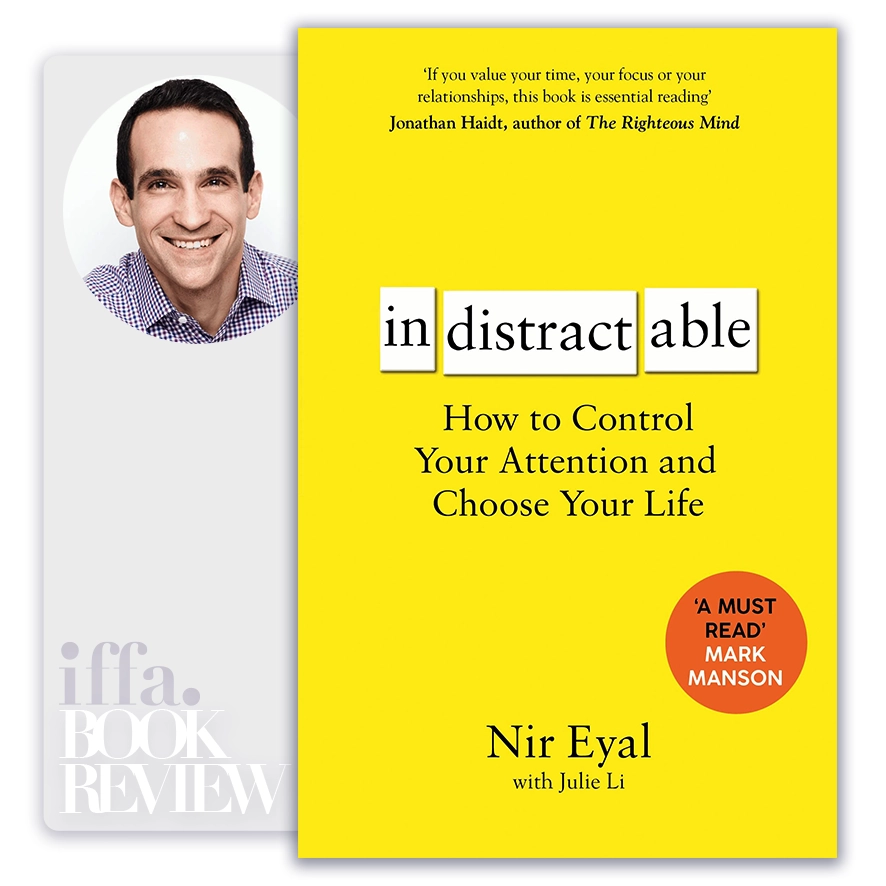
by Nir Eyal
Summary Overview:
Distraction is often framed as a technology problem—smartphones, social media, notifications, and endless digital noise. Indistractable challenges this comforting explanation. Nir Eyal argues that distraction is not caused by technology itself, but by our inability to manage internal discomfort. Tools do not hijack us; they exploit vulnerabilities we have not learned to regulate.
This book matters because distraction has become one of the most expensive hidden costs in modern organizations. Lost focus, fragmented attention, reactive work patterns, burnout, and shallow productivity erode performance at every level—from executives to frontline teams. In a knowledge economy where value is created by thinking, creativity, judgment, and sustained effort, the inability to control attention is a strategic liability. Indistractable reframes focus as a skill that can be trained, measured, and designed into systems—at both personal and organizational levels.
About The Author
Nir Eyal is a behavioral designer, researcher, and author specializing in habit formation, attention, and behavioral psychology. He previously wrote Hooked, a book explaining how technology companies design habit-forming products.
Eyal’s credibility in Indistractable comes from turning the lens inward. Rather than blaming technology creators, he applies the same behavioral science principles to help individuals and organizations regain control of their attention. His perspective is practical, evidence-based, and deeply relevant to modern work and leadership.
Core Idea:
At the heart of Indistractable lies a powerful and uncomfortable truth:
Distraction is not a time-management problem—it is a pain-management problem.
Eyal argues that all behavior is driven by the desire to escape discomfort. Distraction is simply a coping mechanism for:
- Boredom
- Stress
- Anxiety
- Loneliness
- Uncertainty
- Fatigue
External triggers (notifications, emails, pings) only succeed when they activate internal triggers—uncomfortable emotional states we are trying to avoid.
The opposite of distraction is not focus, it is traction.
Key Concepts:
- Redefining Distraction and Traction
Eyal reframes the conversation by introducing precise definitions:
- Traction – actions that align with what you intend to do
- Distraction – actions that divert you from your intentions
The same activity can be traction or distraction depending on intent. Scrolling social media may be traction if intentionally chosen for rest—but distraction if it undermines planned work.
Clarity of intent, not moral judgment, determines distraction.
- The Four-Step Model of Distraction
Eyal introduces a behavioral model explaining how distraction happens:
- Internal Trigger – uncomfortable emotion
- External Trigger – cue (notification, email, thought)
- Action – distraction behavior
- Variable Reward – relief, novelty, validation
Breaking distraction requires addressing all four stages, not just removing external triggers.
- Internal Triggers Are the Root Cause
Most productivity advice focuses on eliminating distractions. Eyal argues this fails because it ignores the root cause: internal discomfort.
People turn to distraction to escape:
- Fear of failure
- Fear of judgment
- Stress from overload
- Emotional fatigue
Until we learn to sit with discomfort, we will always seek escape. Mastery of attention begins with emotional awareness—not discipline.
- Time Is the Ultimate Attention Tool
Rather than relying on willpower, Eyal emphasizes timeboxing—planning what you will do with your time in advance.
Key principle:
- You cannot claim to be distracted if you did not decide what you intended to do
If it’s not on your calendar, it’s not a commitment. Timeboxing converts values into visible action and exposes hidden priorities.
- Making Traction Easier Than Distraction
Behavior follows the path of least resistance. Eyal suggests:
- Increasing friction for distractions
- Reducing friction for focused work
Examples:
- Logging out of distracting apps
- Using website blockers
- Creating dedicated focus environments
Self-control is easier when environment does the work. This applies equally to individuals and organizations.
- Hacking Back External Triggers
Eyal distinguishes between external triggers we control and those we do not.
Strategies include:
- Turning off non-essential notifications
- Scheduling email and messaging checks
- Reclaiming control of digital communication
If someone else controls your triggers, they control your time. Executives who remain perpetually reactive signal distraction as acceptable behavior across the organization.
- The Myth of Willpower
Willpower is unreliable, limited, and depleted under stress.
Eyal argues that sustainable focus comes from:
- Systems
- Agreements
- Pre-commitments
The most indistractable people rely least on willpower. Design beats discipline.
- Indistractable at Work: Fixing the Blame Culture
A major contribution of the book is its focus on organizational distraction.
Eyal highlights how companies unintentionally create distraction through:
- Always-on communication expectations
- Meeting overload
- Unclear priorities
- Lack of psychological safety
Distraction at work is often a symptom of fear—not laziness. Fear of missing out, fear of appearing unresponsive, and fear of failure drive reactive behavior.
- Indistractable Relationships and Leadership
Distraction erodes trust—not just productivity.
Eyal shows that:
- Being fully present builds credibility
- Attention signals respect
- Distraction signals disinterest
The most meaningful currency in relationships is attention. For leaders, attention is not just personal—it is cultural.
- Becoming Indistractable Is a Skill, Not a Trait
Eyal rejects the idea that some people are naturally disciplined.
Focus is:
- Learnable
- Trainable
- Measurable
Indistractability is a practice, not a personality.
The same activity can be traction or distraction depending on intent.
Executive Insights:
Indistractable reframes productivity as attention governance, not motivation.
Strategic Implications for Leaders and Executives:
- Distraction is systemic, not individual
- Always-on cultures destroy deep work
- Reactive behavior spreads hierarchically
- Psychological safety reduces distraction
- Attention is a leadership signal
- Focus is a competitive advantage
Organizations that reward immediacy over impact institutionalize distraction.
Actionable Takeaways:
For Executives and Leaders
- Model focused behavior
- Set clear response-time norms
- Reduce unnecessary meetings
- Reward outcomes, not availability
- Protect deep work time
- Address fear-driven reactivity
For Individuals
- Master internal triggers
- Timebox your day
- Remove frictionless distractions
- Use commitment devices
- Schedule values, not just tasks
- Stop blaming technology—start designing behavior
Final Thoughts:
Indistractable is not a rejection of technology—it is a reclamation of agency. Nir Eyal delivers a rare and empowering message: you are not powerless against distraction, but you are responsible for managing it.
In a world designed to capture attention, those who learn to control it gain more than productivity—they gain clarity, integrity, and freedom.
Focus is no longer a personal preference. It is a strategic skill—and indistractability is the new literacy of leadership.
The ideas in this book go beyond theory, offering practical insights that shape real careers, leadership paths, and professional decisions. At IFFA, these principles are translated into executive courses, professional certifications, and curated learning events aligned with today’s industries and tomorrow’s demands. Discover more in our Courses.
Applied Programs

- Course Code : SBM-409
- Delivery : In-class / Virtual / Workshop
- Duration : 2-4 Days
- Venue: DUBAI HUB

- Course Code : PMA-613
- Delivery : In-class / Virtual / Workshop
- Duration : 3-5 Days
- Venue: DUBAI HUB
- Course Code : CIF-505
- Delivery : In-class / Virtual / Workshop
- Duration : 3-5 Days
- Venue: DUBAI HUB

- Course Code : CIF-512
- Delivery : In-class / Virtual / Workshop
- Duration : 2-4 Days
- Venue: DUBAI HUB
Related Books