The Executive Summary of
Buyology
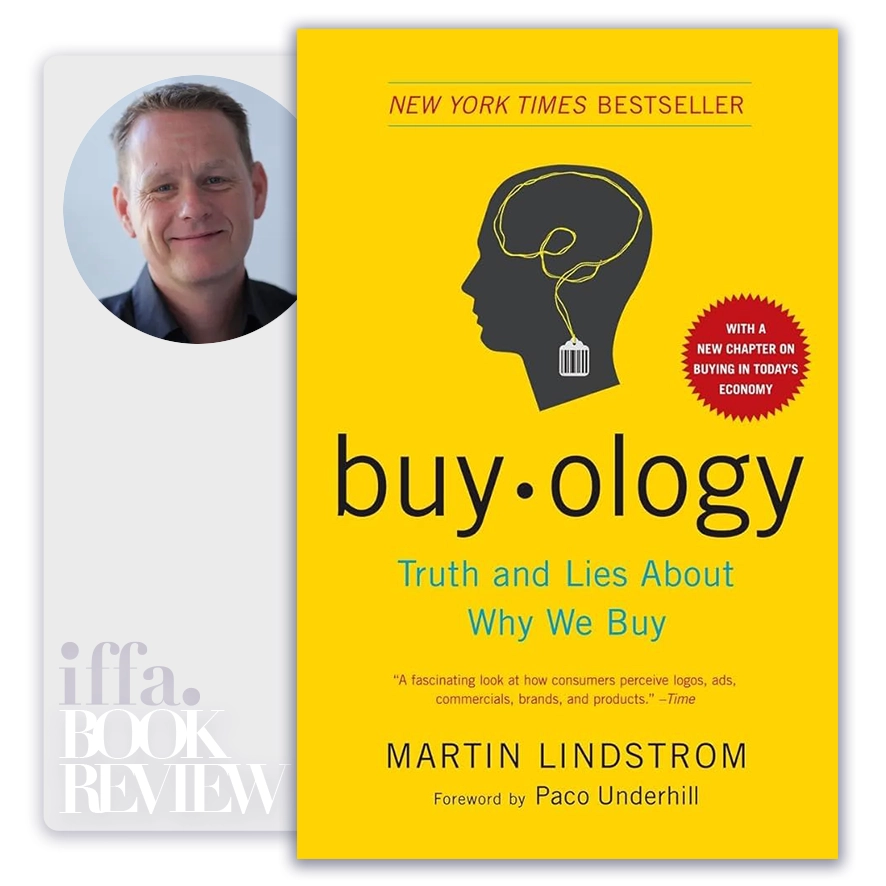
by Martin Lindstrom
Summary Overview:
Despite decades of market research, surveys, and focus groups, most marketing decisions are still based on what consumers say—not on why they actually buy. Buyology dismantles this flawed assumption. Martin Lindstrom reveals a counterintuitive truth: the vast majority of purchasing decisions are made subconsciously, driven by emotion, memory, and sensory triggers rather than logic or stated preference.
Buyology matters because it exposes the hidden mechanisms behind consumer behavior at a time when traditional advertising is losing effectiveness. For executives, marketers, brand leaders, and strategists, this book reframes marketing from persuasion to perception engineering. It demonstrates why understanding the subconscious mind is no longer optional—but a strategic necessity for building brands that influence behavior in crowded, skeptical markets.
About The Author
Martin Lindstrom is a world-renowned branding and neuromarketing expert, former advisor to Fortune 500 companies, and a pioneer in applying neuroscience to consumer research. He has worked with global brands across industries, from FMCG to technology and luxury.
Lindstrom’s credibility stems from his leadership of one of the largest neuromarketing studies ever conducted, combining brain-scanning technology with real consumer exposure. His work bridges science, psychology, and commercial strategy, offering insights unavailable through conventional research methods.
Core Idea:
At the heart of Buyology is a disruptive and evidence-backed insight:
Consumers don’t think their way into buying—they feel their way into it.
Lindstrom argues that traditional research methods—surveys, interviews, focus groups—are deeply unreliable because consumers cannot accurately articulate subconscious motivations. Instead, decisions are shaped by emotional associations, cultural imprinting, ritual, symbolism, and sensory cues.
By studying brain activity directly, Buyology reveals what truly drives attraction, trust, loyalty, and desire. The book challenges marketers to abandon surface-level data and instead design brands that embed themselves into the consumer’s subconscious world.
Brands with rituals don’t compete on price, they compete on meaning.
Key Concepts:
- The Subconscious Drives the Sale
Neuroscience shows that up to 85–95% of decisions occur subconsciously. Rational explanations often come after the decision, not before it.
This means:
- Consumers rationalize emotionally driven choices
- Logic is a justification tool, not a trigger
- Emotional resonance outperforms rational argument
If you’re marketing to logic, you’re too late.
- Neuromarketing vs. Traditional Research
Lindstrom contrasts what people say with what their brains reveal.
Traditional research fails because:
- People want to appear rational
- Memory is unreliable
- Social pressure distorts answers
Neuromarketing tools such as fMRI and EEG reveal:
- Emotional engagement
- Fear, desire, and trust responses
- Unconscious brand associations
This shift reframes research from opinion gathering to behavior decoding.
- Fear, Reassurance, and the Reptilian Brain
The book explains how the reptilian brain—the most primitive part of human cognition—plays a central role in purchasing behavior. This part of the brain responds to:
- Safety
- Belonging
- Familiarity
- Survival cues
Brands that successfully tap into reassurance, security, and comfort often outperform those that focus solely on innovation or features.
- Rituals Create Loyalty
One of Buyology’s most powerful insights is the role of ritual in brand attachment.
Rituals:
- Create predictability and comfort
- Deepen emotional bonds
- Transform products into experiences
Examples include:
- How a product is opened
- How it is consumed
- The sequence surrounding its use
Brands with rituals don’t compete on price—they compete on meaning.
- Sensory Branding and Memory Encoding
The human brain is wired to remember sensory experiences more vividly than messages.
Lindstrom shows how:
- Sound (audio logos, tones)
- Smell (signature scents)
- Touch (materials, textures)
- Visual consistency
Can create powerful, long-lasting brand recall. Multisensory brands occupy more neural real estate in the consumer’s mind.
- The Myth of Sex in Advertising
Contrary to popular belief, Lindstrom’s research found that sexual imagery often distracts from brand recall rather than enhancing it.
While sex attracts attention, it can:
- Overload cognitive processing
- Reduce message retention
- Shift focus away from the brand
This challenges long-standing advertising assumptions and highlights the importance of contextual relevance over shock value.
- Brand Symbols and Cultural Imprinting
Symbols, icons, and repeated visual cues embed brands into cultural memory. Over time, these cues:
- Trigger emotional responses
- Create instant recognition
- Signal trust and familiarity
Religious symbolism, childhood memories, and cultural archetypes all influence brand perception—often invisibly.
- Ethical Boundaries and Responsibility
Lindstrom does not ignore the ethical implications of neuromarketing. With greater influence comes greater responsibility.
The book raises important questions:
- Where does persuasion become manipulation?
- How should brands protect consumer autonomy?
- What role should regulation play?
Understanding the brain demands ethical restraint—not exploitation.
If you’re marketing to logic, you’re too late.
Executive Insights:
Buyology fundamentally reframes marketing as behavioral design, not communication. For leaders, it highlights a gap between what organizations measure and what actually matters.
Strategic Implications for Executives:
- Brand decisions must account for subconscious drivers
- Emotion outperforms information
- Consistency beats creativity alone
- Sensory experience is a competitive advantage
- Trust and familiarity reduce perceived risk
Organizations that fail to understand subconscious influence risk wasting budgets on messages that never land.
Actionable Takeaways:
The book translates neuroscience into practical strategic direction.
Practical Actions for Marketers and Leaders:
- Design brands for emotional resonance, not explanation
- Audit sensory touchpoints across the customer journey
- Create repeatable rituals around product use
- Test messaging for subconscious impact, not stated preference
- Simplify communication to reduce cognitive overload
- Balance influence with ethical responsibility
For Organizations:
- Move beyond focus groups as primary insight tools
- Invest in behavioral and experiential research
- Build brand consistency across all senses
- Treat trust as a neurological outcome
Final Thoughts:
Buyology exposes the hidden forces shaping consumer behavior and challenges leaders to rethink everything they believe about marketing effectiveness. Martin Lindstrom delivers a clear message: brands win not in the marketplace—but in the mind.
Those who understand how the brain decides do not need to shout louder—they simply connect deeper.
The ideas in this book go beyond theory, offering practical insights that shape real careers, leadership paths, and professional decisions. At IFFA, these principles are translated into executive courses, professional certifications, and curated learning events aligned with today’s industries and tomorrow’s demands. Discover more in our Courses.
Applied Programs

- Course Code : SBM-409
- Delivery : In-class / Virtual / Workshop
- Duration : 2-4 Days
- Venue: DUBAI HUB

- Course Code : PMA-613
- Delivery : In-class / Virtual / Workshop
- Duration : 3-5 Days
- Venue: DUBAI HUB
- Course Code : CIF-505
- Delivery : In-class / Virtual / Workshop
- Duration : 3-5 Days
- Venue: DUBAI HUB

- Course Code : CIF-512
- Delivery : In-class / Virtual / Workshop
- Duration : 2-4 Days
- Venue: DUBAI HUB
Related Books