The Executive Summary of
Crashed: How a Decade of Financial Crises Changed the World
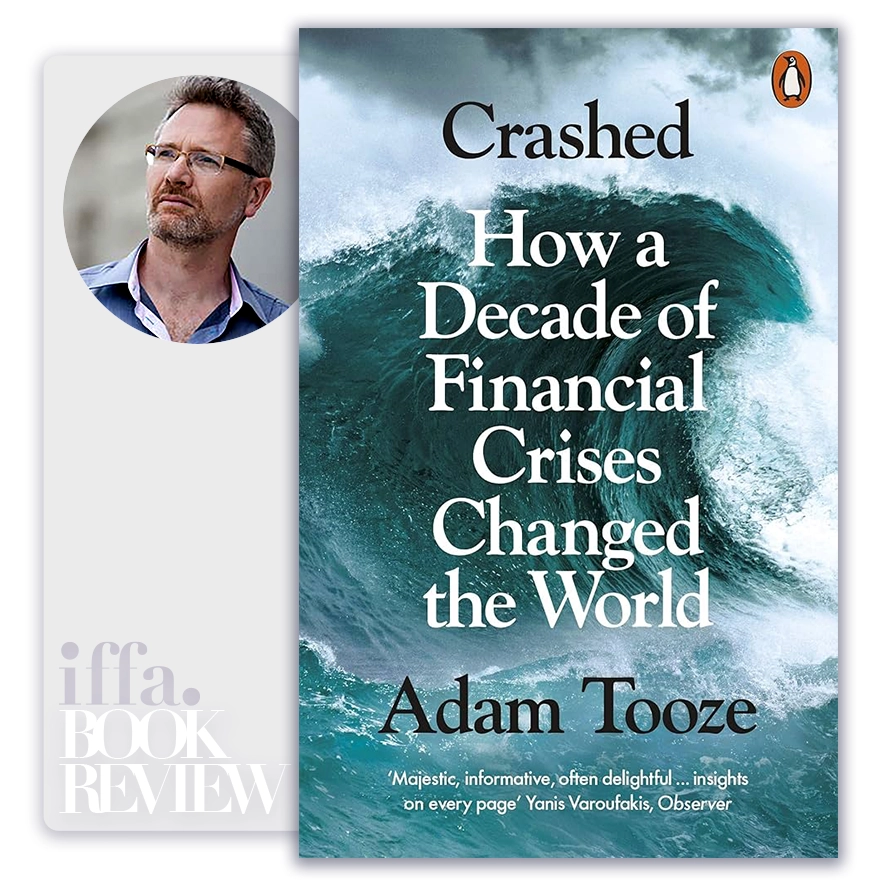
by Adam Tooze
Summary Overview:
Most executives remember the 2008 Global Financial Crisis as a violent shock followed by a slow recovery. Crashed forces leaders to confront a far more unsettling reality: the crisis never truly ended—it mutated, spread, and reshaped global power, politics, and finance for an entire decade.
This book matters because it reframes financial crises not as temporary market failures, but as systemic stress events that redefine governance, geopolitics, and institutional legitimacy. Adam Tooze shows that the real story of the post-2008 world is not just recession and recovery, but the emergence of a crisis-driven global order, where central banks became the ultimate stabilizers, financial systems fused with state power, and political backlash reshaped democracy itself. For leaders responsible for capital, risk, and long-term strategy, Crashed is a strategic warning: future crises will not be contained within markets—they will reconfigure the entire operating environment.
About The Author
Adam Tooze is one of the world’s leading economic historians, known for his work on global capitalism, financial power, and systemic risk. He combines deep archival research with macro-level analysis across finance, politics, and geopolitics.
Tooze’s credibility comes from his ability to connect markets to power. He does not treat finance as a technical domain, but as a political system with global consequences—a perspective essential for senior leaders navigating today’s interconnected risks.
Core Idea:
The central thesis of Crashed can be translated into leadership language as follows:
Modern crises are not isolated events—they are cascading system failures that force institutions to choose between collapse and extraordinary intervention.
Tooze argues that after 2008:
- Financial stability became inseparable from state power
- Central banks became de facto crisis managers for capitalism
- Sovereignty was reshaped by financial dependency
- Politics absorbed the social consequences of financial rescue
For leaders, this means risk is no longer local, linear, or purely financial.
Financial leverage became geopolitical leverage.
Key Concepts:
- The Crisis Was Global—But Unevenly Experienced
Tooze emphasizes that 2008 was not simply an American banking crisis.
The U.S. mortgage crisis triggered a global dollar funding crisis.
European banks, emerging markets, and global trade networks were deeply exposed. Leaders who misread crises as “foreign” or “sector-specific” underestimate systemic contagion.
- The Central Bank as the Ultimate Backstop
One of the book’s most important insights is the transformation of central banks.
Central banks became the shock absorbers of last resort for the global system.
Through:
- Quantitative easing
- Emergency liquidity lines
- Balance-sheet expansion
They prevented collapse—but at the cost of distorting markets and politics. Leaders must recognize that monetary policy is now a permanent strategic force, not a background variable.
- Dollar Dominance and Hidden Power
Tooze reveals how the U.S. dollar system underpins global finance.
The Federal Reserve stabilized not just America—but the world.
Dollar swap lines exposed a hidden hierarchy:
- Countries with access to dollars survived
- Those without faced extreme stress
For global leaders, this highlights currency dependency as a strategic vulnerability.
- Sovereign Debt and Political Fragility
The crisis morphed into a sovereign debt crisis—especially in Europe.
A financial rescue without political legitimacy breeds instability.
Austerity measures stabilized balance sheets but eroded public trust, fueling populism and fragmentation. Leaders must understand that economic fixes without social legitimacy carry long-term risk.
- Crisis Management vs. Democratic Accountability
Tooze highlights a core tension:
Crisis decisions were made fast—but far from democratic scrutiny.
Emergency governance saved systems, but weakened democratic consent. For executives and policymakers, this underscores the importance of transparency and legitimacy in crisis leadership.
- Financialization of the State
Governments became deeply entangled with financial markets.
States did not retreat—they were absorbed into financial logic.
Public balance sheets became shock absorbers for private risk. Leaders must recognize that public and private risk are now fused.
- Inequality as a Crisis Multiplier
The book shows how crisis responses protected capital faster than labor.
Unequal recovery fuels political backlash.
This dynamic shaped Brexit, Trumpism, and global polarization. Leaders who ignore distributional impacts misjudge long-term stability.
- Crisis as the New Normal
Tooze argues that post-2008 governance operates in permanent crisis mode.
Emergency tools became standard operating procedure.
This creates:
- Moral hazard
- Fragile expectations
- Reduced resilience
Organizations must plan for repeated shocks, not one-off events.
- Geopolitics Rewired by Finance
Financial crises reshaped global power relations.
Financial leverage became geopolitical leverage.
Sanctions, capital controls, and currency access now function as strategic weapons. Leaders must integrate geopolitical finance into risk planning.
- The Illusion of Resolution
Perhaps Tooze’s most sobering insight:
Stability was restored—but fragility was institutionalized.
Low rates, high debt, and inflated asset prices left the system vulnerable to future shocks—including pandemics, climate risk, and geopolitical conflict.
Financial credibility often matters more than military strength.
Executive Insights:
From a leadership and governance perspective, Crashed delivers critical lessons:
- Crises cascade across systems
- Financial risk becomes political risk
- Central banks shape strategy indirectly
- Currency dominance equals power
- Legitimacy matters as much as liquidity
- Public and private risk are intertwined
- Inequality destabilizes recovery
- Emergency tools create dependency
- Geopolitics and finance are inseparable
- Stability can conceal fragility
Actionable Takeaways:
Practical Leadership Actions Inspired by Tooze:
- Stress-test strategies for systemic shocks
- Map currency and funding dependencies
- Monitor central-bank policy as strategic input
- Assess political legitimacy risks
- Plan for repeated crisis scenarios
- Integrate geopolitical finance into risk models
- Evaluate social impact of restructuring decisions
- Avoid overreliance on emergency support
- Build resilience, not just efficiency
- Prepare governance structures for crisis decision-making
Final Thoughts:
Crashed is not a history book—it is a strategic diagnosis of the world leaders now operate in. Adam Tooze shows that the post-2008 era reshaped capitalism into a system sustained by extraordinary intervention and fragile consent.
The book’s ultimate leadership insight is stark and essential:
Crises no longer end—they accumulate.
For executives, policymakers, and institutional leaders, Crashed offers a sobering truth:
Those who understand how power, finance, and crisis interact will survive the next shock; those who don’t will be surprised again.
The ideas in this book go beyond theory, offering practical insights that shape real careers, leadership paths, and professional decisions. At IFFA, these principles are translated into executive courses, professional certifications, and curated learning events aligned with today’s industries and tomorrow’s demands. Discover more in our Courses.
Applied Programs

- Course Code : SBM-409
- Delivery : In-class / Virtual / Workshop
- Duration : 2-4 Days
- Venue: DUBAI HUB

- Course Code : PMA-613
- Delivery : In-class / Virtual / Workshop
- Duration : 3-5 Days
- Venue: DUBAI HUB
- Course Code : CIF-505
- Delivery : In-class / Virtual / Workshop
- Duration : 3-5 Days
- Venue: DUBAI HUB

- Course Code : CIF-512
- Delivery : In-class / Virtual / Workshop
- Duration : 2-4 Days
- Venue: DUBAI HUB
Related Books