The Executive Summary of
The Prize
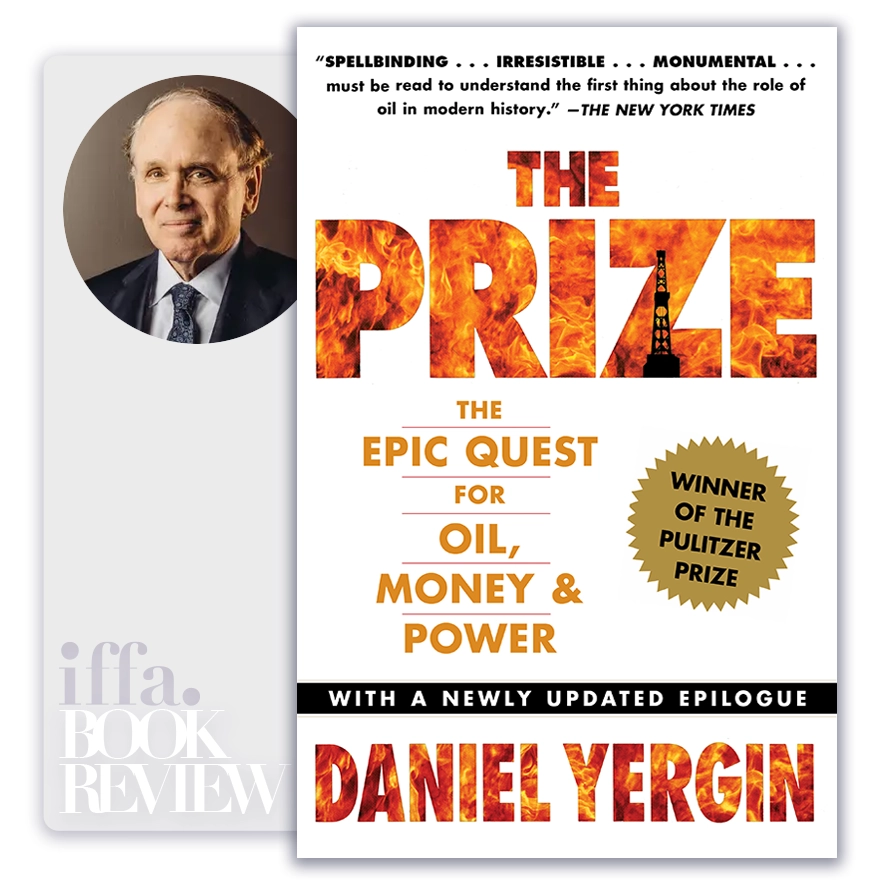
by Daniel Yergin
Summary Overview:
Few commodities have shaped the modern world as profoundly as oil. The Prize is not simply a history of an industry—it is a strategic chronicle of how energy became inseparable from power, national security, economic growth, and global conflict. Daniel Yergin demonstrates that oil is not just a fuel; it is a strategic resource that has repeatedly determined the rise and fall of nations, corporations, and empires.
This book matters because today’s geopolitical tensions, energy transitions, supply shocks, and price volatility are echoes of patterns established over more than a century. Leaders who treat energy as a purely commercial input consistently misjudge risk. The Prize shows that oil markets are shaped as much by politics, war, diplomacy, and ideology as by supply and demand. For executives, policymakers, and strategists, the book provides a foundational understanding of why energy decisions are never neutral—and why control of energy systems remains a cornerstone of global power.
About The Author
Daniel Yergin is one of the world’s foremost authorities on energy, geopolitics, and global markets. A historian and economist, Yergin combines rigorous scholarship with deep engagement in real-world policy and industry advisory.
His credibility comes from his ability to synthesize corporate strategy, political history, and economic forces into a coherent narrative that explains not just what happened—but why it mattered, and why it still does.
Core Idea:
The central thesis of The Prize is sweeping and enduring:
Oil has been the single most important strategic commodity of the modern era, shaping wars, economies, alliances, and global order.
Yergin argues that control over oil:
- Determined military outcomes
- Enabled industrial expansion
- Defined geopolitical influence
- Created corporate empires
- Triggered political revolutions
From the rise of Standard Oil to the creation of OPEC, oil’s story is inseparable from money and power. Markets alone never dictated outcomes—states, strategies, and shocks always intervened.
Oil is the lifeblood of modern civilization, and lifeblood is never treated as optional.
Key Concepts:
- Oil as a Strategic Resource, Not a Commodity
Unlike most goods, oil’s value lies not only in its price, but in its strategic necessity.
Oil:
- Fuels armies and navies
- Powers industrial economies
- Enables mobility and modern warfare
- Anchors national security planning
Oil is the lifeblood of modern civilization—and lifeblood is never treated as optional.
This reality explains why governments have always intervened in oil markets.
- The Rise of Corporate Oil Empires
Yergin traces the emergence of powerful oil companies, beginning with Standard Oil, which pioneered:
- Vertical integration
- Market control
- Scale efficiency
These firms were not merely businesses—they were quasi-political actors, negotiating with states and shaping foreign policy.
Oil companies became instruments of national power long before governments admitted it.
- Oil and War
One of the book’s most critical themes is oil’s role in warfare.
Examples include:
- World War I’s shift from coal to oil
- World War II’s battles over supply routes and fields
- Axis and Allied strategies shaped by fuel access
Amateurs talk tactics; professionals talk logistics—and oil is logistics.
Military strategy repeatedly failed when fuel supply was misjudged.
- The Middle East and the Reordering of Power
Yergin explains how the Middle East became the epicenter of global energy—and geopolitics.
Key dynamics:
- Discovery of vast reserves
- Colonial influence and concession systems
- Post-war power realignments
- Strategic importance of chokepoints
Oil transformed deserts into global power centers, while also sowing long-term instability.
- Nationalism, Sovereignty, and Resource Control
As producing nations asserted sovereignty, control shifted:
- From companies to states
- From concessions to national oil companies
- From Western dominance to producer leverage
This culminated in the rise of OPEC, fundamentally altering the balance of power.
Callout Insight:
Oil nationalism was not ideological—it was economic self-defense.
- The Oil Shocks and Economic Vulnerability
The 1970s oil crises exposed the fragility of energy-dependent economies:
- Inflation surged
- Growth stalled
- Political confidence eroded
Yergin shows how oil price shocks reshaped:
- Monetary policy
- Industrial strategy
- Energy diversification
- Markets vs. States: A Permanent Tension
Throughout the book, Yergin highlights a recurring pattern:
- Markets seek efficiency
- States seek security
Oil sits at the intersection, creating constant tension.
No purely free oil market has ever existed—state intervention is structural, not exceptional.
- Technology, Exploration, and Risk
Oil history is also a story of technological ambition:
- Offshore drilling
- Deepwater exploration
- Enhanced recovery
Each breakthrough expanded supply—but also increased:
- Capital intensity
- Environmental risk
- Strategic exposure
Energy innovation reduces scarcity—but increases complexity.
- Corporate Strategy Under Political Risk
Yergin shows how oil companies learned to:
- Navigate unstable regimes
- Balance diplomacy and profit
- Hedge political risk
Success depended less on geology than on political judgment and adaptability.
- The Enduring Pattern of Energy Transitions
While The Prize focuses on oil, it also reveals a broader truth:
- Energy transitions are slow
- Old systems persist alongside new ones
- Power structures resist rapid change
Energy transitions reshape power—but never on tidy timelines.
This lesson resonates strongly in today’s renewable transition debates.
Energy security is economic security.
Executive Insights:
The Prize reframes energy as a strategic system, not a market commodity.
Strategic Implications for Leaders and Policymakers:
- Energy decisions are geopolitical decisions
- Security often overrides efficiency
- Supply concentration creates vulnerability
- Resource control shapes alliances
- Markets cannot neutralize strategic resources
- Energy shocks drive macroeconomic change
- Long-term planning must account for politics
- Transitions increase instability before reducing it
Actionable Takeaways:
The book’s lessons remain directly applicable today.
Practical Actions for Executives and Strategists:
- Integrate geopolitical analysis into energy planning
- Diversify supply sources and routes
- Build resilience against price shocks
- Treat energy infrastructure as strategic assets
- Plan for state intervention—not market purity
- Anticipate political backlash to energy transitions
- Align corporate strategy with national energy policy
- Stress-test operations against geopolitical disruption
- Understand history before forecasting the future
Final Thoughts:
The Prize endures because it explains a reality many leaders prefer to ignore: energy is power, and power is never governed by markets alone. Daniel Yergin shows that oil has shaped the modern world not because it is valuable, but because societies cannot function without it.
The book’s ultimate lesson is clear and timeless:
Those who control energy shape history—and those who misunderstand it are shaped by events they cannot control.
For leaders navigating energy transition, geopolitical fragmentation, and strategic competition, The Prize offers a foundational insight:
The future of energy will not be decided solely by technology or economics—but by strategy, security, and power.
The ideas in this book go beyond theory, offering practical insights that shape real careers, leadership paths, and professional decisions. At IFFA, these principles are translated into executive courses, professional certifications, and curated learning events aligned with today’s industries and tomorrow’s demands. Discover more in our Courses.
Applied Programs

- Course Code : SBM-409
- Delivery : In-class / Virtual / Workshop
- Duration : 2-4 Days
- Venue: DUBAI HUB
- Course Code : PMA-613
- Delivery : In-class / Virtual / Workshop
- Duration : 3-5 Days
- Venue: DUBAI HUB
- Course Code : CIF-505
- Delivery : In-class / Virtual / Workshop
- Duration : 3-5 Days
- Venue: DUBAI HUB

- Course Code : CIF-512
- Delivery : In-class / Virtual / Workshop
- Duration : 2-4 Days
- Venue: DUBAI HUB
Related Books