
The Executive Summary of
Maritime Logistics
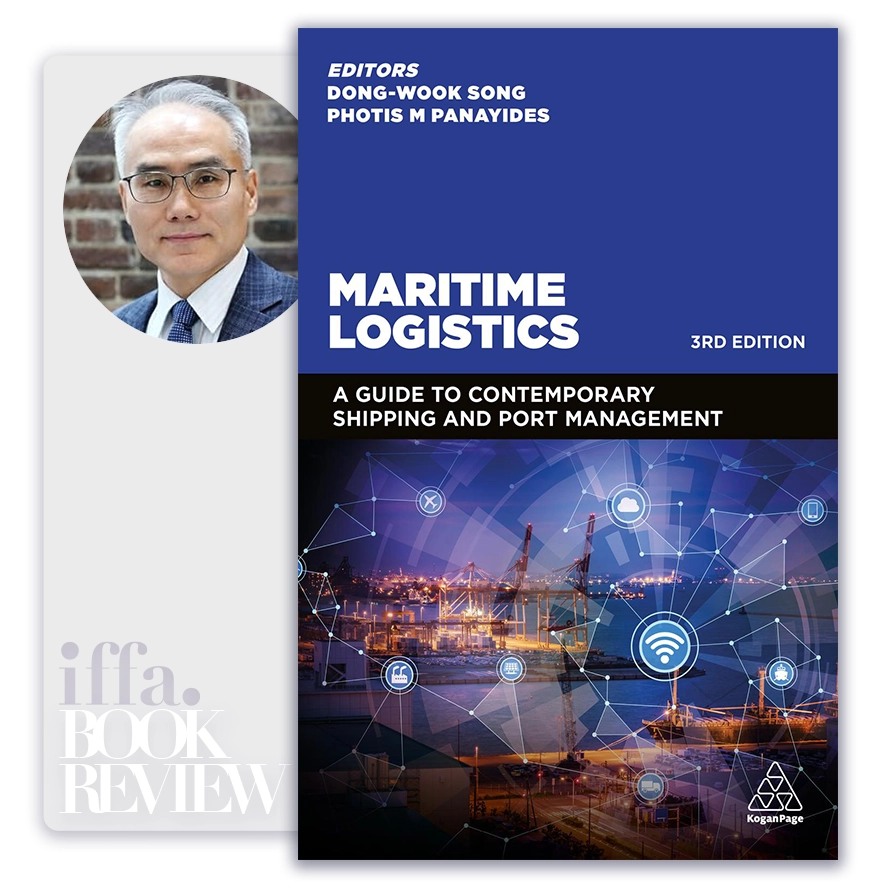
by Dong-Wook Song & Photis Panayides
Summary Overview:
Maritime transport carries over 80% of global trade by volume, yet for decades it was treated as a cost-focused, operational utility rather than a strategic value creator. Maritime Logistics matters because it reframes shipping, ports, and maritime services as integral components of global logistics systems, deeply interconnected with supply chains, trade competitiveness, and national economic performance.
For executives in shipping lines, port authorities, terminal operators, logistics providers, regulators, and infrastructure investors, the book provides a strategic lens for understanding how maritime transport has evolved—from isolated maritime activities into logistics-driven, customer-oriented, and network-based systems. In an era of containerization, digitalization, consolidation, and sustainability pressure, this book explains why logistics integration—not vessel size or port throughput alone—defines competitive advantage.
About The Authors
Dong-Wook Song is a leading academic in maritime logistics and supply chain management, widely published on port performance, maritime networks, and logistics integration.
Photis Panayides is a globally recognized scholar in shipping, ports, and maritime economics, with strong engagement in policy advisory and industry collaboration.
Together, they combine rigorous academic research with strong industry relevance, making this work particularly valuable for executive education, policy design, and strategic planning in maritime and logistics sectors.
Core Idea:
The core idea of Maritime Logistics is that maritime transport performance is determined less by individual actors and more by system-level coordination across shipping, ports, and inland logistics. Ships, terminals, and hinterland networks do not operate independently; they form an integrated logistics system whose weakest link determines overall efficiency.
Song and Panayides argue that maritime logistics must be understood as a value-creating network, not a linear transport function. Competitive advantage emerges when shipping lines, port authorities, terminal operators, regulators, and logistics providers align strategies, share information, and invest coherently. Without alignment, scale and technology deliver diminishing returns.
Maritime logistics performance is a function of system coordination, not vessel size or terminal capacity alone.
Key Concepts:
- Maritime Logistics as a System, Not a Sector
The book emphasizes that maritime logistics is an integrated system comprising shipping services, port operations, terminal management, customs, hinterland transport, and logistics services. Optimizing one component in isolation often degrades overall performance.
- System-wide alignment matters more than local efficiency
- Bottlenecks shift rather than disappear
- Coordination determines reliability
- Ports as Logistics Nodes, Not Cargo Interfaces
Ports are no longer simple transfer points between sea and land. They function as logistics platforms that influence supply chain speed, cost, and resilience. Port performance depends on governance, connectivity, and service integration as much as physical infrastructure.
- Value is created beyond the quay
- Hinterland access defines competitiveness
- Port strategy shapes trade flows
- Shipping Lines as Network Orchestrators
Shipping lines increasingly act as network managers rather than transport providers alone. Alliances, vessel deployment, and service design reflect strategic trade-offs between scale, frequency, and reliability.
- Network design drives service quality
- Alliances reshape competitive dynamics
- Scale creates coordination complexity
- Terminal Operations and Productivity
Terminal efficiency remains critical, but productivity gains depend on labor relations, technology adoption, and operational discipline. The book shows that automation alone does not guarantee performance without governance and skills alignment.
- Productivity is socio-technical
- Labor relations affect resilience
- Technology requires institutional readiness
- Hinterland Connectivity as a Competitive Differentiator
Ports compete based on how effectively they connect to inland markets. Rail, road, and inland waterways determine cargo velocity and cost. Weak hinterland links undermine even the most advanced terminals.
- Inland access defines port reach
- Congestion shifts costs inland
- Integration reduces dwell time
- Governance Models and Institutional Design
Port governance structures—landlord, tool port, service port—shape incentives, investment behavior, and accountability. The book highlights governance as a decisive factor in long-term port performance.
- Governance shapes behavior
- Incentives drive investment quality
- Institutional clarity improves outcomes
- Competition and Cooperation Dynamics
Maritime logistics systems balance competition and cooperation. Excessive rivalry fragments capacity, while excessive concentration creates systemic risk. Strategic collaboration can improve efficiency without eliminating competition.
- Cooperation improves system performance
- Concentration increases fragility
- Balance is context-dependent
- Supply Chain Integration and Value Creation
Shipping and ports increasingly integrate into end-to-end logistics solutions. Vertical integration changes risk allocation, bargaining power, and performance accountability across the supply chain.
- Integration reshapes power structures
- Value shifts toward reliability
- Control replaces transaction-based models
- Risk, Disruption, and Resilience
The book highlights vulnerability to shocks—labor disputes, weather events, geopolitical tension, pandemics. Resilience depends on redundancy, coordination, and governance rather than capacity alone.
- Efficiency without resilience is fragile
- Redundancy has strategic value
- Coordination mitigates disruption
- Environmental and Regulatory Pressure
Decarbonization, emissions regulation, and environmental compliance increasingly shape maritime logistics decisions. Sustainability becomes a strategic constraint influencing fleet design, port investment, and routing choices.
- Regulation shapes competitiveness
- Sustainability affects network design
- Compliance is strategic, not optional
Ports and shipping lines compete as networks, not as isolated entities.
Executive Insights:
Maritime Logistics reframes shipping and port performance as a leadership and governance challenge. Operational excellence alone cannot compensate for fragmented strategy or misaligned incentives. System performance improves only when decision-makers recognize interdependence across actors and layers.
For executives and policymakers, the book underscores that maritime logistics is critical national and corporate infrastructure. Underinvestment, poor governance, or short-term optimization exposes economies and supply chains to disproportionate risk. Conversely, well-governed maritime systems enhance trade competitiveness, resilience, and long-term value creation.
Key strategic implications include:
- Maritime logistics performance is system-driven
- Governance quality determines long-term outcomes
- Hinterland connectivity is as critical as port capacity
- Scale must be managed, not worshipped
- Resilience requires coordination, not excess capacity
Actionable Takeaways:
The book offers enduring principles for maritime and logistics leadership.
- Treat maritime logistics as integrated infrastructure, not isolated operations
- Align port, shipping, and hinterland strategies
- Design governance models that incentivize coordination
- Invest in connectivity, not just capacity
- Balance efficiency with resilience
- Anticipate regulatory and environmental constraints early
- Build institutional capability alongside physical assets
Final Thoughts:
Maritime Logistics is a rigorous and strategic examination of how global trade actually moves—and why it often fails under stress. Song and Panayides demonstrate that the true challenges of maritime logistics lie not in ships or cranes, but in coordination, governance, and long-term thinking.
The enduring insight of the book is clear: maritime logistics systems succeed when they are designed as coherent networks rather than collections of optimized parts. Leaders who understand this will move beyond reactive problem-solving toward building maritime systems that are efficient, resilient, and capable of sustaining global trade in an increasingly uncertain world.
The ideas in this book go beyond theory, offering practical insights that shape real careers, leadership paths, and professional decisions. At IFFA, these principles are translated into executive courses, professional certifications, and curated learning events aligned with today’s industries and tomorrow’s demands. Discover more in our Courses.
Applied Programs

- Course Code : SBM-409
- Delivery : In-class / Virtual / Workshop
- Duration : 2-4 Days
- Venue: DUBAI HUB
- Course Code : PMA-613
- Delivery : In-class / Virtual / Workshop
- Duration : 3-5 Days
- Venue: DUBAI HUB
- Course Code : CIF-505
- Delivery : In-class / Virtual / Workshop
- Duration : 3-5 Days
- Venue: DUBAI HUB

- Course Code : CIF-512
- Delivery : In-class / Virtual / Workshop
- Duration : 2-4 Days
- Venue: DUBAI HUB
Related Books