The Executive Summary of
The Toyota Way
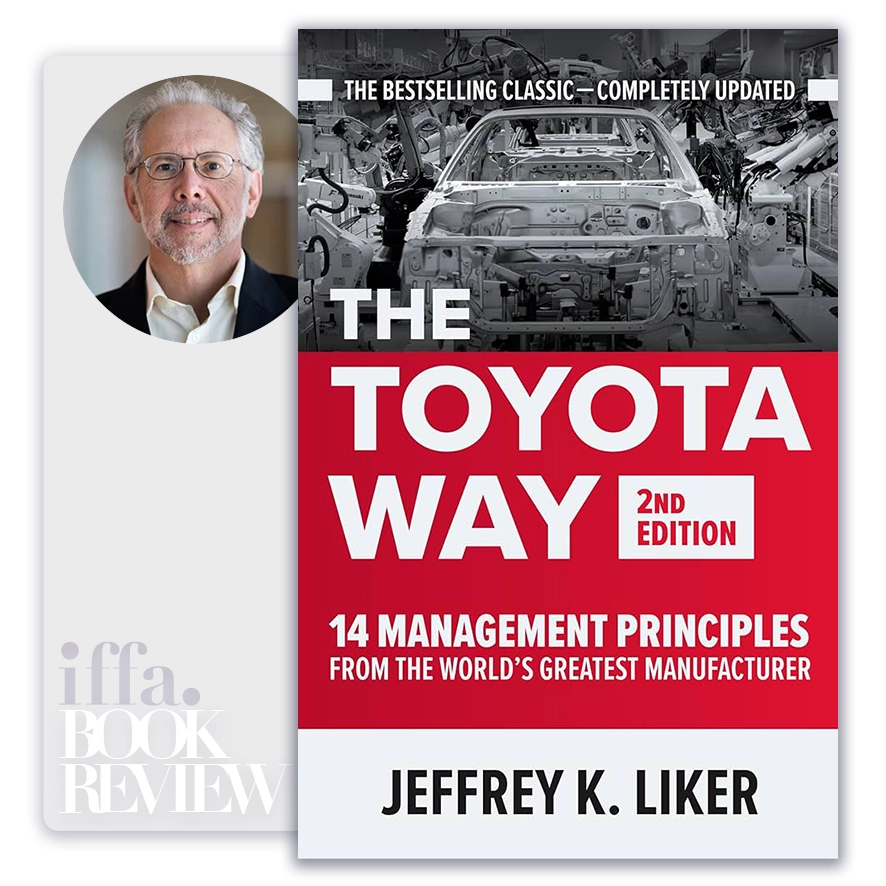
by Jeffrey K. Liker
Summary Overview:
The Toyota Way matters because it explains a truth that many organizations continue to overlook: sustained operational excellence is the result of a management philosophy, not a collection of tools. While lean methods, process optimization, and efficiency programs are widely adopted, they rarely deliver lasting advantage when separated from the deeper system of thinking that gives them meaning. Liker’s work reveals why Toyota has outperformed competitors across cycles, technologies, and markets—not through speed alone, but through coherence, discipline, and purpose.
In a business environment dominated by short-term targets, rapid restructuring, and constant transformation initiatives, The Toyota Way offers a fundamentally different model. It shows how organizations can remain competitive by aligning long-term vision with daily execution, treating problems as learning opportunities, and developing people as the primary source of improvement. For executives, boards, and leaders responsible for building organizations that endure rather than merely perform, this book provides a timeless framework for decision-making, governance, and operational integrity.
About The Author
Jeffrey K. Liker is a leading authority on Toyota’s management system and lean thinking, with decades of research into organizational excellence. His perspective is distinctive for translating Toyota’s internal philosophy into clear, structured principles applicable beyond manufacturing and across industries.
Core Idea:
The core idea of The Toyota Way is that exceptional performance is achieved through a tightly integrated system of principles that guide behavior, decisions, and learning at every level of the organization. Toyota’s success is not rooted in efficiency alone, but in a philosophy that balances long-term thinking, operational discipline, and respect for people.
Liker frames the Toyota Way as a management system built on consistency rather than charisma. Leaders are expected to think beyond immediate results, design processes that expose problems, and develop people who can improve those processes over time. Tools matter, but only as expressions of deeper principles. When philosophy and practice are aligned, improvement becomes continuous and self-reinforcing.
Excellence is not achieved by heroic effort, it is achieved by building systems that make excellence inevitable.
Key Concepts:
- Long-Term Philosophy as the Foundation
Toyota prioritizes long-term purpose over short-term financial gain. Decisions are evaluated based on their impact on future capability, stability, and trust. This orientation allows Toyota to invest patiently in people and systems, even when short-term efficiency might suffer.
- Long-term thinking guides strategy
- Short-term sacrifices protect future strength
- Purpose anchors decision-making
- Creating Flow to Expose Problems
Toyota designs processes to flow smoothly, making abnormalities visible immediately. When work flows, delays, defects, and inefficiencies cannot hide. Problems are surfaced early, enabling rapid learning rather than late-stage correction.
- Flow reveals weaknesses
- Visibility accelerates learning
- Stability enables improvement
- Pull Systems Over Push Thinking
Rather than producing based on forecasts alone, Toyota relies on pull systems driven by real demand. This reduces overproduction, excess inventory, and waste while increasing responsiveness and flexibility.
- Demand drives production
- Waste is minimized structurally
- Responsiveness replaces speculation
- Leveling the Workload for Sustainability
Toyota avoids extreme peaks and valleys in production. Leveling work reduces stress on people and systems, improves quality, and supports continuous improvement over time.
- Stability improves quality
- Sustainable pace protects people
- Consistency outperforms bursts
- Building Quality Into the Process
Quality is not inspected at the end; it is built into every step. Workers are empowered to stop processes when abnormalities occur, reinforcing accountability and preventing defects from flowing downstream.
- Quality is everyone’s responsibility
- Problems are addressed immediately
- Prevention replaces correction
- Standardization as the Basis for Improvement
Standardized work defines the current best method. Rather than limiting creativity, standards create a baseline from which improvement can occur. Without standards, learning remains inconsistent and anecdotal.
- Standards enable comparison
- Deviations trigger learning
- Discipline supports innovation
- Visual Management and Transparency
Toyota emphasizes visual controls that communicate status instantly. Anyone can see whether work is normal or abnormal, reducing dependence on reports and hierarchy.
- Transparency supports accountability
- Information is shared openly
- Problems are hard to ignore
- Technology Serving People and Process
Toyota adopts technology cautiously. New tools are introduced only when they support people and strengthen processes. Automation without understanding is seen as risk rather than progress.
- Technology follows process clarity
- People remain central
- Reliability matters more than novelty
- Developing Leaders Who Live the Philosophy
Leaders are grown internally and expected to embody Toyota’s principles. Leadership credibility comes from deep process knowledge and teaching ability, not positional authority.
- Leaders are developed, not hired
- Teaching is a leadership duty
- Consistency protects culture
- Continuous Learning Through Reflection
Toyota institutionalizes learning through reflection and problem-solving. Successes and failures are examined deeply to extract insight and improve systems continuously.
- Learning is systematic
- Reflection precedes improvement
- Knowledge compounds over time
- Respect for People as a Strategic Asset
Toyota treats employees as long-term partners in improvement. Respect is shown by involving people in decisions, developing their skills, and trusting them to solve problems.
- Engagement drives ownership
- Development builds capability
- Trust enables transparency
- Partners and Suppliers as Extensions of the System
Toyota works closely with suppliers to improve quality and efficiency across the value chain. Short-term price pressure is avoided in favor of long-term mutual growth.
- Collaboration replaces extraction
- Shared learning improves outcomes
- Stability strengthens ecosystems
- Decision-Making by Consensus and Speed of Execution
Toyota takes time to build consensus, ensuring alignment and understanding. Once decisions are made, execution is fast and disciplined because resistance has been resolved upfront.
- Alignment precedes action
- Consensus builds commitment
- Execution accelerates after clarity
- Relentless Focus on Root Causes
Problems are not treated as isolated events. Toyota emphasizes root-cause analysis to prevent recurrence and strengthen systems rather than applying temporary fixes.
- Symptoms are not solutions
- Depth matters more than speed
- Systems outperform workarounds
Operational excellence emerges when people, processes, and principles reinforce one another consistently.
Executive Insights:
The Toyota Way reveals that sustainable performance is not achieved through periodic transformation, but through daily consistency in thinking and behavior. Organizations fail not because they lack tools, but because they lack alignment between philosophy, leadership behavior, and operational systems.
For executives and boards, the book reframes governance as stewardship of principles. When leaders prioritize long-term capability, develop people intentionally, and design systems that surface truth, organizations become resilient under pressure. When shortcuts replace discipline, improvement collapses.
Key implications include:
- Philosophy determines performance durability
- Leadership behavior defines system outcomes
- Learning organizations outperform optimizing ones
- Stability enables innovation over time
- Culture is a strategic asset, not a soft concern
Actionable Takeaways:
This book offers enduring principles applicable across industries and scales.
- Anchor strategy in long-term purpose
- Design processes that expose problems early
- Build quality into work rather than inspect later
- Treat standards as learning tools
- Develop leaders as teachers and mentors
- Invest in people as long-term assets
- Align incentives with stated principles
- Strengthen ecosystems through collaboration
Final Thoughts:
The Toyota Way is ultimately a book about organizational maturity and disciplined leadership. It challenges the belief that excellence can be installed quickly or outsourced through tools and consultants. Instead, it shows that enduring success is built patiently through coherence, humility, and learning.
The enduring insight of the book is clear and demanding: organizations do not rise to the level of their ambitions; they fall to the level of their principles and daily practice. Leaders who embrace this reality—and are willing to invest in systems, people, and long-term thinking—can build organizations that perform consistently, adapt intelligently, and endure across generations.
The ideas in this book go beyond theory, offering practical insights that shape real careers, leadership paths, and professional decisions. At IFFA, these principles are translated into executive courses, professional certifications, and curated learning events aligned with today’s industries and tomorrow’s demands. Discover more in our Courses.
Applied Programs

- Course Code : SBM-409
- Delivery : In-class / Virtual / Workshop
- Duration : 2-4 Days
- Venue: DUBAI HUB

- Course Code : PMA-613
- Delivery : In-class / Virtual / Workshop
- Duration : 3-5 Days
- Venue: DUBAI HUB
- Course Code : CIF-505
- Delivery : In-class / Virtual / Workshop
- Duration : 3-5 Days
- Venue: DUBAI HUB

- Course Code : CIF-512
- Delivery : In-class / Virtual / Workshop
- Duration : 2-4 Days
- Venue: DUBAI HUB
Related Books