The Executive Summary of
Toyota Culture: The Heart and Soul of the Toyota Way
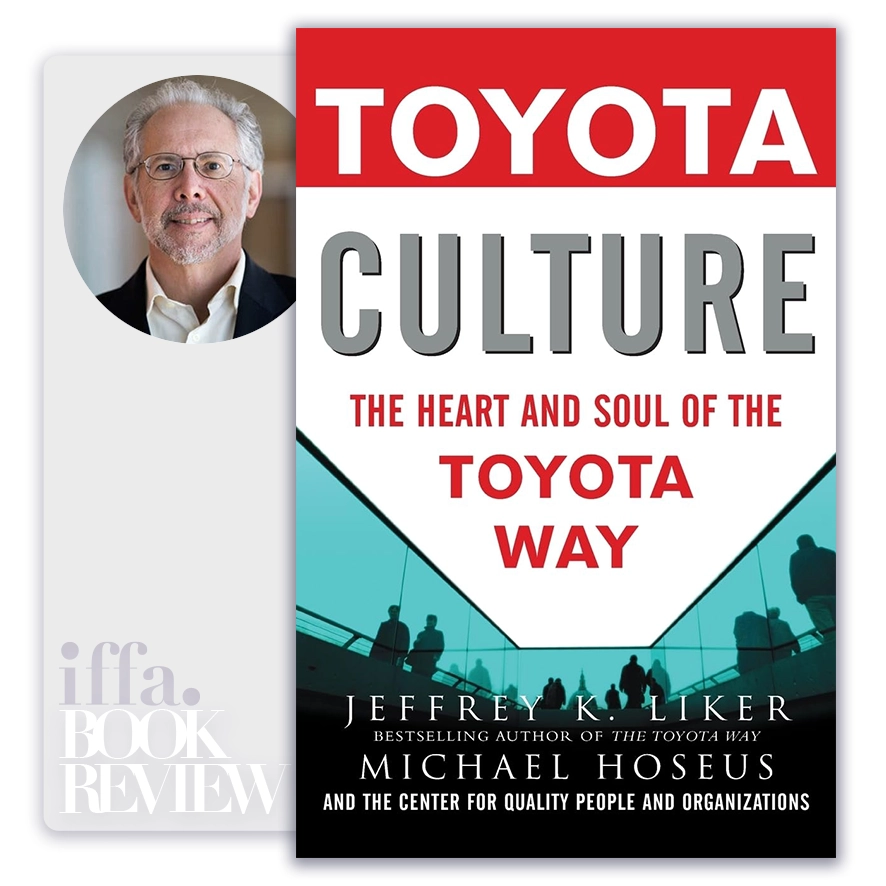
by Jeffrey K. Liker & Michael Hoseus
Summary Overview:
Toyota Culture: The Heart and Soul of the Toyota Way matters because it explains what most organizations misunderstand about sustained excellence: you cannot copy results without copying culture. While countless companies adopt Toyota’s tools—lean systems, continuous improvement methods, operational metrics—very few achieve Toyota’s consistency, resilience, or longevity. Liker and Hoseus show that the missing ingredient is not technique, but a deeply embedded culture that develops people as the primary source of competitive advantage.
At a time when leaders chase rapid transformation, digital acceleration, and quarterly performance, this book offers a disciplined counterpoint. It demonstrates that Toyota’s success is built on long-term thinking, respect for people, and leaders who see teaching as their core responsibility. For executives, boards, and organizations seeking durable performance rather than temporary wins, Toyota Culture provides a rare and practical lens into how culture becomes the true operating system of strategy—and why it remains the hardest asset to imitate.
About The Author
Jeffrey K. Liker is a renowned authority on the Toyota Way, known for decades of research into lean management and organizational excellence. Michael Hoseus brings deep practitioner experience from inside Toyota, offering a rare perspective on how cultural principles are lived, taught, and protected in practice, not just described in theory.
Core Idea:
The core idea of Toyota Culture is that sustainable performance emerges from a culture that develops people before it demands results. Toyota does not treat employees as variable costs or interchangeable resources; it treats them as long-term assets whose capability, judgment, and alignment determine organizational success.
Liker and Hoseus argue that Toyota’s culture is intentionally designed around two inseparable pillars: respect for people and continuous improvement. Respect is not politeness or comfort; it is a demanding commitment to develop individuals, involve them in problem-solving, and hold leaders accountable for teaching. Continuous improvement is not about speed or cost-cutting; it is about learning deeply from work and embedding that learning into the system.
Toyota’s greatest competitive advantage is its ability to develop people who can think, learn, and improve the system every day.
Key Concepts:
- Culture as a Designed System, Not an Emergent Accident
Toyota’s culture did not arise organically or accidentally. It was intentionally shaped through decades of leadership behavior, training systems, and structural alignment. Leaders are taught that culture must be built as carefully as production systems, with clear principles and consistent reinforcement.
At Toyota, cultural expectations are explicit, observable, and practiced daily. New employees are socialized into how to think, not just what to do. This prevents drift and protects continuity even as the organization grows globally.
- Culture is treated as infrastructure
- Leadership behavior is the primary cultural signal
- Consistency matters more than charisma
- Respect for People as a Demanding Standard
Respect at Toyota does not mean avoiding conflict or lowering expectations. It means taking responsibility for developing others. Leaders are expected to coach, teach, and challenge employees to improve their thinking and capability.
This form of respect assumes that people want to do meaningful work and are capable of growth when supported properly. Ignoring problems or imposing solutions without engagement is considered disrespectful.
- Respect is demonstrated through development
- Leaders are accountable for people growth
- Engagement is built through responsibility
- Leaders as Teachers, Not Controllers
One of the book’s most distinctive insights is Toyota’s view of leadership. Leaders are not valued primarily for decision-making speed or personal brilliance, but for their ability to teach others how to think and solve problems.
Managers are expected to go to the work, observe processes directly, ask questions, and guide learning rather than issue commands. Authority is earned through knowledge and mentorship, not hierarchy alone.
- Teaching is a core leadership responsibility
- Presence at the work builds credibility
- Questions matter more than answers
- Long-Term Thinking Over Short-Term Optimization
Toyota consistently prioritizes long-term capability over short-term financial gain. Decisions about hiring, promotion, and investment are made with decades in mind, not quarterly earnings.
This orientation allows Toyota to absorb short-term inefficiencies in exchange for learning, stability, and trust. The book contrasts this with organizations that sacrifice people and systems for immediate results, undermining future performance.
- Capability is valued above speed
- Stability enables learning
- Patience compounds advantage
- Continuous Improvement as Daily Practice
At Toyota, continuous improvement is not a program or initiative. It is embedded in daily work. Employees are expected to identify problems, analyze root causes, and propose improvements as part of their normal responsibilities.
Importantly, improvement is not delegated to specialists. It is owned by those doing the work, reinforcing engagement and accountability.
- Problems are signals, not failures
- Improvement belongs to everyone
- Learning is structured and disciplined
- Standardization as a Foundation for Learning
Contrary to misconceptions, Toyota does not oppose standardization. Standards are viewed as the current best way of working, providing a baseline from which improvement can occur.
Without standards, variation hides problems and prevents learning. With standards, deviations become visible opportunities for improvement.
- Standards enable clarity
- Deviation triggers learning
- Discipline supports creativity
- Alignment Between Values, Systems, and Incentives
Toyota aligns what it says with what it rewards. Performance systems, promotion criteria, and recognition mechanisms reinforce cultural priorities such as teamwork, learning, and humility.
This alignment prevents the common failure where organizations espouse values that are contradicted by incentives. At Toyota, what gets rewarded teaches culture more powerfully than any speech.
- Incentives shape behavior
- Misalignment erodes trust
- Culture is reinforced structurally
- Hiring for Attitude, Developing for Skill
The book highlights Toyota’s careful approach to hiring. Cultural fit, willingness to learn, and humility are prioritized over technical brilliance alone. Skills can be taught; mindset is harder to change.
Once hired, employees receive extensive development over time, reinforcing loyalty and shared identity.
- Mindset precedes skill
- Development is continuous
- Retention supports stability
- Problem-Solving as a Social Process
Toyota treats problem-solving not as an individual activity but as a collective learning process. Teams are encouraged to surface issues openly, analyze causes together, and share learning across the organization.
Blame is avoided because it discourages transparency. The focus remains on improving the system, not assigning fault.
- Transparency accelerates learning
- Blame destroys improvement
- Systems outperform heroes
- Protecting Culture Through Leadership Succession
Perhaps the most strategic insight of the book is Toyota’s attention to leadership succession. Leaders are promoted based on cultural stewardship as much as performance results.
This ensures continuity across generations and protects the organization from cultural erosion during growth or crisis.
- Succession is a cultural act
- Leaders transmit values
Continuity requires vigilance
Culture at Toyota is not a slogan but a discipline reinforced through leadership behavior and daily work.
Executive Insights:
Toyota Culture demonstrates that culture is not an abstract ideal but a practical mechanism for sustaining excellence. Organizations that treat culture as messaging or morale miss its true function: shaping how decisions are made when rules are unclear and pressure is high.
The book makes clear that cultural strength is built slowly but collapses quickly if leadership behavior changes. Tools can be copied; trust, discipline, and shared understanding cannot. For boards and executives, this reframes culture from a human-resources concern into a core governance responsibility.
Key implications include:
- Long-term performance depends on people development
- Leadership behavior defines culture more than strategy
- Learning organizations outperform optimizing ones
- Trust enables transparency and improvement
- Culture is the ultimate risk management system
Actionable Takeaways:
This book offers enduring principles rather than tactics.
- Treat culture as a designed system, not a slogan
- Hold leaders accountable for teaching and development
- Align incentives with stated values
- Invest in long-term capability over short-term gain
- Standardize work to enable learning
- Encourage problem-solving at every level
- Protect culture through deliberate succession planning
Final Thoughts:
Toyota Culture: The Heart and Soul of the Toyota Way is ultimately a book about organizational maturity. It challenges the myth that excellence comes from speed, brilliance, or disruption alone. Instead, it shows that enduring success emerges from patience, discipline, and deep respect for human capability.
The enduring lesson is both simple and demanding: organizations become what their leaders consistently practice, not what they claim to value. Those willing to invest in people, learning, and cultural coherence will build enterprises that outlast trends, technologies, and leadership tenures—and remain resilient in the face of uncertainty.
The ideas in this book go beyond theory, offering practical insights that shape real careers, leadership paths, and professional decisions. At IFFA, these principles are translated into executive courses, professional certifications, and curated learning events aligned with today’s industries and tomorrow’s demands. Discover more in our Courses.
Applied Programs

- Course Code : SBM-409
- Delivery : In-class / Virtual / Workshop
- Duration : 2-4 Days
- Venue: DUBAI HUB

- Course Code : PMA-613
- Delivery : In-class / Virtual / Workshop
- Duration : 3-5 Days
- Venue: DUBAI HUB
- Course Code : CIF-505
- Delivery : In-class / Virtual / Workshop
- Duration : 3-5 Days
- Venue: DUBAI HUB

- Course Code : CIF-512
- Delivery : In-class / Virtual / Workshop
- Duration : 2-4 Days
- Venue: DUBAI HUB
Related Books