
The Executive Summary of
Sustainable Construction
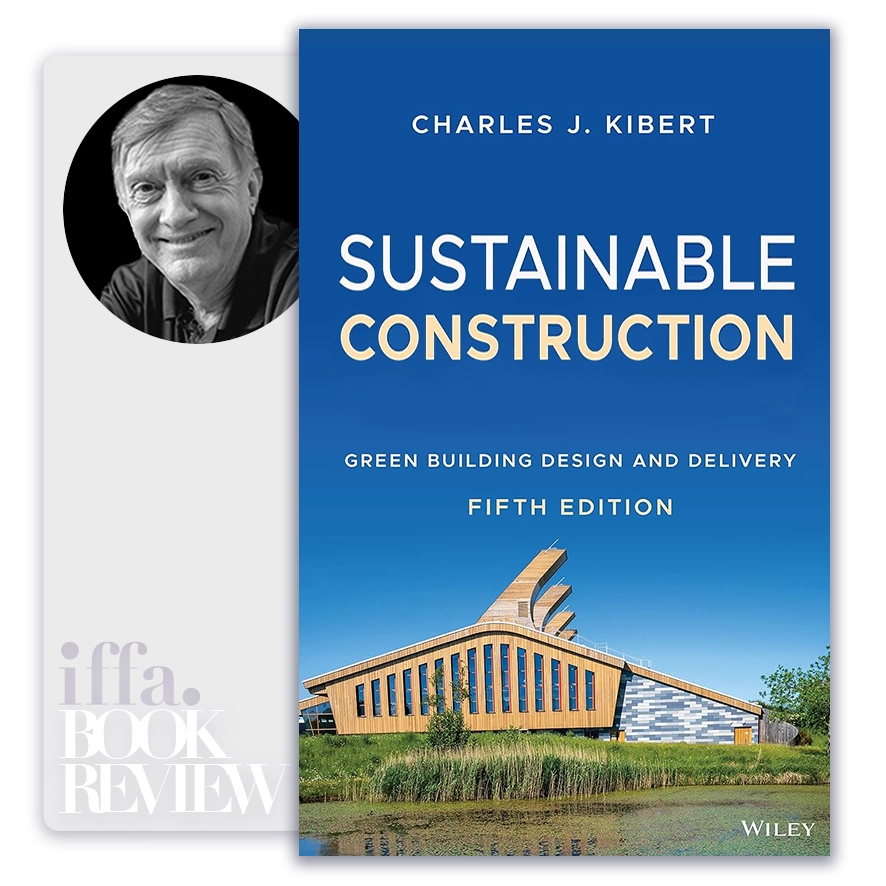
by Charles J. Kibert
Summary Overview:
Sustainable Construction matters because the construction sector sits at the center of some of the most consequential challenges of our time: climate change, resource depletion, waste generation, and long-term infrastructure risk. Buildings and infrastructure account for a significant share of global energy use, material consumption, and carbon emissions. Decisions made at the design and construction stage lock in environmental and economic outcomes for decades.
Kibert’s work remains highly relevant because it moves beyond slogans and certifications to address a harder truth: sustainability in construction is not achieved through isolated green features, but through systemic change in how projects are conceived, delivered, and evaluated. Incremental efficiency gains are insufficient when the scale of construction activity continues to grow globally. The book challenges industry leaders to rethink underlying assumptions about materials, processes, costs, and responsibility.
For executives, policymakers, developers, and built-environment professionals, the book provides a structured lens for understanding sustainability as a strategic and lifecycle issue, not a compliance exercise. It clarifies why many well-intentioned projects fail to deliver meaningful impact—and how a disciplined, systems-based approach can align environmental stewardship with long-term economic value.
About The Author
Charles J. Kibert is a leading academic and practitioner in sustainable construction, known for shaping early frameworks and standards in the field. His perspective is distinctive for combining engineering rigor, lifecycle thinking, and policy awareness, positioning sustainability as an integrated discipline rather than a design trend.
Core Idea:
The core idea of Sustainable Construction is that the built environment must be planned, designed, constructed, operated, and eventually deconstructed in ways that respect ecological limits while delivering social and economic value. Sustainability is not an attribute added at the end of a project; it is a guiding principle that shapes every decision across the building lifecycle.
Kibert presents construction as a material and energy system embedded within larger natural and social systems. When projects ignore these connections, they externalize costs—through emissions, waste, health impacts, and future remediation. The book argues that sustainable construction seeks to internalize these costs through better design, material selection, process management, and governance.
Sustainable construction is achieved through lifecycle responsibility, not isolated green features.
Key Concepts:
- Lifecycle Thinking as the Foundation
Kibert emphasizes that sustainability must be evaluated across the full lifecycle—resource extraction, manufacturing, construction, operation, maintenance, and end-of-life. Decisions that reduce upfront cost but increase long-term impacts undermine true performance. - Resource Efficiency and Material Selection
The book highlights the importance of reducing material intensity, selecting low-impact materials, and prioritizing renewability and recyclability. Material choice influences embodied energy, emissions, durability, and future adaptability. - Energy Performance Beyond Operations
While operational energy is critical, Kibert draws attention to embodied energy in materials and construction processes. Sustainable outcomes require addressing both operational and embodied impacts, especially as buildings become more energy-efficient in use. - Waste Reduction and Circularity
Construction waste is framed as a design failure rather than an inevitability. Strategies such as modular design, prefabrication, reuse, and design for disassembly support circular material flows and reduce landfill dependency. - Integrated Design and Collaboration
Sustainable construction depends on early and continuous collaboration among architects, engineers, contractors, and owners. Fragmented delivery models often prevent optimization across systems, leading to suboptimal outcomes. - Economic Sustainability and True Costing
The book challenges narrow cost metrics. Life-cycle costing reveals that higher upfront investment often delivers lower total cost of ownership through reduced energy use, maintenance, and replacement. Short-term cost minimization increases long-term risk. - Health, Safety, and Social Performance
Sustainability extends to indoor environmental quality, worker safety, and community impact. Buildings affect human health, productivity, and well-being—dimensions often overlooked in traditional project evaluation. - Policy, Standards, and Market Transformation
Kibert examines the role of regulations, rating systems, and public policy in driving industry change. While standards help, they are most effective when aligned with performance outcomes rather than checklist compliance. - Construction Processes and Site Management
Sustainability is influenced not only by what is built, but by how it is built. Energy use, emissions, water consumption, and site disturbance during construction are significant and manageable through better planning and technology. - Education and Cultural Change
The book underscores that technical solutions alone are insufficient. Sustainable construction requires cultural change—new skills, values, and decision frameworks across the industry. Education and leadership are central to this transition.
Long-term value emerges when environmental limits are treated as design constraints, not obstacles.
Executive Insights:
Sustainable Construction reframes sustainability as a risk management and value creation strategy. Environmental externalities eventually return as regulatory pressure, operating cost volatility, asset obsolescence, or reputational damage. Organizations that ignore sustainability defer costs rather than eliminate them.
For leaders, the book highlights that sustainability decisions made early in projects have outsized influence on outcomes. Governance structures, procurement models, and incentive alignment determine whether sustainable intent translates into performance. Those who integrate sustainability into core decision-making gain resilience in an increasingly constrained world.
The book also clarifies that sustainable construction is not anti-growth, but pro-quality growth—growth that respects limits and preserves future options.
Key strategic implications include:
- Lifecycle thinking reduces long-term financial and environmental risk
- Early design decisions determine most sustainability outcomes
- Integrated delivery outperforms fragmented project models
- True costing improves capital allocation decisions
- Sustainability strengthens asset longevity and resilience
Actionable Takeaways:
The book offers clear principles applicable across construction, development, and infrastructure leadership.
- Evaluate projects using full lifecycle performance, not upfront cost alone
- Reduce material intensity and prioritize low-impact materials
- Address embodied and operational energy together
- Design for adaptability, reuse, and end-of-life recovery
- Integrate sustainability objectives from project inception
- Use life-cycle costing to inform investment decisions
- Treat waste reduction as a design and planning issue
- Build organizational capability and culture around sustainability
Final Thoughts:
Sustainable Construction remains a foundational work because it treats sustainability not as aspiration, but as professional responsibility grounded in systems thinking. Kibert shows that the built environment can no longer be designed as if resources are infinite and consequences external.
The enduring insight of the book is clear: construction shapes the future more permanently than most human activities. Leaders who embrace lifecycle responsibility, integrate sustainability into decision-making, and align short-term actions with long-term limits will build assets—and institutions—that endure in a world defined by constraint, accountability, and change.
The ideas in this book go beyond theory, offering practical insights that shape real careers, leadership paths, and professional decisions. At IFFA, these principles are translated into executive courses, professional certifications, and curated learning events aligned with today’s industries and tomorrow’s demands. Discover more in our Courses.
Applied Programs

- Course Code : SBM-409
- Delivery : In-class / Virtual / Workshop
- Duration : 2-4 Days
- Venue: DUBAI HUB

- Course Code : PMA-613
- Delivery : In-class / Virtual / Workshop
- Duration : 3-5 Days
- Venue: DUBAI HUB
- Course Code : CIF-505
- Delivery : In-class / Virtual / Workshop
- Duration : 3-5 Days
- Venue: DUBAI HUB

- Course Code : CIF-512
- Delivery : In-class / Virtual / Workshop
- Duration : 2-4 Days
- Venue: DUBAI HUB
Related Books