The Executive Summary of
Norman Foster
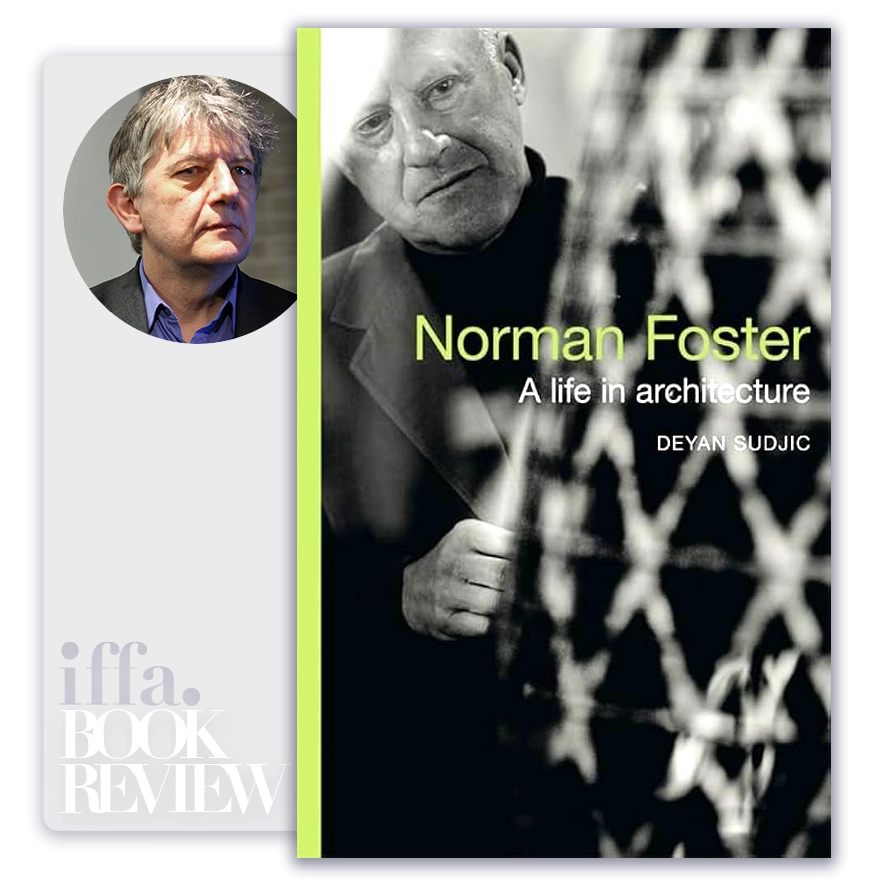
by Deyan Sudjic
Summary Overview:
Norman Foster offers a rare window into how architecture, technology, power, and leadership intersect at the highest level of global practice. Rather than treating buildings as isolated works of art, Deyan Sudjic presents Norman Foster’s career as a case study in how ideas are translated into large-scale systems—cities, infrastructure, institutions, and corporate identities—under intense technical, political, and economic constraints.
The book is especially relevant today as architecture faces climate responsibility, urban density, digital engineering, and public accountability simultaneously. For executives, architects, developers, and policymakers, this is not simply a biography; it is a study of how long-term vision, organizational discipline, and technological optimism can be sustained across decades. By tracing Foster’s evolution from experimental modernism to global influence, the book reveals how leadership in design is built through precision, resilience, and the ability to align innovation with real-world delivery—a lesson that extends far beyond architecture itself.
About The Author
Deyan Sudjic is one of the world’s most influential architecture critics and historians, known for analyzing design through cultural, political, and economic lenses. His perspective is distinctive for situating architecture within power structures and institutional realities, rather than treating it as isolated artistic expression.
Core Idea:
The core idea of Norman Foster is that architecture is an applied form of systems thinking, where technology, environment, economy, and human behavior converge. Sudjic presents Foster not as a stylist, but as a rational modernist whose work is driven by efficiency, innovation, and belief in progress—tempered by rigorous discipline.
Foster’s architecture, as portrayed in the book, reflects a worldview in which design is a problem-solving activity at scale. Buildings are machines for living, working, and moving—yet also symbols of institutional confidence and future orientation. The book argues that Foster’s enduring relevance lies in his ability to align architectural vision with the realities of engineering, cost, and governance.
Enduring architecture emerges when vision is disciplined by systems, not when form is pursued for its own sake.
Key Concepts:
- Architecture as Infrastructure, Not Ornament
Sudjic emphasizes that Foster’s work treats buildings as infrastructure—integrated systems of structure, energy, movement, and use. This approach prioritizes longevity and performance over short-term visual impact. - Engineering as Creative Force
Foster’s collaboration with engineers is central to his practice. The book shows how structural logic and technological innovation become sources of architectural expression, rather than constraints. - High-Tech Modernism with Discipline
While often associated with high-tech architecture, Foster’s work avoids excess. Sudjic highlights a consistent restraint—technology is deployed only when it enhances efficiency, sustainability, or clarity. - Global Practice, Local Adaptation
Foster operates globally, yet adapts to local climates, regulations, and cultures. The book illustrates how standard principles—light, structure, efficiency—are recalibrated across contexts. - Sustainability Before It Was Fashionable
Sudjic traces Foster’s early commitment to environmental performance. Passive ventilation, daylighting, and energy efficiency are shown as foundational principles rather than retrofits. - Architecture and Power
Many of Foster’s projects are commissioned by governments, financial institutions, and global corporations. The book examines how architecture functions as a symbol of authority, transparency, or progress, depending on context. - Airports and Mobility as Civic Architecture
Foster’s airport designs are treated as significant civic spaces—where movement, security, and identity intersect. These projects reflect a belief that infrastructure shapes societal experience. - Precision, Control, and Practice Culture
Sudjic pays attention to Foster’s studio culture: precision, hierarchy, and relentless attention to detail. The book suggests that such discipline enables consistency across a vast portfolio. - The Risk of Technological Optimism
While largely admiring, Sudjic does not ignore tensions. He explores critiques of technological determinism and questions whether modernist optimism always aligns with social complexity. - Legacy and Continuity
The book considers Foster’s long-term impact on cities and professional practice. His legacy is framed not as a style, but as a method—repeatable, scalable, and adaptable.
Modernity succeeds when technology serves human and environmental purpose rather than spectacle.
Executive Insights:
Norman Foster presents architecture as a strategic discipline operating within constraints, much like large-scale leadership or infrastructure planning. Its insights extend beyond design into how institutions manage complexity, innovation, and risk over long horizons.
For decision-makers, the book highlights the value of clarity of principles combined with operational rigor. Foster’s success is shown to derive less from individual brilliance and more from systems, partnerships, and consistency of purpose.
Key strategic implications include:
- Long-term value emerges from disciplined systems, not expressive excess
- Technology delivers impact only when aligned with purpose and governance
- Sustainability is most effective when embedded from the outset
- Global scale requires adaptable frameworks, not rigid formulas
- Institutional trust is reinforced through clarity and performance
Actionable Takeaways:
The book offers broad principles applicable to leadership, planning, and design governance.
- Treat large projects as systems, not objects
- Align vision with engineering, cost, and operational reality
- Embed sustainability as a foundational principle
- Favor clarity, efficiency, and longevity over novelty
- Build organizational cultures that support precision and learning
- Recognize the symbolic power of infrastructure and public works
- Balance technological optimism with social and environmental context
Final Thoughts:
Norman Foster is ultimately a book about modernity practiced with discipline. Through Sudjic’s lens, Foster emerges as a figure who believes deeply in progress—but only when it is engineered, tested, and governed responsibly.
The enduring insight of the book is clear: architecture, like leadership, succeeds when ambition is matched by rigor. In a world facing environmental limits and infrastructural demands, the Foster model—systemic, restrained, and future-oriented—offers a compelling template for thinking at scale without losing control.
The ideas in this book go beyond theory, offering practical insights that shape real careers, leadership paths, and professional decisions. At IFFA, these principles are translated into executive courses, professional certifications, and curated learning events aligned with today’s industries and tomorrow’s demands. Discover more in our Courses.
Applied Programs

- Course Code : SBM-409
- Delivery : In-class / Virtual / Workshop
- Duration : 2-4 Days
- Venue: DUBAI HUB

- Course Code : PMA-613
- Delivery : In-class / Virtual / Workshop
- Duration : 3-5 Days
- Venue: DUBAI HUB
- Course Code : CIF-505
- Delivery : In-class / Virtual / Workshop
- Duration : 3-5 Days
- Venue: DUBAI HUB

- Course Code : CIF-512
- Delivery : In-class / Virtual / Workshop
- Duration : 2-4 Days
- Venue: DUBAI HUB
Related Books