
The Executive Summary of
Underwater Radiated Noise Guide
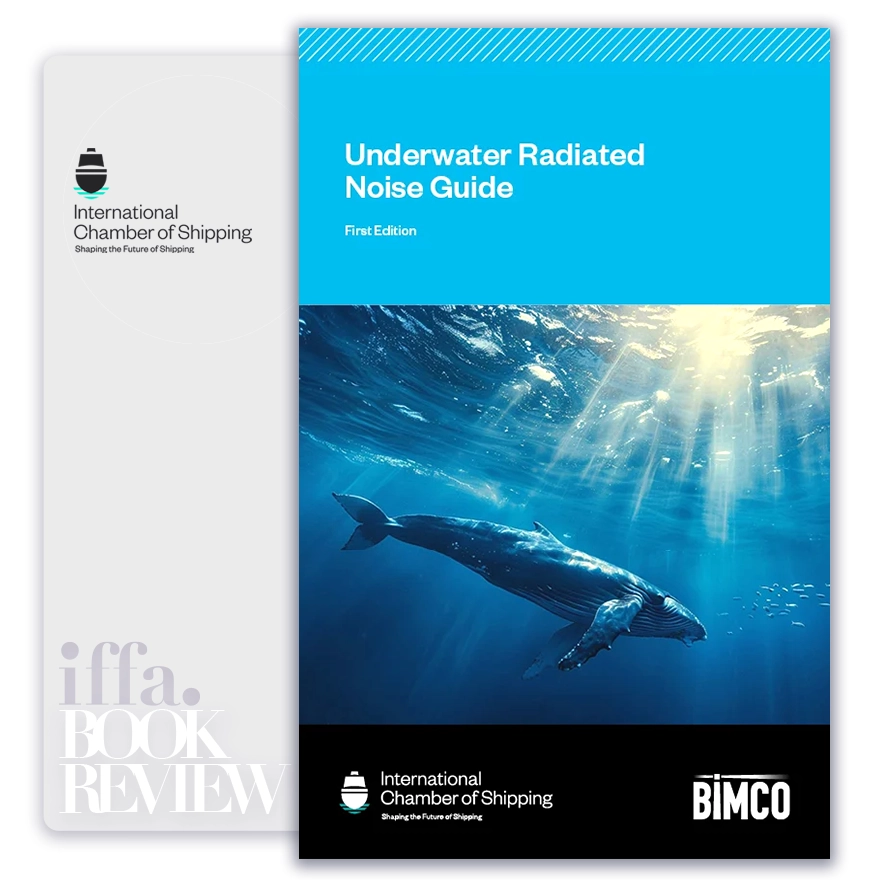
by International Chamber of Shipping
Summary Overview:
Underwater radiated noise (URN) has emerged as one of the least visible yet most consequential environmental risks facing global shipping. The Underwater Radiated Noise Guide remains highly relevant because it reframes noise not as an abstract ecological concern, but as a systemic byproduct of ship design, operation, and maintenance choices. For executives, board members, regulators, and fleet managers, the guide matters because URN increasingly shapes regulatory expectations, stakeholder scrutiny, port access, and long-term asset viability. As environmental oversight expands beyond emissions and discharges, this guide clarifies how sound has become a governance issue, demanding the same strategic seriousness as safety, pollution prevention, and carbon intensity.
About The Author
The International Chamber of Shipping represents shipowners and operators responsible for the majority of the world’s merchant fleet and plays a central role in shaping global maritime standards. Its authority is grounded in direct industry stewardship, regulatory engagement, and operational experience across vessel types and trading patterns.
What distinguishes ICS’s perspective in this guide is its emphasis on practical system control rather than advocacy. The guidance reflects accumulated technical research, operational feedback, and regulatory dialogue, translated into clear leadership responsibilities and decision frameworks for managing underwater noise.
Core Idea:
The core idea of the Underwater Radiated Noise Guide is that underwater noise is a design and governance outcome, not an incidental side effect. Noise levels are determined by propulsion choices, hull form, machinery installation, maintenance standards, and operational behavior. As such, URN must be managed through intentional system design and disciplined operation, not post hoc mitigation.
The guide positions URN as a long-horizon risk. While its impacts are diffuse and cumulative, regulatory and reputational consequences are accelerating. Executives who treat URN as a future problem risk locking in assets and practices that become costly liabilities under evolving environmental regimes.
Underwater noise is an environmental footprint shaped long before a vessel enters service.
Key Concepts:
- Noise as an Environmental Externality
URN represents a form of pollution that propagates far beyond the ship itself. Leaders must recognize noise as systemic environmental impact, not localized nuisance. - Design Choices Lock in Outcomes
Propeller design, hull optimization, and machinery isolation determine baseline noise performance. These decisions are capital allocation choices with decades-long consequences. - Maintenance as Noise Control
Degraded propellers, fouling, and worn machinery significantly increase noise. Maintenance discipline becomes a continuous environmental control mechanism. - Operations Influence Environmental Footprint
Speed, loading condition, and routing affect cavitation and vibration. Operational decisions therefore directly shape environmental performance. - Measurement, Uncertainty, and Transparency
Noise is difficult to measure and communicate. The guide emphasizes credible assessment and consistent reporting as foundations of trust with regulators and stakeholders. - Regulation Ahead of Consensus
Environmental concern often precedes technical certainty. Leaders must anticipate regulatory movement before standards fully mature, avoiding reactive retrofits. - Cumulative and Area-Based Risk
URN impacts accumulate across fleets and sensitive regions. Strategic planning must account for geographic concentration and operational intensity. - Trade-Offs Between Efficiency and Noise
Efficiency measures can reduce or increase noise depending on execution. Governance requires balancing carbon, cost, and acoustic outcomes, not optimizing one metric in isolation. - Collaboration Across the Value Chain
Noise reduction requires coordination between designers, yards, operators, and charterers. Fragmentation undermines effectiveness; alignment creates leverage. - Reputation and Social License to Operate
As awareness grows, noise performance influences brand credibility and access to environmentally sensitive trades. URN becomes a reputational and commercial factor, not merely ecological.
Invisible impacts demand deliberate governance, not reactive compliance.
Executive Insights:
The guide makes clear that underwater radiated noise is an emerging strategic constraint, not a distant scientific issue. Organizations that integrate noise considerations early gain flexibility, while late adopters face accelerating cost, scrutiny, and constraint.
For boards and senior leadership, URN oversight represents a forward-looking governance responsibility tied to environmental legitimacy.
- Invisible impacts carry visible consequences
- Design discipline outperforms retrofit mitigation
- Maintenance quality protects environmental credibility
- Regulation will follow sensitivity, not certainty
- Strategic foresight preserves optionality
Actionable Takeaways:
Senior leaders should translate the guide’s principles into strategic posture and systems:
- Reframe underwater noise as an environmental governance issue, not a technical footnote
- Embed noise considerations into newbuild and retrofit decisions
- Strengthen maintenance regimes as environmental controls
- Anticipate regulatory direction rather than waiting for mandates
- Align operational practices with long-term environmental credibility
Final Thoughts:
The Underwater Radiated Noise Guide is ultimately about governing what cannot be seen. In complex systems, the most damaging risks are often those that accumulate quietly until tolerance disappears.
Its enduring value lies in reminding leaders that environmental responsibility is expanding in scope and subtlety. What once escaped notice now defines legitimacy.
The closing insight is both calm and demanding: long-term value and license to operate in global shipping will belong to organizations that govern invisible environmental risks with the same rigor they apply to safety, emissions, and financial performance.
The ideas in this book go beyond theory, offering practical insights that shape real careers, leadership paths, and professional decisions. At IFFA, these principles are translated into executive courses, professional certifications, and curated learning events aligned with today’s industries and tomorrow’s demands. Discover more in our Courses.
Applied Programs

- Course Code : SBM-409
- Delivery : In-class / Virtual / Workshop
- Duration : 2-4 Days
- Venue: DUBAI HUB
- Course Code : PMA-613
- Delivery : In-class / Virtual / Workshop
- Duration : 3-5 Days
- Venue: DUBAI HUB
- Course Code : CIF-505
- Delivery : In-class / Virtual / Workshop
- Duration : 3-5 Days
- Venue: DUBAI HUB

- Course Code : CIF-512
- Delivery : In-class / Virtual / Workshop
- Duration : 2-4 Days
- Venue: DUBAI HUB
Related Books