
The Executive Summary of
Ship to Ship Transfer Guide
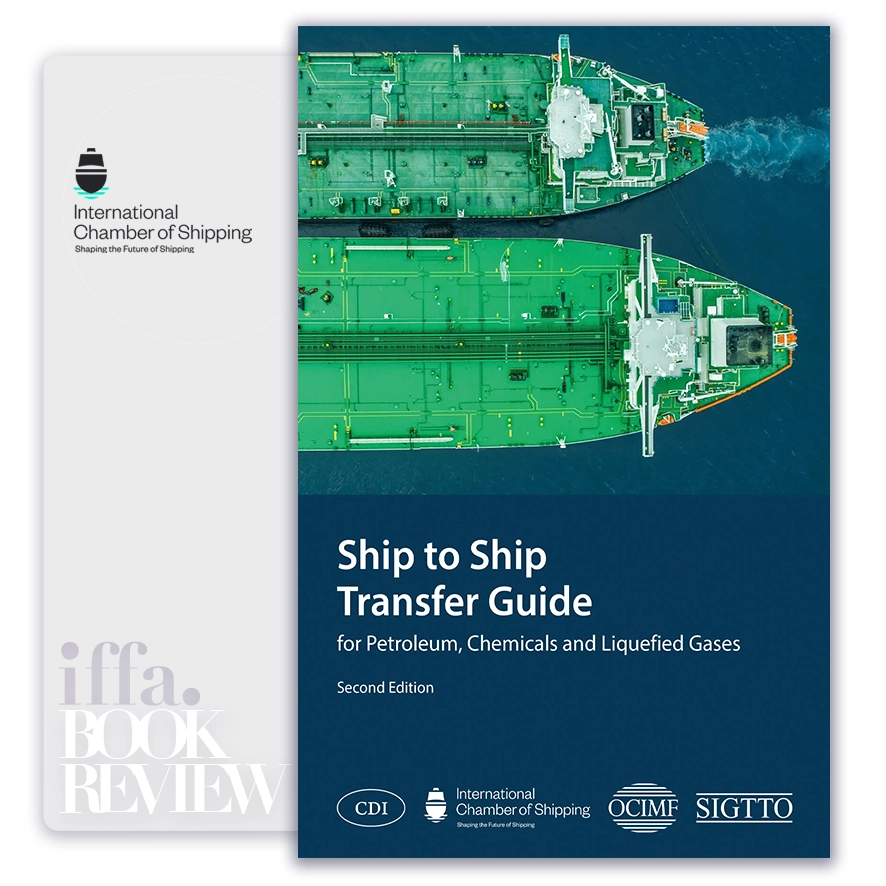
by International Chamber of Shipping
Summary Overview:
Ship-to-ship (STS) transfers sit at the intersection of commercial urgency and concentrated operational risk. They enable flexibility in global trade, yet compress hazards involving navigation, cargo transfer, weather, human factors, and environmental exposure into a single maneuver. The Ship to Ship Transfer Guide for Petroleum, Chemicals and Liquefied Gases remains essential because it reframes STS not as a niche seamanship task, but as a governance-critical operation where failures propagate instantly across companies, insurers, regulators, and communities. For executives and boards, the guide’s relevance lies in making clear that STS incidents are rarely technical surprises; they emerge from ambiguity in authority, misaligned incentives, and erosion of procedural discipline under time pressure.
About The Author
The International Chamber of Shipping represents shipowners and operators responsible for the majority of the world’s merchant fleet and plays a central role in shaping global maritime standards. Its authority is grounded in direct operational stewardship, regulatory engagement, and accumulated learning from incidents and enforcement across jurisdictions.
What distinguishes ICS’s contribution is its focus on systemized coordination across organizational boundaries. This guide consolidates industry experience into a common framework that aligns shipowners, masters, operators, service providers, and terminals around shared expectations, responsibilities, and controls during STS operations.
Core Idea:
The core idea of the STS Guide is that safe ship-to-ship transfers depend on eliminating ambiguity at the moment of highest risk. STS operations bring together multiple vessels, crews, service providers, and authorities, often outside port infrastructure. Safety is achieved only when authority is explicit, communication is structured, and verification replaces assumption.
The guide positions STS safety as a joint governance system rather than a collection of best practices. It emphasizes that planning, risk assessment, execution, and contingency response must be collectively owned and rigorously synchronized. Leaders who treat STS as an operational workaround rather than a governed activity expose their organizations to disproportionate, non-linear risk.
Ship-to-ship safety fails when shared responsibility is assumed rather than defined.
Key Concepts:
- STS as a High-Consequence Interface
STS transfers concentrate navigational, cargo, and human risks. Executives must recognize STS as qualitatively higher risk than routine cargo operations, warranting elevated oversight. - Joint Planning as Risk Control
Effective STS operations begin long before vessels approach. Structured planning, role definition, and contingency design determine outcomes more than execution skill alone. - Clear Authority and Command Structure
Ambiguity over who decides, who stops, and who escalates is a primary failure mode. The guide mandates explicit command arrangements across participating parties. - Environmental and Location Sensitivity
Weather, sea state, traffic density, and proximity to sensitive areas amplify consequences. Site selection is therefore a strategic risk decision, not a logistical convenience. - Cargo-Specific Hazard Differentiation
Petroleum, chemicals, and liquefied gases introduce distinct risk profiles. Governance systems must adapt controls to cargo characteristics, not apply uniform assumptions. - Mooring, Fendering, and Equipment Integrity
Physical interfaces are safety-critical assets. Equipment suitability and verification are non-negotiable safeguards, not operational preferences. - Communication as a Control System
Standardized communications prevent misinterpretation under stress. Informal or ad-hoc communication erodes shared situational awareness. - Human Factors Under Time Pressure
STS operations magnify fatigue, cognitive load, and normalization of deviation. The guide embeds error-tolerant design and cross-checking into procedures. - Emergency Preparedness and Abort Criteria
The ability to stop safely defines operational maturity. Pre-agreed abort conditions prevent hesitation when conditions deteriorate. - Documentation and Traceability
Checklists, permits, and records are decision gates that establish accountability and protect organizations during post-incident scrutiny.
In STS operations, coordination is the primary safety barrier.
Executive Insights:
The STS Guide makes clear that ship-to-ship incidents are governance failures before they are operational ones. Organizations with similar vessels and crews experience radically different outcomes based on clarity of authority, rigor of planning, and leadership seriousness.
For boards and senior leadership, STS activity represents concentrated enterprise risk with outsized reputational and financial consequences.
- STS operations magnify governance weaknesses
- Shared authority requires explicit design
- Planning quality determines execution resilience
- Environmental context amplifies consequence severity
Discipline protects license to operate
Actionable Takeaways:
Senior leaders should internalize this guide as operating doctrine, not reference material:
- Reframe STS operations as board-visible risk events, not routine logistics
- Eliminate ambiguity in command, escalation, and abort authority
- Embed joint planning and verification into contractual and operational frameworks
- Differentiate controls by cargo hazard, not convenience
- Align incentives to reward procedural discipline, not speed
Final Thoughts:
The Ship to Ship Transfer Guide for Petroleum, Chemicals and Liquefied Gases is ultimately about how organizations manage risk when no single party is fully in control. STS operations test leadership maturity because they require cooperation without dilution of responsibility.
Its enduring value lies in recognizing that coordination is a safety system. Where roles are clear, procedures respected, and authority shared deliberately, STS operations remain quiet and uneventful. Where ambiguity creeps in, consequences escalate rapidly.
The lasting insight is direct and demanding: long-term value, credibility, and trust in STS operations are secured not by experience or urgency, but by disciplined systems that make safe coordination the only acceptable way to operate.
The ideas in this book go beyond theory, offering practical insights that shape real careers, leadership paths, and professional decisions. At IFFA, these principles are translated into executive courses, professional certifications, and curated learning events aligned with today’s industries and tomorrow’s demands. Discover more in our Courses.
Applied Programs

- Course Code : SBM-409
- Delivery : In-class / Virtual / Workshop
- Duration : 2-4 Days
- Venue: DUBAI HUB
- Course Code : PMA-613
- Delivery : In-class / Virtual / Workshop
- Duration : 3-5 Days
- Venue: DUBAI HUB
- Course Code : CIF-505
- Delivery : In-class / Virtual / Workshop
- Duration : 3-5 Days
- Venue: DUBAI HUB

- Course Code : CIF-512
- Delivery : In-class / Virtual / Workshop
- Duration : 2-4 Days
- Venue: DUBAI HUB
Related Books