The Executive Summary of
The Oil Kings
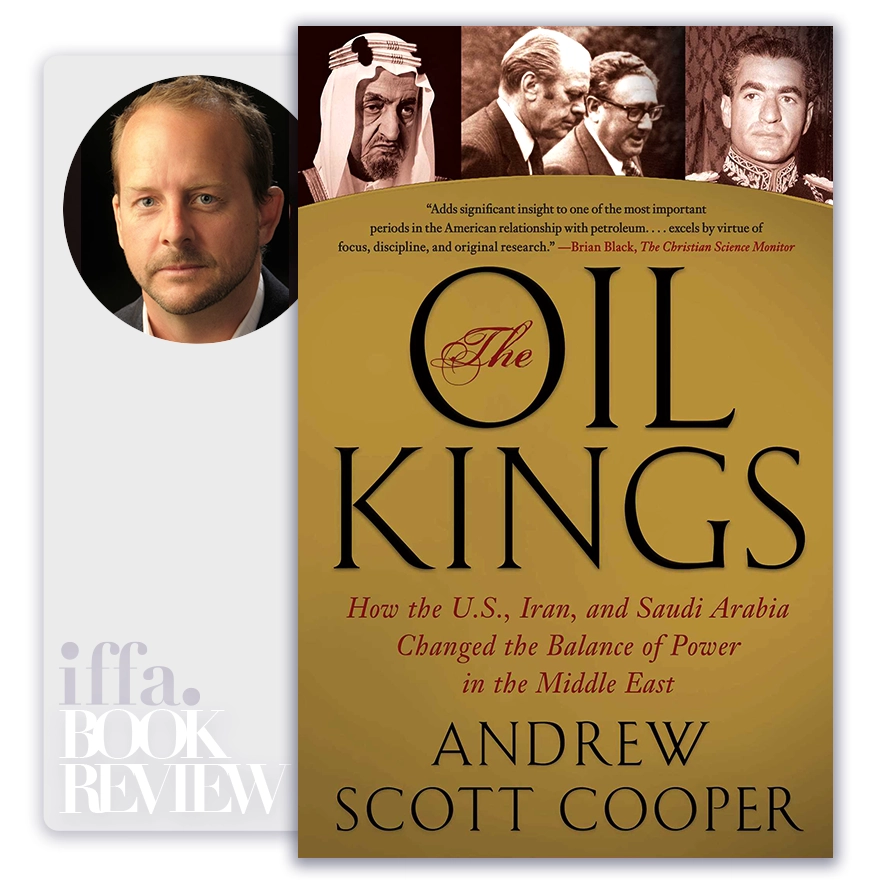
by Andrew Scott Cooper
Summary Overview:
Energy markets do not merely respond to geopolitics; they produce it. The Oil Kings remains essential because it explains how modern Middle Eastern power structures were deliberately engineered through oil diplomacy, elite relationships, and strategic bargains rather than ideology or accident. In a period marked by renewed great-power rivalry, energy insecurity, and shifting alliances, the book offers senior leaders a clear reminder that today’s geopolitical constraints are the residue of yesterday’s oil decisions. Its relevance lies in revealing how personal leadership choices, state interests, and energy control converged to shape durable political orders that still govern markets, security, and capital flows.
About The Author
Andrew Scott Cooper is a historian specializing in U.S.–Middle East relations, energy politics, and modern Iranian history. His work draws on archival research, diplomatic records, and elite correspondence to reconstruct decision-making at the highest levels of state power.
What distinguishes Cooper’s perspective is his focus on leaders rather than abstractions. He analyzes how individual rulers, presidents, and advisors exercised judgment within structural constraints, offering a leadership-centered account of geopolitical formation.
Core Idea:
The core idea of The Oil Kings is that oil was the decisive instrument through which the United States shaped a postwar Middle Eastern order, elevating certain regimes while marginalizing others in pursuit of stability, access, and influence. Power in the region emerged not solely from military force or ideology, but from control over production, pricing, and political alignment around oil.
Cooper presents geopolitics as a relationship-driven system, where trust, rivalry, and misjudgment among leaders translated directly into long-term structural outcomes. Strategic decisions taken to manage oil flows created durable alliances and equally durable resentments, embedding volatility into the region’s political economy.
Oil did not just finance power in the Middle East; it determined who was allowed to wield it.
Key Concepts:
- Oil as a Tool of Statecraft
Oil functioned as a diplomatic currency. Access, production levels, and pricing were used to reward allies and discipline rivals. For executives and policymakers, this underscores that energy markets have always been instruments of power, not neutral exchanges. - The Construction of Strategic Alliances
The U.S. relationship with Saudi Arabia and Iran was built through energy security bargains, not cultural alignment. These alliances prioritized stability and access, shaping decades of regional order. - Leadership Personality and Power Outcomes
Personal relationships between leaders mattered. Misjudgments, overconfidence, and misread intentions altered strategic trajectories, highlighting how leadership temperament influences systemic risk. - Iran’s Central but Precarious Role
Iran’s position as a key oil power was central to U.S. strategy, yet structurally unstable. The book shows how elite dependency on external backing created long-term vulnerability. - Saudi Arabia’s Ascendance Through Energy Control
Saudi Arabia’s rise was not inevitable. It was enabled by strategic alignment, production capacity, and political reliability, transforming the kingdom into a global swing power. - Stability Versus Legitimacy Trade-Offs
Efforts to secure oil stability often came at the expense of political legitimacy. These trade-offs produced latent instability, which resurfaced in later crises. - Oil Revenues and State Formation
Energy income reshaped governance structures, centralizing power and reducing accountability. This model delivered short-term order but long-term institutional fragility. - The Illusion of Control
External powers repeatedly overestimated their ability to manage outcomes. Oil-based alliances created dependencies that limited strategic flexibility when conditions changed. - Long Shadow of Early Decisions
Foundational choices made in the mid-20th century constrained future options. The book demonstrates how path dependency dominates energy geopolitics. - Energy as a Systemic Risk Multiplier
By tying political legitimacy and economic survival to oil, states amplified the impact of price shocks and demand shifts, embedding volatility into governance itself.
Geopolitical stability is often purchased with arrangements that defer, rather than resolve, structural conflict.
Executive Insights:
The Oil Kings reframes Middle Eastern geopolitics as a leadership-driven energy system, where strategic bargains outlast the leaders who made them. For boards and policymakers, the book highlights how energy alignment decisions create obligations and constraints that persist for generations.
At an executive level, the lesson is that access-oriented strategies often trade resilience for control, a dynamic still visible in modern energy diplomacy.
- Energy alliances shape political legitimacy
- Leadership judgment compounds over time
- Stability achieved through oil carries deferred risk
- Path dependency limits strategic exit options
- Energy policy and foreign policy are inseparable
Actionable Takeaways:
Senior leaders should internalize these insights as strategic orientation:
- Reframe energy relationships as long-term political commitments, not transactional deals
- Stop assuming control equals stability in resource-dependent systems
- Embed historical path analysis into geopolitical risk assessment
- Design alliances with exit optionality, not permanence
- Align energy strategy with institutional resilience, not short-term access
Final Thoughts:
The Oil Kings is ultimately a book about how power is assembled and sustained through strategic resources. It shows that the architecture of modern geopolitics is built less on ideology than on decisions about who controls energy and under what conditions.
Its enduring value lies in reminding leaders that today’s constraints were once deliberate choices. Understanding that lineage sharpens judgment, tempers overconfidence, and improves long-term strategy.
The closing insight is as relevant now as ever: lasting influence is not achieved by commanding resources alone, but by governing the relationships, institutions, and expectations that grow around them.
The ideas in this book go beyond theory, offering practical insights that shape real careers, leadership paths, and professional decisions. At IFFA, these principles are translated into executive courses, professional certifications, and curated learning events aligned with today’s industries and tomorrow’s demands. Discover more in our Courses.
Applied Programs

- Course Code : SBM-409
- Delivery : In-class / Virtual / Workshop
- Duration : 2-4 Days
- Venue: DUBAI HUB
- Course Code : PMA-613
- Delivery : In-class / Virtual / Workshop
- Duration : 3-5 Days
- Venue: DUBAI HUB
- Course Code : CIF-505
- Delivery : In-class / Virtual / Workshop
- Duration : 3-5 Days
- Venue: DUBAI HUB

- Course Code : CIF-512
- Delivery : In-class / Virtual / Workshop
- Duration : 2-4 Days
- Venue: DUBAI HUB
Related Books